Center for Molecular and Cellular Biology, School of Biological, Environmental, and Earth Sciences, University of Southern Mississippi, Hattiesburg, MS, United States.
Front Cell Infect Microbiol. 2021 Jul 20;11:680264. doi: 10.3389/fcimb.2021.680264. eCollection 2021.
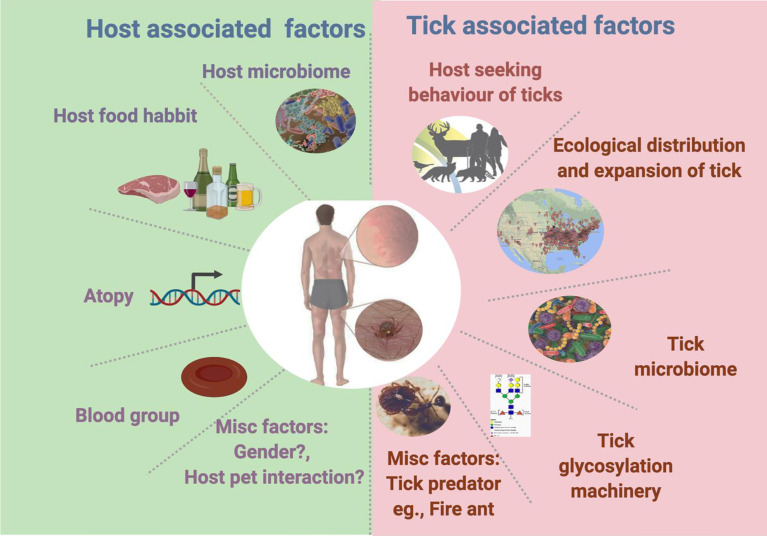
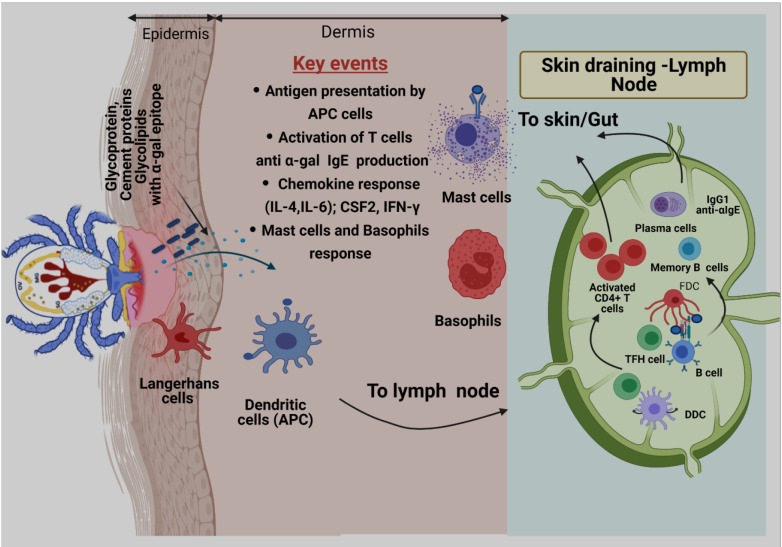
Ticks and tick-borne diseases are significant public health concerns. Bioactive molecules in tick saliva facilitate prolonged blood-feeding and transmission of tick-borne pathogens to the vertebrate host. Alpha-gal syndrome (AGS), a newly reported food allergy, is believed to be induced by saliva proteins decorated with a sugar molecule, the oligosaccharide galactose-⍺-1,3-galactose (α-gal). This syndrome is characterized by an IgE antibody-directed hypersensitivity against α-gal. The α-gal antigen was discovered in the salivary glands and saliva of various tick species including, the Lone Star tick (). The underlying immune mechanisms linking tick bites with α-gal-specific IgE production are poorly understood and are crucial to identify and establish novel treatments for this disease. This article reviews the current understanding of AGS and its involvement with tick species.
蜱虫和蜱传疾病是重大的公共卫生关切。蜱虫唾液中的生物活性分子有助于其长时间吸血,并将蜱传病原体传播给脊椎动物宿主。α-半乳糖综合征(AGS)是一种新报告的食物过敏,据信是由唾液蛋白上带有糖分子半乳糖-α-1,3-半乳糖(α-gal)而引起的。这种综合征的特征是针对 α-gal 的 IgE 抗体介导的过敏反应。α-gal 抗原已在各种蜱种(包括孤星蜱())的唾液腺和唾液中被发现。蜱叮咬与 α-gal 特异性 IgE 产生之间的潜在免疫机制尚不清楚,对于确定和建立针对这种疾病的新治疗方法至关重要。本文综述了目前对 AGS 的认识及其与蜱种的关系。