Donaldson Lynda, Wilson Robert J, Maclean Ilya M D
1Environment and Sustainability Institute, University of Exeter, Penryn Campus, Cornwall, TR10 9FE UK.
2College of Life and Environmental Sciences, University of Exeter, Exeter, EX4 4PS UK.
Biodivers Conserv. 2017;26(3):527-552. doi: 10.1007/s10531-016-1257-9. Epub 2016 Dec 5.
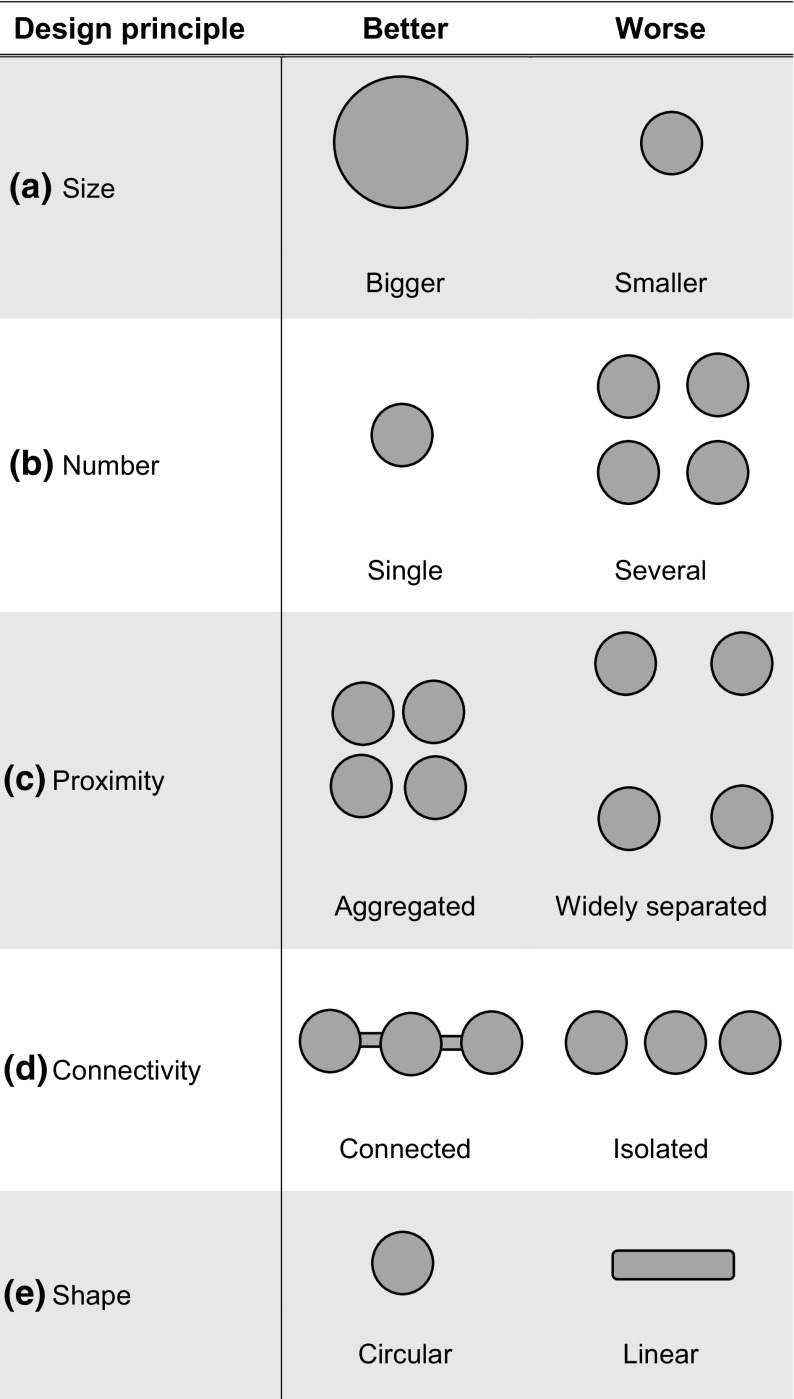
Landscape-scale approaches to conservation stem largely from the classic ideas of reserve design: encouraging bigger and more sites, enhancing connectivity among sites, and improving habitat quality. Trade-offs are imposed between these four strategies by the limited resources and opportunities available for conservation programmes, including the establishment and management of protected areas, and wildlife-friendly farming and forestry. Although debate regarding trade-offs between the size, number, connectivity and quality of protected areas was prevalent in the 1970-1990s, the implications of the same trade-offs for ongoing conservation responses to threats from accelerating environmental change have rarely been addressed. Here, we reassess the implications of reserve design theory for landscape-scale conservation, and present a blueprint to help practitioners to prioritise among the four strategies. We consider the new perspectives placed on landscape-scale conservation programmes by twenty-first century pressures including climate change, invasive species and the need to marry food security with biodiversity conservation. A framework of the situations under which available theory and evidence recommend that each of the four strategies be prioritized is provided, seeking to increase the clarity required for urgent conservation decision-making.
鼓励设立更大、更多的保护区,增强保护区之间的连通性,以及改善栖息地质量。在包括保护区的建立和管理、有利于野生动物的农业和林业在内的保护计划所拥有的有限资源和机会之间,这四种策略存在着权衡取舍。尽管在20世纪70年代至90年代,关于保护区面积、数量、连通性和质量之间权衡取舍的争论很普遍,但对于当前应对加速的环境变化所带来威胁的保护措施而言,同样的权衡取舍的影响却很少得到探讨。在此,我们重新评估保护区设计理论对景观尺度保护的影响,并提出一个蓝图,以帮助从业者在这四种策略中进行优先排序。我们考虑了21世纪的压力,包括气候变化、入侵物种以及将粮食安全与生物多样性保护相结合的必要性,这些压力给景观尺度保护计划带来的新视角。我们提供了一个框架,说明在哪些情况下现有理论和证据建议优先考虑这四种策略中的每一种,旨在提高紧急保护决策所需的清晰度。