Xia Jinbing, Li Dengping, Zhu Xiaoliang, Xia Wenying, Qi Zhenyong, Li Guanhua, Xu Qian
Clinical Laboratory, Shouguang People's Hospital, Shouguang, Shandong 262700, P.R. China.
Department of CT Magnetic Resonance, Shouguang People's Hospital, Shouguang, Shandong 262700, P.R. China.
Oncol Lett. 2020 May;19(5):3578-3586. doi: 10.3892/ol.2020.11457. Epub 2020 Mar 11.
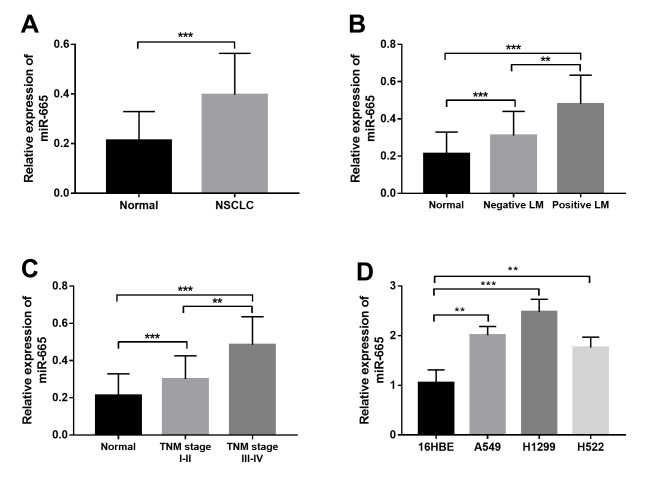
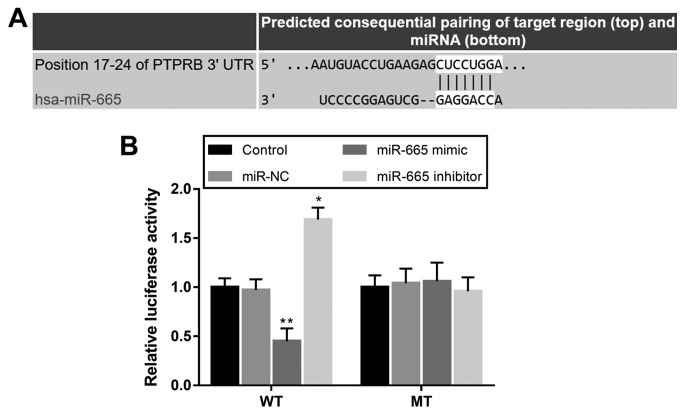
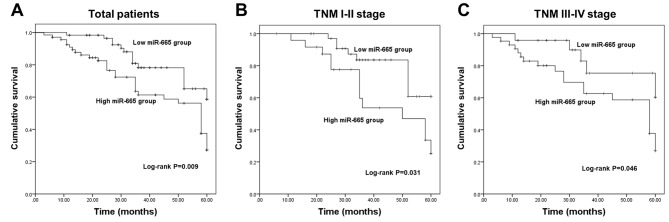
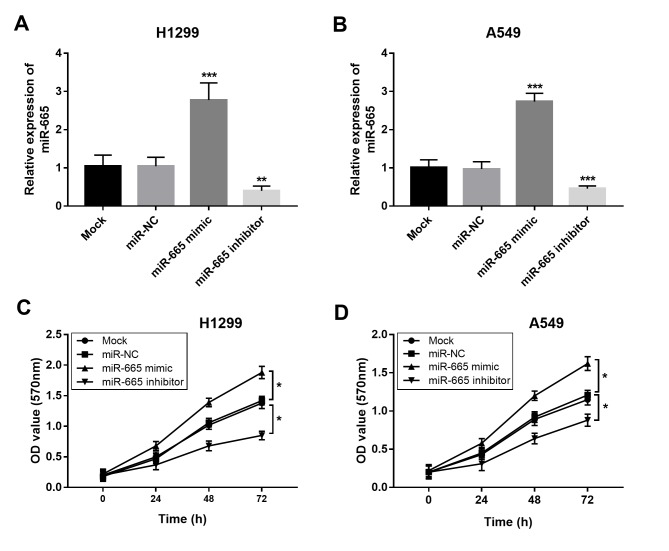
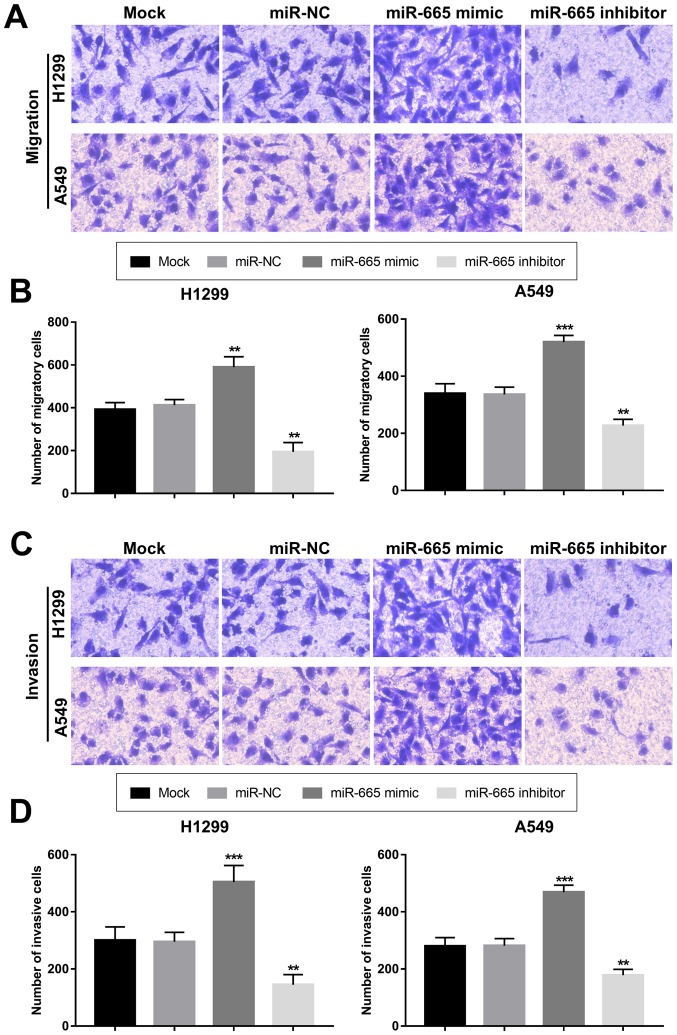
Non-small cell lung cancer (NSCLC) is one of the leading causes of global cancer-associated mortality. Aberrant microRNAs (miRs) have been reported to be involved in the pathogenesis of various cancer types. The present study aimed to investigate the expression profile and prognostic value of miR-665 in patients with NSCLC, and to analyze its functional role in tumor progression using NSCLC cells. Reverse transcription-quantitative PCR was used to estimate the expression levels of miR-665. Kaplan-Meier survival curves and Cox regression analysis were performed to evaluate the prognostic value of miR-665. The effects of miR-665 on NSCLC cell proliferation, migration and invasion were examined by cell transfection, and the target gene of miR-665 was explored. miR-665 expression was elevated in the tissue and cell samples of NSCLC. This increased miR-665 expression was associated with lymph node metastasis and TNM stage. An independent association between miR-665 and overall survival was identified in patients with NSCLC. When regulating the expression levels of miR-665 , NSCLC cell proliferation, migration and invasion were enhanced by overexpression of miR-665, but were inhibited by knockdown of miR-665. The luciferase activity results indicated that the protein tyrosine phosphatase receptor type B () was a direct target of miR-665 in NSCLC cells. The present study provided evidence for the clinical significance of a decreased expression of miR-665 in the prognosis of NSCLC. Upregulation of miR-665 contributed to tumor cell proliferation, migration and invasion by targeting , suggesting the potential of miR-665 as a candidate therapeutic target for NSCLC treatment.
非小细胞肺癌(NSCLC)是全球癌症相关死亡的主要原因之一。据报道,异常的微小RNA(miR)参与了多种癌症类型的发病机制。本研究旨在调查miR-665在NSCLC患者中的表达谱和预后价值,并使用NSCLC细胞分析其在肿瘤进展中的功能作用。采用逆转录定量PCR来估计miR-665的表达水平。进行Kaplan-Meier生存曲线和Cox回归分析以评估miR-665的预后价值。通过细胞转染检测miR-665对NSCLC细胞增殖、迁移和侵袭的影响,并探索miR-665的靶基因。miR-665在NSCLC的组织和细胞样本中表达升高。miR-665表达的增加与淋巴结转移和TNM分期相关。在NSCLC患者中确定了miR-665与总生存之间的独立关联。当调节miR-665的表达水平时,miR-665的过表达增强了NSCLC细胞的增殖、迁移和侵袭,但miR-665的敲低则抑制了这些作用。荧光素酶活性结果表明,蛋白酪氨酸磷酸酶受体B型()是NSCLC细胞中miR-665的直接靶标。本研究为miR-665表达降低在NSCLC预后中的临床意义提供了证据。miR-665的上调通过靶向促进肿瘤细胞增殖、迁移和侵袭,提示miR-665作为NSCLC治疗候选靶点的潜力。