Wang Zhengyang, Lin Minmin, He Lulu, Qi Hongyan, Shen Jing, Ying Kejing
Department of Pulmonary and Critical Care Medicine, Regional Medical Center for National Institute of Respiratory Diseases, Sir Run Run Shaw Hospital, School of Medicine, Zhejiang University, Hangzhou 310016, China.
Cancer Center, Zhejiang University, Hangzhou, Zhejiang 310058, China.
J Oncol. 2021 Jul 24;2021:9813773. doi: 10.1155/2021/9813773. eCollection 2021.
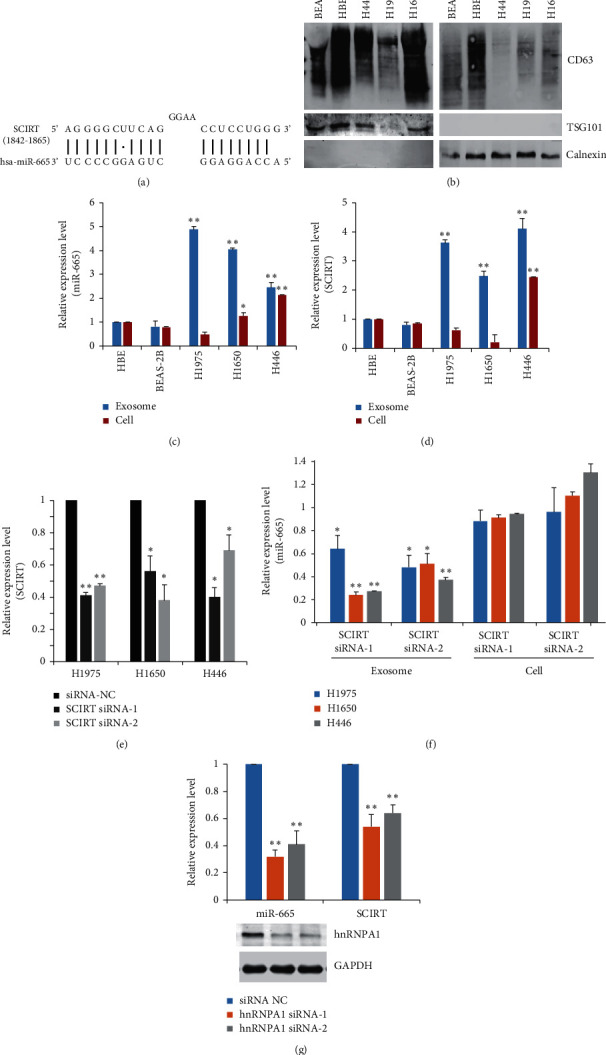
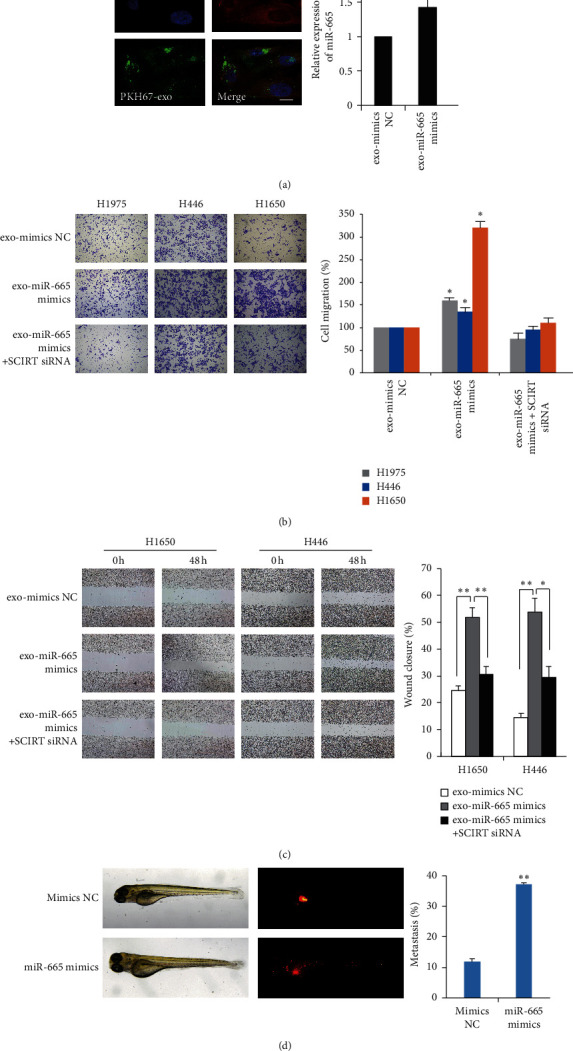
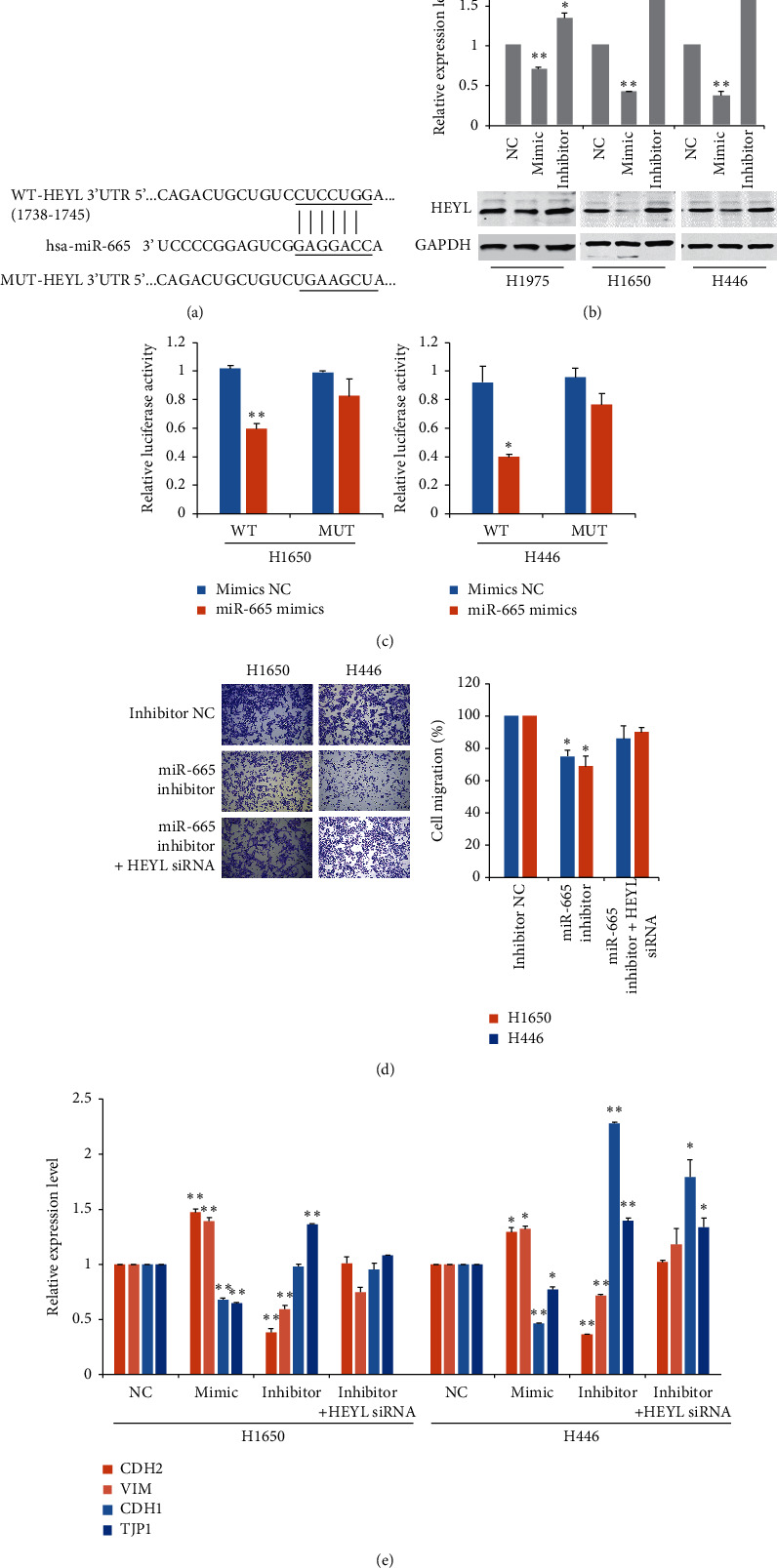
Lung cancer remains the leading cause of cancer-related death worldwide. Recently, extracellular vesicles such as exosomes have attracted considerable interest both as a source for theranostic biomarkers and an essential participant in lung cancer progression. However, how specific exosomal cargos, such as noncoding RNAs, are selectively packaged into exosomes and promote lung cancer progression remains unclear. In this study, we identified miR-665 as the most elevated exosomal miRNA from both non-small-cell lung cancer (NSCLC) and small-cell lung cancer (SCLC) patients. We further demonstrated that lncRNA SCIRT was also increased in cancer cell exosomes and may facilitate the exosomal loading of miR-665 with the help of hnRNPA1. As a consequence, exosomal miR-665 promoted lung cancer cell invasion and migration by targeting Notch downstream transcription factor HEYL. In addition, we found that miR-665 and SCIRT were significantly upregulated in tumor tissue and plasma of patients with lung cancer, and both of them showed increased expression in metastatic disease samples. Our findings suggest that the exosomal transferring of miR-665 and SCIRT is a functional and mechanism-driven pathway that contributes to cancer progression and, thus, may provide novel diagnostic and therapeutic targets for lung cancer.
肺癌仍然是全球癌症相关死亡的主要原因。最近,细胞外囊泡如外泌体作为治疗诊断生物标志物的来源以及肺癌进展的重要参与者引起了相当大的关注。然而,非编码RNA等特定外泌体货物如何被选择性地包装到外泌体中并促进肺癌进展仍不清楚。在本研究中,我们鉴定出miR-665是来自非小细胞肺癌(NSCLC)和小细胞肺癌(SCLC)患者的外泌体中升高最明显的miRNA。我们进一步证明lncRNA SCIRT在癌细胞外泌体中也增加,并且可能在hnRNPA1的帮助下促进miR-665的外泌体装载。因此,外泌体miR-665通过靶向Notch下游转录因子HEYL促进肺癌细胞的侵袭和迁移。此外,我们发现miR-665和SCIRT在肺癌患者的肿瘤组织和血浆中显著上调,并且它们在转移性疾病样本中均表现出表达增加。我们的研究结果表明,miR-665和SCIRT的外泌体转移是一条功能和机制驱动的途径,有助于癌症进展,因此可能为肺癌提供新的诊断和治疗靶点。