Department of Emergency Medicine, Faculty of Medicine, Chiang Mai University, Chiang Mai, 50200, Thailand.
Research Group of Embedded Systems and Mobile Application in Health Science, College of Arts, Media and Technology, Chiang Mai University, Chiang Mai, 50200, Thailand.
BMC Med Inform Decis Mak. 2020 Apr 9;20(1):66. doi: 10.1186/s12911-020-1075-6.
Before patients are admitted into the emergency department, it is important to undertake a pre-hospital process, both in terms of treatment performance and a request for resources from an emergency unit. The existing system to triage patients in Thailand is not functioning to its full capacity in either the primary medical system or pre-hospital treatment with shortcomings in the areas of speed, features, and appropriate systems. There is a high possibility of issuing a false Initial Dispatch Code (IDC), which will cause the over or underutilisation of emergency resources, such as rescue teams, community hospitals and emergency medical volunteers.
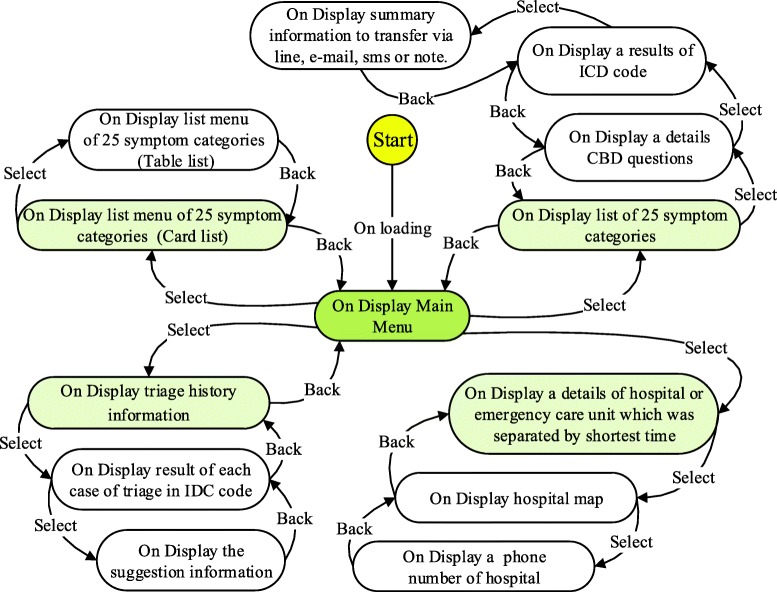
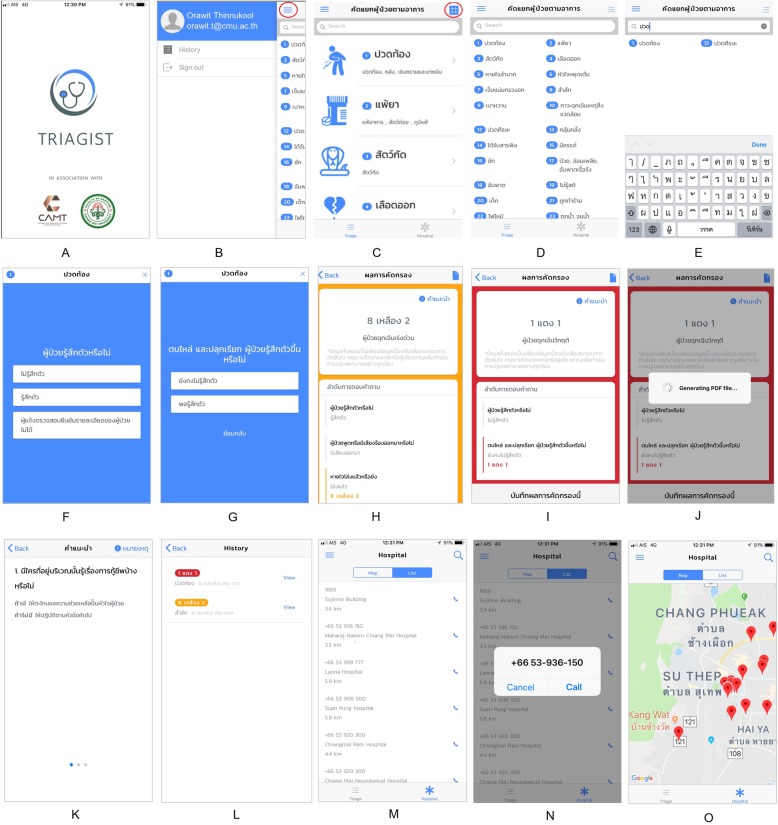
A usability system design, together with a reliability test, was applied to develop an application to optimise the pre-hospital process, specifically to sort patients, using an IDC to improve the request for emergency resources. The triage mobile application was developed on both iOS and Android operating systems to support patient triage based on Criteria Based Dispatch (CBD). The 25 main symptom categories covered by CBD were used to design and develop the application, and 12 emergency medical staff, including doctors and nurses, were asked to test the system in the aspects of triage protocol correction, triage reliability, usability and user satisfaction.
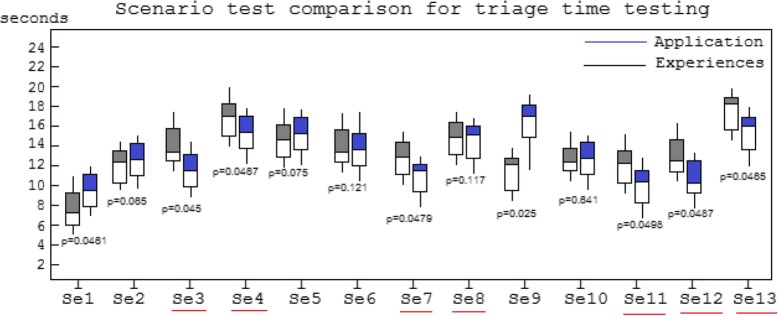
The results of testing the proposed triage application were compared with the time used to triage by experienced staff and it was found that, in non-trauma cases, it was faster and more effective to use the application for emergency operations and to correct the IDC code representation.
The triage application will be utilised to support the pre-hospital process and to classify patients' conditions before they are admitted to the Emergency Department (ED). The application is suitable for users who are not medical emergency staff. Patients with non-trauma symptoms may be a suitable group to use the application in terms of time used to identify IDC for their own symptoms. The use of the application can be beneficial for those who wish to self-identify their symptoms before requesting medical services.
在患者被收入急诊科之前,重要的是要在治疗表现和向急诊单位请求资源方面进行院前处理。泰国现有的患者分诊系统在初级医疗系统或院前治疗方面都没有充分发挥作用,存在速度、功能和适当系统方面的缺陷。发出错误初始调度代码 (IDC) 的可能性很高,这将导致过度或不足地利用紧急资源,如救援团队、社区医院和紧急医疗志愿者。
应用可用性系统设计和可靠性测试开发了一个应用程序,以优化院前流程,特别是使用 IDC 对患者进行分类,以改善对紧急资源的请求。分诊移动应用程序开发了适用于 iOS 和 Android 操作系统,以支持基于基于标准调度 (CBD) 的患者分诊。使用 CBD 涵盖的 25 个主要症状类别来设计和开发应用程序,并要求 12 名急诊医务人员,包括医生和护士,从分诊协议校正、分诊可靠性、可用性和用户满意度等方面测试系统。
将提出的分诊应用程序的测试结果与经验丰富的工作人员进行分诊所花费的时间进行了比较,结果发现,在非创伤病例中,使用该应用程序进行紧急操作和校正 IDC 代码表示更快、更有效。
分诊应用程序将用于支持院前流程并在患者被收入急诊科之前对其病情进行分类。该应用程序适合非医疗急救人员使用。具有非创伤症状的患者可能是适合使用该应用程序的群体,因为他们可以在识别自己症状的 IDC 方面节省时间。该应用程序的使用对于那些希望在请求医疗服务之前自行识别症状的人可能是有益的。