Palliative and Supportive Care Clinic, Institute of Oncology of Southern Switzerland and Ente Ospedaliero Cantonale, Bellinzona, Switzerland.
International Observatory on End of Life Care, Lancaster University, Lancaster, United Kingdom.
J Pain Symptom Manage. 2020 Jul;60(1):e27-e30. doi: 10.1016/j.jpainsymman.2020.03.030. Epub 2020 Apr 8.
The COVID-19 pandemic is spreading across the world. Many patients will not be suitable for mechanical ventilation owing to the underlying health conditions, and they will require a conservative approach including palliative care management for their important symptom burden.
To develop a management plan for patients who are not suitable for mechanical ventilation that is tailored to the stage their COVID-19 disease.
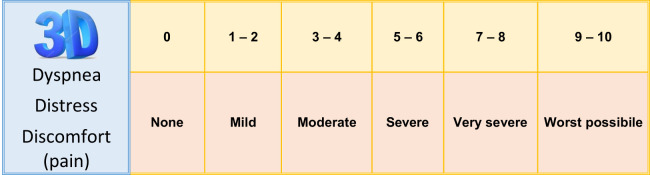
Patients were identified as being stable, unstable, or at the end of life using the early warning parameters for COVID-19. Furthermore, a COVID-19-specific assessment tool was developed locally, focusing on key symptoms observed in this population which assess dyspnoea, distress, and discomfort. This tool helped to guide the palliative care management as per patients' disease stage.
A management plan for all patients' (stable, unstable, end of life) was created and implemented in acute hospitals. Medication guidelines were based on the limitations in resources and availability of drugs. Staff members who were unfamiliar with palliative care required simple, clear instructions to follow including medications for key symptoms such as dyspnoea, distress, fever, and discomfort. Nursing interventions and family involvement were adapted as per patients' disease stage and infection control requirements.
Palliative care during the COVID-19 pandemic needs to adapt to an emergency style of palliative care as patients can deteriorate rapidly and require quick decisions and clear treatment plans. These need to be easily followed up by generalist staff members caring for these patients. Furthermore, palliative care should be at the forefront to help make the best decisions, give care to families, and offer spiritual support.
COVID-19 疫情正在全球蔓延。许多患者由于基础健康状况,不适合进行机械通气,他们需要采用保守方法,包括姑息治疗管理来缓解重要的症状负担。
制定一个不适合机械通气患者的管理计划,该计划根据 COVID-19 疾病的阶段量身定制。
使用 COVID-19 的早期预警参数来确定患者是稳定、不稳定还是生命末期。此外,还在当地开发了一种 COVID-19 特定评估工具,重点关注该人群中观察到的关键症状,包括呼吸困难、痛苦和不适。该工具有助于根据患者的疾病阶段指导姑息治疗管理。
为所有患者(稳定、不稳定、生命末期)创建并实施了急性医院的管理计划。药物治疗指南基于资源限制和药物可用性。不熟悉姑息治疗的工作人员需要遵循简单、明确的指示,包括治疗呼吸困难、痛苦、发热和不适等关键症状的药物。根据患者的疾病阶段和感染控制要求,调整护理干预措施和家庭参与。
COVID-19 大流行期间的姑息治疗需要适应紧急姑息治疗风格,因为患者可能会迅速恶化,需要快速决策和明确的治疗计划。这些需要由照顾这些患者的全科工作人员轻松跟进。此外,姑息治疗应处于前沿,以帮助做出最佳决策、为家庭提供关怀并提供精神支持。