Park Joo Hyun, Kim Hee-Bok, Ko Seo Hyun, Kim Bo Hae, Lim Yun-Sung, Park Seok-Won, Song Jae-Jun, Cho Chang Gun
Department of Otorhinolaryngology-Head and Neck Surgery, Dongguk University Ilsan Hospital, Dongguk University College of Medicine, Goyang, Korea.
Sensory Organ Research Institute, Dongguk University College of Medicine, Gyeongju, Korea.
Clin Exp Otorhinolaryngol. 2020 Nov;13(4):381-388. doi: 10.21053/ceo.2019.01753. Epub 2020 Apr 13.
Human amniotic membrane extract (AME) is known to contain numerous bioactive factors and anti-inflammatory substances. However, the anti-inflammatory effects of AME on the middle ear (ME) mucosa are unclear. This study assessed the effects of AME on the growth of the ME mucosa in response to bacterially-induced otitis media (OM).
OM was induced by inoculating nontypeable Haemophilus influenzae (NTHi) into the ME cavity of rats. ME mucosal explants were cultured in AME concentrations of 0, 5, 10, or 50 μg/mL. The area of explant outgrowth was measured in culture and analyzed at 1, 3, 5, and 7 days after explantation. The expression of Ki-67, mucin 5AC (MUC5AC), tumor necrosis factor-α (TNF-α), and interleukin-10 (IL-10) in the explants was also evaluated using quantitative polymerase chain reaction (PCR) and immunocytochemistry (ICC).
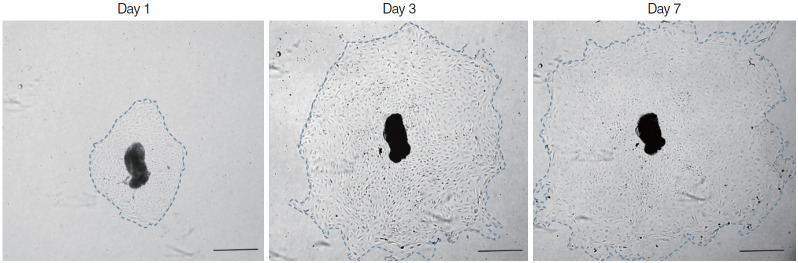
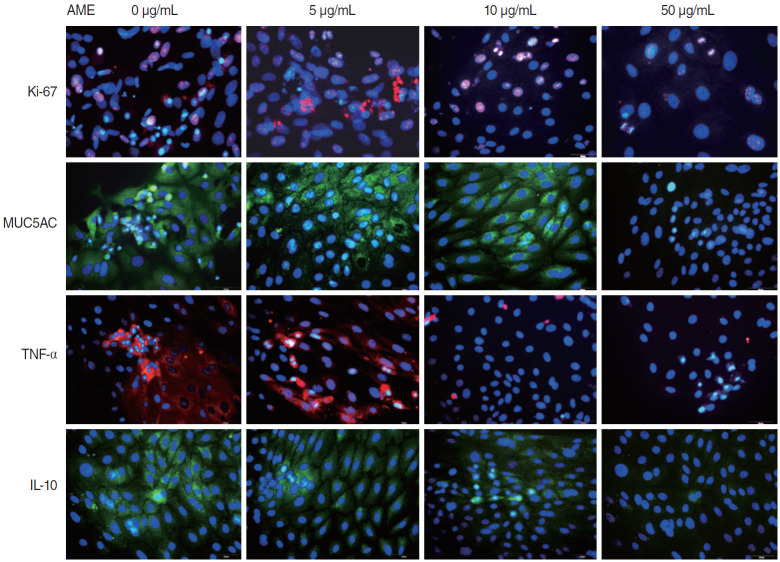
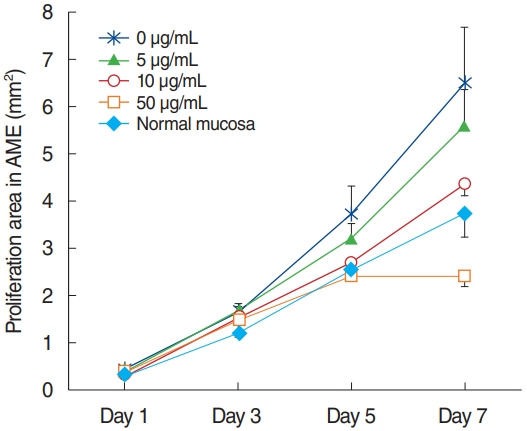
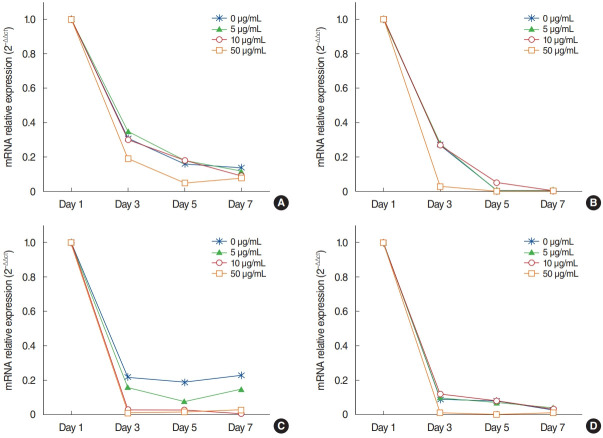
The NTHi-induced ME mucosa growth increased gradually over the 7-day culture period in all explants at different AME concentrations. There was a trend for mucosal growth inhibition at higher concentrations of AME, although the growth was not significantly different among the groups until day 5. The ME mucosal explants treated with the 50 μg/mL concentration of AME showed significantly suppressed growth on postexplantation day 7 compared with other explants on the same day. PCR and ICC staining revealed that the expression of Ki-67, MUC5AC, TNF-α, and IL-10 further decreased in the explants with higher concentrations of AME than in those with lower concentrations of AME.
Our results showed that higher concentrations of AME reduced the mucosal proliferative response in bacterial OM in rats. These findings provide evidence that AME has an influence on the inflammatory and proliferative responses to NTHi infection in ME mucosa.
已知人羊膜提取物(AME)含有多种生物活性因子和抗炎物质。然而,AME对中耳(ME)黏膜的抗炎作用尚不清楚。本研究评估了AME对细菌诱导的中耳炎(OM)时ME黏膜生长的影响。
通过将不可分型流感嗜血杆菌(NTHi)接种到大鼠的ME腔中来诱导OM。将ME黏膜外植体在浓度为0、5、10或50μg/mL的AME中培养。在培养过程中测量外植体生长面积,并在植入后1、3、5和7天进行分析。还使用定量聚合酶链反应(PCR)和免疫细胞化学(ICC)评估外植体中Ki-67、粘蛋白5AC(MUC5AC)、肿瘤坏死因子-α(TNF-α)和白细胞介素-10(IL-10)的表达。
在不同AME浓度下,所有外植体在7天培养期内,NTHi诱导的ME黏膜生长均逐渐增加。在较高浓度的AME下存在黏膜生长抑制趋势,尽管直到第5天各实验组之间的生长无显著差异。与同一天的其他外植体相比,用50μg/mL浓度AME处理的ME黏膜外植体在植入后第7天显示出明显的生长抑制。PCR和ICC染色显示,与低浓度AME处理的外植体相比,高浓度AME处理的外植体中Ki-67、MUC5AC、TNF-α和IL-10的表达进一步降低。
我们的结果表明,较高浓度的AME可降低大鼠细菌性OM中的黏膜增殖反应。这些发现提供了证据,表明AME对ME黏膜中NTHi感染的炎症和增殖反应有影响。