Center for Cancer Research and Therapeutic Development, Clark Atlanta University, Atlanta, GA 30314, USA.
Department of Biological Sciences, Clark Atlanta University, Atlanta, GA 30314, USA.
Cells. 2020 Apr 9;9(4):919. doi: 10.3390/cells9040919.
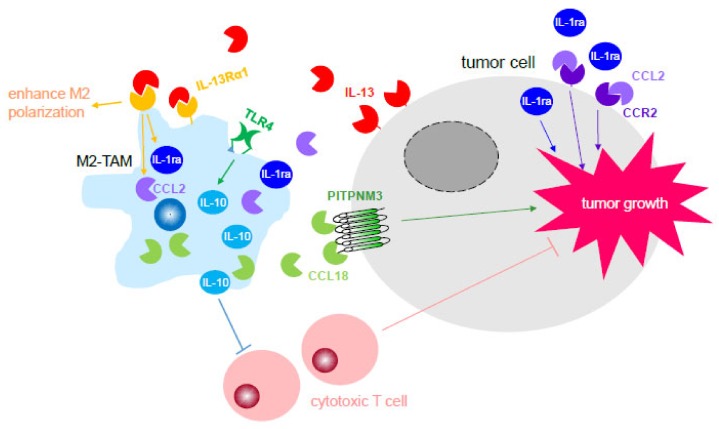
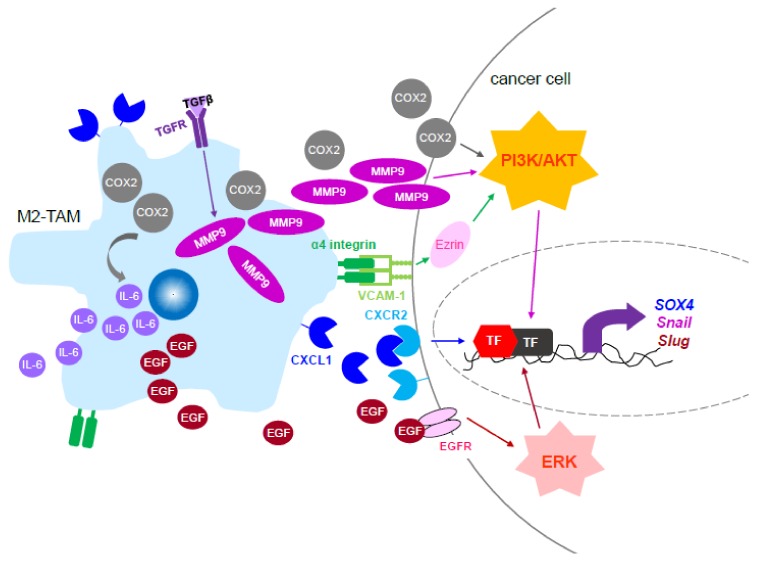
The immune response is critical in the maintenance of an organism's health. The immune response can be broken down into two groups. The innate response, which is fast-acting and rids the body of most foreign material before infection occurs, and the adaptive response, a more specific defense against pathogen composed mostly of antibody production and killer cells. Linking the two responses via cytokine and chemokine secretion are macrophages, motile phagocytic cells that ingest and present foreign material playing a role in the innate and adaptive immune response. Although macrophages are necessary for the survival of an organism, studies have also shown macrophages play a more sinister role in the initiation, progression, and metastasis in tumorous cells. In this comprehensive review, we show how macrophages induce such a response through abnormal cellular signaling and creating a cellular microenvironment conducive for tumor growth and metastasis, as well as the future outlook of this field.
免疫反应对于维持生物体的健康至关重要。免疫反应可以分为两类:先天反应,它作用迅速,在感染发生之前清除体内的大多数外来物质;以及适应性反应,这是一种针对病原体的更特异性防御,主要由抗体产生和杀伤细胞组成。巨噬细胞通过细胞因子和趋化因子的分泌将这两种反应联系起来,巨噬细胞是一种游走的吞噬细胞,可吞噬和呈现外来物质,在先天和适应性免疫反应中发挥作用。虽然巨噬细胞对生物体的生存是必要的,但研究也表明,巨噬细胞在肿瘤细胞的起始、进展和转移中起着更为险恶的作用。在这篇全面的综述中,我们展示了巨噬细胞如何通过异常的细胞信号转导诱导这种反应,并创造有利于肿瘤生长和转移的细胞微环境,以及该领域的未来展望。