Golubkina Nadezhda A, Kharchenko Viktor A, Moldovan Anastasia I, Koshevarov Andrey A, Zamana Svetlana, Nadezhkin Sergey, Soldatenko Alexey, Sekara Agnieszka, Tallarita Alessio, Caruso Gianluca
Federal Scientific Center of Vegetable Production, Selectsionnaya 14, Vniissok, Odintsovo district, Moscow region 143072, Russia.
State University of Land Management, Kazakova str. 15, 10506 Moscow, Russia.
Plants (Basel). 2020 Apr 9;9(4):484. doi: 10.3390/plants9040484.
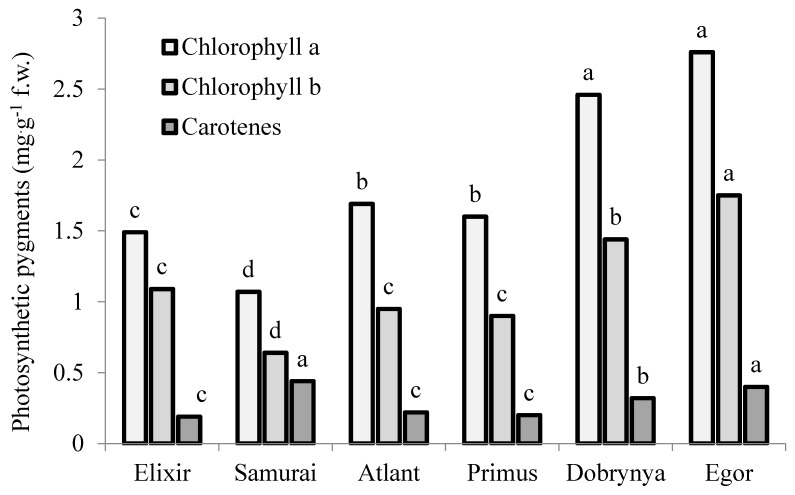
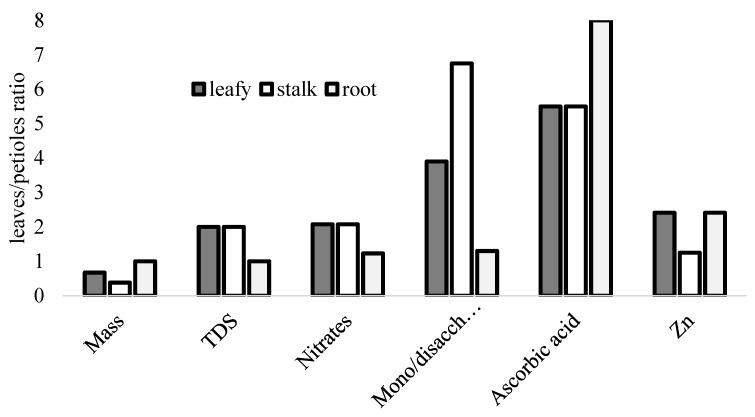
Celery is one of the major nutraceutical vegetable species due to the high dietary and medicinal properties of all of its plant parts. Yield, growth and produce quality of six celery genotypes belonging to leafy (Elixir and Samurai), stalk (Atlant and Primus) or root (Egor and Dobrynya) types, as well as the distribution of biomass, sugars, mineral elements and antioxidants among the different plant parts, were assessed. Within the celery root type, cultivar Dobrynya resulted in higher yield than Egor, whereas the genotype did not significantly affect the marketable plant part production of leafy and stalk types. Leaf/petiole ratios relevant to biomass, total dissolved solids, sugars, ascorbic acid, flavonoids, antioxidant activity and ash, K, Zn, Fe, Mn, Cu and Se content were significantly affected by the celery type examined. Ash content was highest in the leaves and lowest in the roots. Celery antioxidant system was characterized by highly significant relationships between ascorbic acid, polyphenols, flavonoids, antioxidant activity and Zn. Among the celery types analyzed, the highest values of chlorophyll, Fe and Mn content as well as antioxidant activity were recorded in leaves from root genotypes, which suggests interesting nutraceutical prospects of the aforementioned plant parts for human utilization.
芹菜是主要的营养蔬菜品种之一,因为其所有植物部分都具有很高的食用和药用价值。对六种芹菜基因型进行了评估,它们分别属于叶用型(灵丹妙药和武士)、茎用型(亚特兰大和平原)或根用型(叶戈尔和多布廖尼亚),评估内容包括产量、生长情况、产品质量,以及不同植物部分之间生物量、糖类、矿物质元素和抗氧化剂的分布。在根用型芹菜中,多布廖尼亚品种的产量高于叶戈尔,而该基因型对叶用型和茎用型芹菜可上市的植物部分产量没有显著影响。所检测的芹菜类型对与生物量、总溶解固体、糖类、抗坏血酸、黄酮类化合物、抗氧化活性以及灰分、钾、锌、铁、锰、铜和硒含量相关的叶/叶柄比率有显著影响。灰分含量在叶片中最高,在根部最低。芹菜抗氧化系统的特征是抗坏血酸、多酚、黄酮类化合物、抗氧化活性与锌之间存在高度显著的关系。在分析的芹菜类型中,根用型基因型叶片中的叶绿素、铁和锰含量以及抗氧化活性值最高,这表明上述植物部分在人类利用方面具有有趣的营养前景。