Department of Clinical Laboratories Science, The Faculty of Applied Medical Sciences, Taif University, Taif, Saudi Arabia.
Addiction and Neuroscience Research Unit, Taif University, Taif, Saudi Arabia.
Sci Rep. 2020 Apr 14;10(1):6272. doi: 10.1038/s41598-020-62925-9.
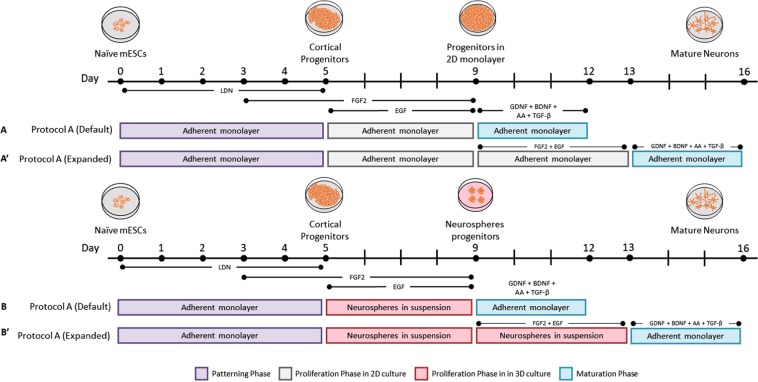
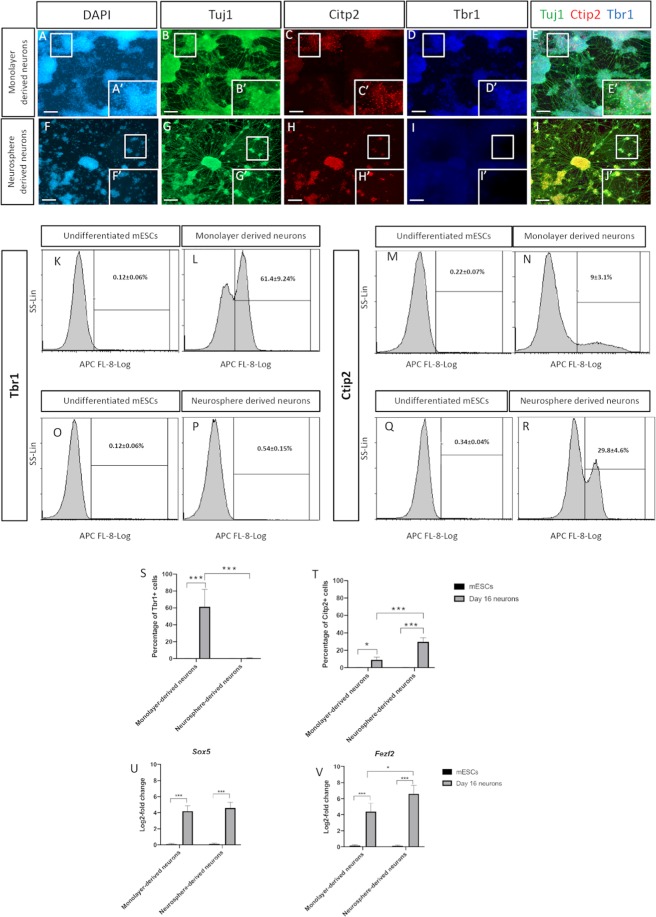
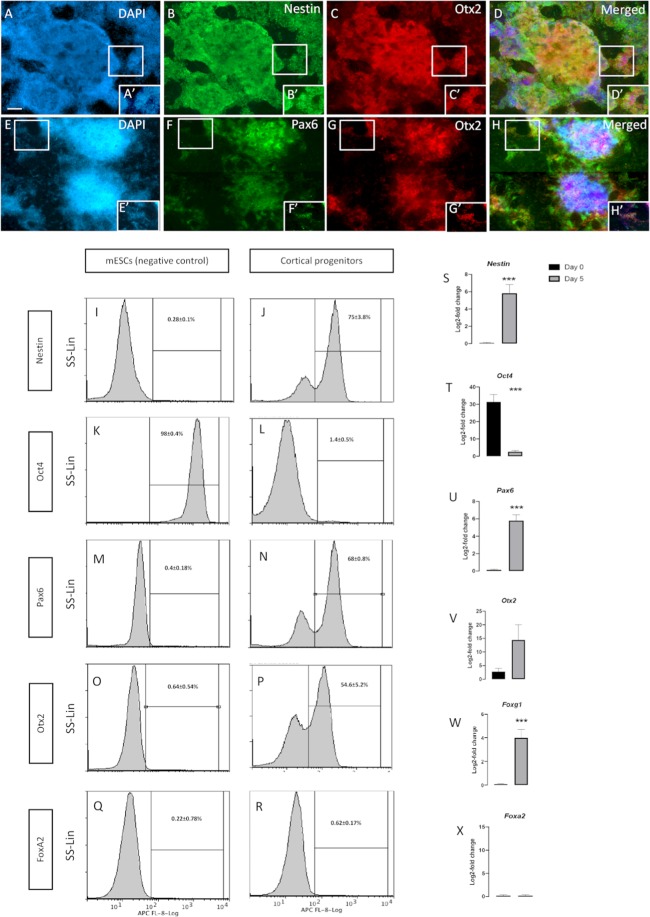
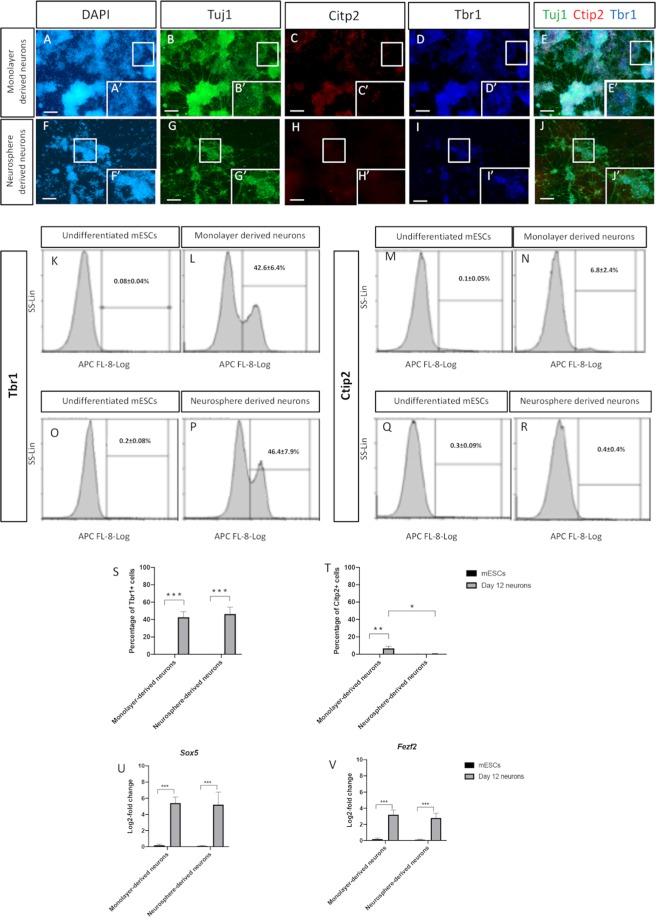
Embryonic stem cells (ESCs) can be used to derive different neural subtypes. Current differentiation protocols generate heterogeneous neural subtypes rather than a specific neuronal population. Here, we present a protocol to derive separate two-deep layer cortical neurons from mouse ESCs (mESCs). mESCs were differentiated into mature Tbr1 or Ctip2-positive neurons using a monolayer-based culture for neural induction and neurosphere-based culture for neural proliferation and expansion. The differentiation protocol relies on SMAD inhibition for neural induction and the use of FGF2 and EGF for proliferation and it is relatively short as mature neurons are generated between differentiation days 12-16. Compared with the monolayer-based differentiation method, mESCs can be directed to generate specific deep-layer cortical neurons rather than heterogeneous cortical neurons that are generated using the monolayer differentiation culture. The early analysis of progenitors using flow cytometry, immunocytochemistry, and qRT-PCR showed high neuralization efficiency. The immunocytochemistry and flow cytometry analyses on differentiation days 12 and 16 showed cultures enriched in Tbr1- and Ctip2-positive neurons, respectively. Conversely, the monolayer differentiation culture derived a mixture of Tbr1 and Ctip2 mature neurons. Our findings suggested that implementing a neurosphere-based culture enabled directing neural progenitors to adopt a specific cortical identity. The generated progenitors and neurons can be used for neural-development investigation, drug testing, disease modelling, and examining novel cellular replacement therapy strategies.
胚胎干细胞(ESCs)可用于衍生不同的神经亚型。目前的分化方案生成的是异质的神经亚型,而不是特定的神经元群体。在这里,我们提出了一种从小鼠胚胎干细胞(mESCs)中衍生出单独的两层皮质神经元的方案。通过基于单层培养的神经诱导和基于神经球的培养进行神经增殖和扩增,将 mESCs 分化为成熟的 Tbr1 或 Ctip2 阳性神经元。分化方案依赖于 SMAD 抑制进行神经诱导,并使用 FGF2 和 EGF 进行增殖,分化过程相对较短,因为成熟神经元在分化第 12-16 天之间产生。与基于单层的分化方法相比,mESCs 可以被定向产生特定的深层皮质神经元,而不是使用单层分化培养产生的异质皮质神经元。使用流式细胞术、免疫细胞化学和 qRT-PCR 对前体细胞进行的早期分析显示出高神经化效率。在分化第 12 天和第 16 天的免疫细胞化学和流式细胞术分析显示,培养物分别富含 Tbr1 和 Ctip2 阳性神经元。相反,单层分化培养产生了 Tbr1 和 Ctip2 成熟神经元的混合物。我们的研究结果表明,实施基于神经球的培养可以使神经前体细胞采用特定的皮质特征。所产生的祖细胞和神经元可用于神经发育研究、药物测试、疾病建模以及检查新的细胞替代治疗策略。