Tea Research Institute of Chinese Academy of Agricultural Sciences, Key Laboratory of Tea Biology and Resources Utilization, Ministry of Agriculture and Rural Affairs, 9 South Meiling Road, Hangzhou, Zhejiang, 310008, China.
Sci Rep. 2020 Apr 14;10(1):6286. doi: 10.1038/s41598-020-62859-2.
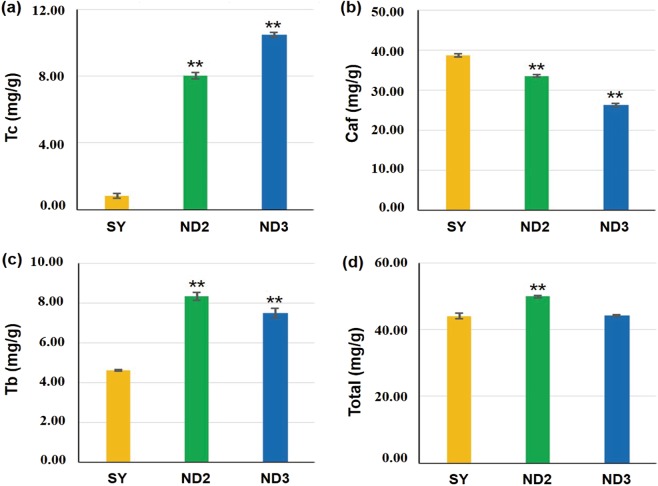
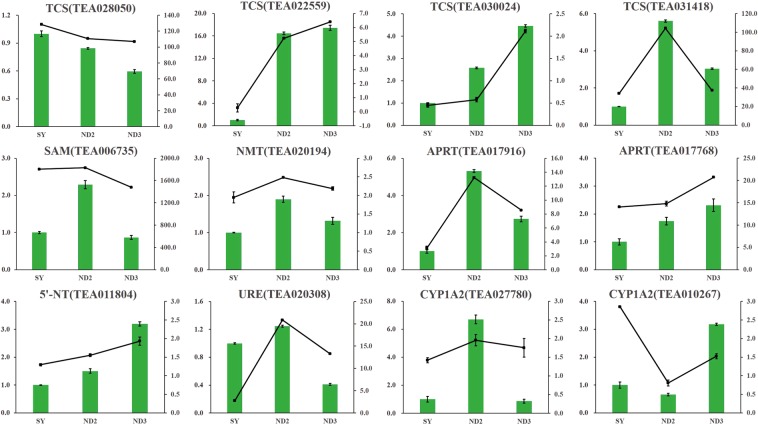
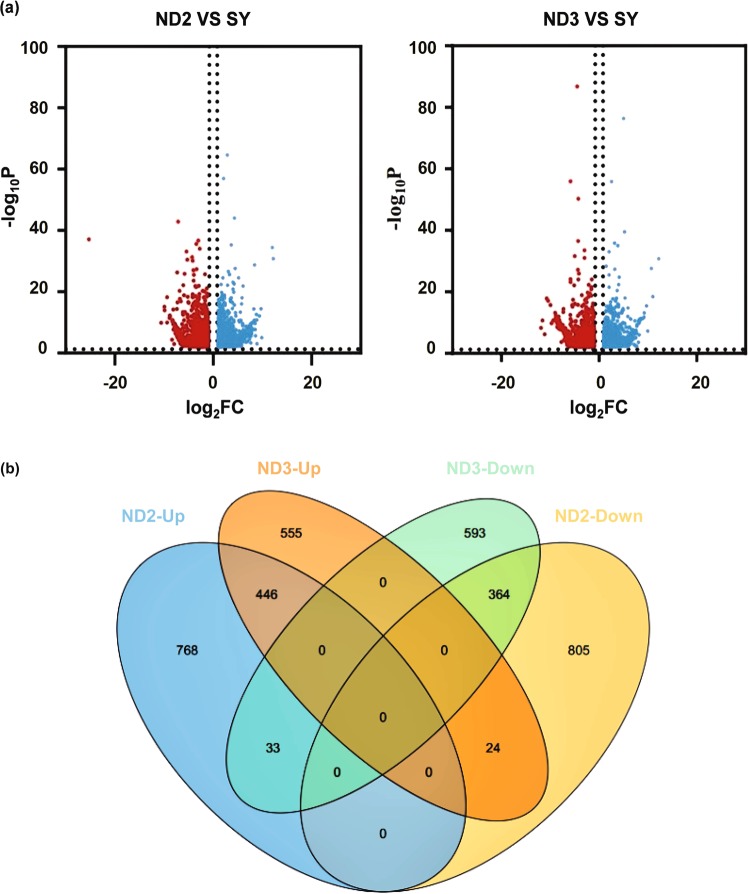
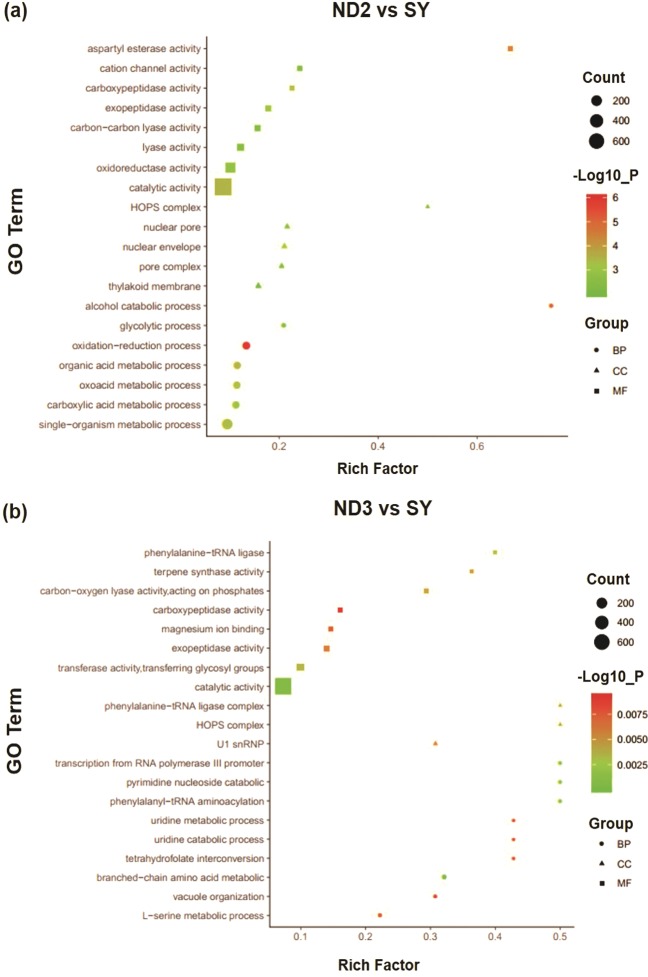
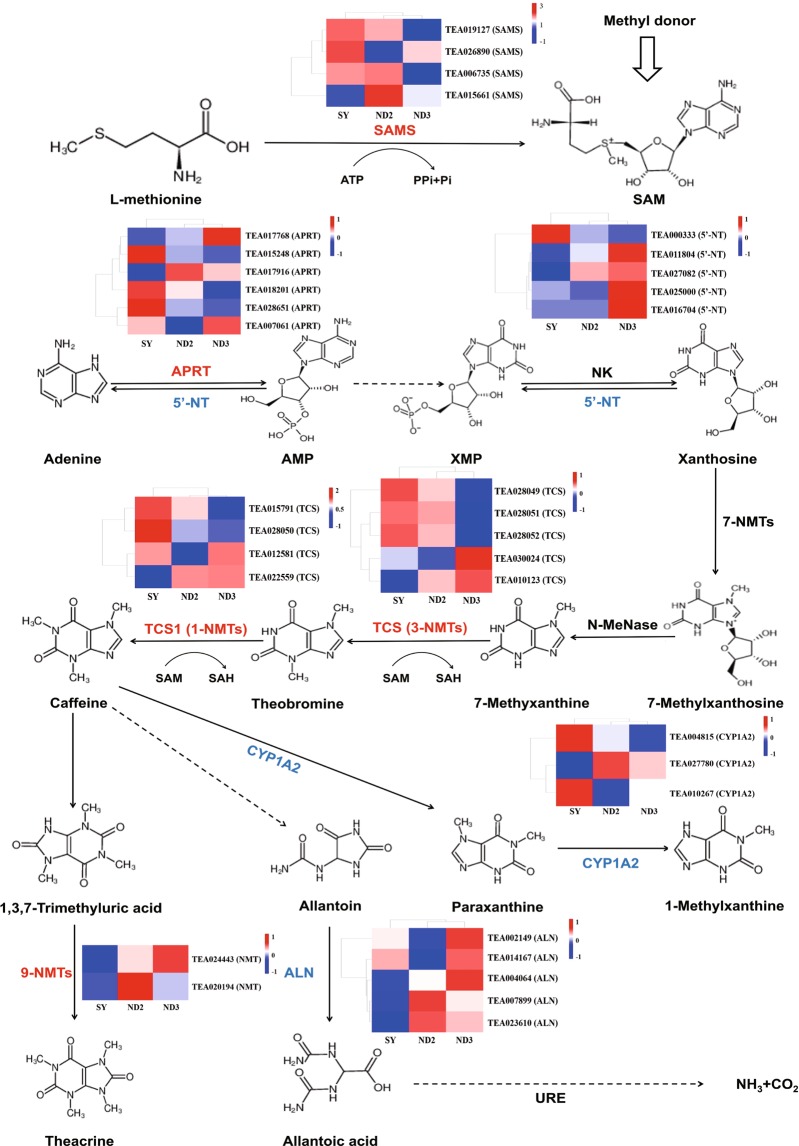
Kucha (Camellia sinensis) is a kind of unique wild tea resources in southwest China, containing sizeable amounts of theacrine (1,3,7,9-tetramethyluric acid) and having a special bitter taste both in fresh leaves and made tea. Theacrine has good healthy function locally. But the molecular mechanism of theacrine metabolism in Kucha was still unclear. In order to illuminate the biosynthesis and catabolism of theacrine in Kucha plants, three tea cultivars, C. sinensis 'Shangyou Zhongye' (SY) with low-theacrine, 'Niedu Kucha 2' (ND2) with middle-theacrine and, 'Niedu Kucha 3' (ND3) with high-theacrine, were used for our research. Purine alkaloid analysis and transcriptome of those samples were performed by High Performance Liquid Chromatography (HPLC) and RNA-Seq, respectively. The related gene expression levels of purine alkaloid were correlated with the content of purine alkaloid, and the results of quantitative real-time (qRT) PCR were also confirmed the reliability of transcriptome. Based on the data, we found that theacrine biosynthesis is a relatively complex process, N-methyltransferase (NMT) encoded by TEA024443 may catalyze the methylation at 9-N position in Kucha plant. Our finding will assist to reveal the molecular mechanism of theacrine biosynthesis, and be applied to selection and breeding of Kucha tea cultivars in the future.
苦茶(Camellia sinensis)是中国西南地区特有的一种野生茶资源,含有相当数量的可可因(1,3,7,9-四甲基尿酸),其鲜叶和制成的茶叶均具有特殊的苦味。可可因在当地具有良好的健康功能。但苦茶中可可因代谢的分子机制尚不清楚。为了阐明苦茶植物中可可因的生物合成和分解代谢,我们使用了三个茶树品种,可可因含量低的 C. sinensis 'Shangyou Zhongye'(SY)、可可因含量中等的 'Niedu Kucha 2'(ND2)和可可因含量高的 'Niedu Kucha 3'(ND3)进行研究。通过高效液相色谱法(HPLC)和 RNA-Seq 分别对嘌呤生物碱分析和这些样品的转录组进行了分析。嘌呤生物碱相关基因的表达水平与嘌呤生物碱的含量相关,定量实时(qRT)PCR 的结果也证实了转录组的可靠性。基于这些数据,我们发现可可因的生物合成是一个相对复杂的过程,TEA024443 编码的 N-甲基转移酶(NMT)可能在苦茶植物中催化 9-N 位的甲基化。我们的发现将有助于揭示可可因生物合成的分子机制,并应用于未来苦茶茶树品种的选择和培育。