Mahidol-Oxford Tropical Medicine Research Unit (MORU), Faculty of Tropical Medicine, Mahidol University, Bangkok, Thailand.
Centre for Tropical Medicine and Global Health, Nuffield Department of Clinical Medicine, University of Oxford, Oxford, United Kingdom.
PLoS Negl Trop Dis. 2020 Apr 14;14(4):e0008233. doi: 10.1371/journal.pntd.0008233. eCollection 2020 Apr.
Scrub typhus is a major cause of acute febrile illness in the tropics and is endemic over large areas of the Asia Pacific region. The national and global burden of scrub typhus remains unclear due to limited data and difficulties surrounding diagnosis.
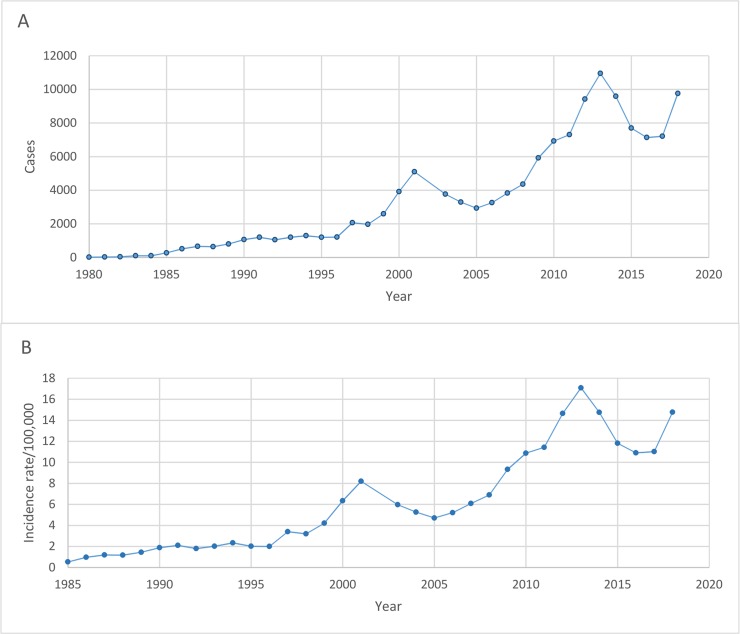
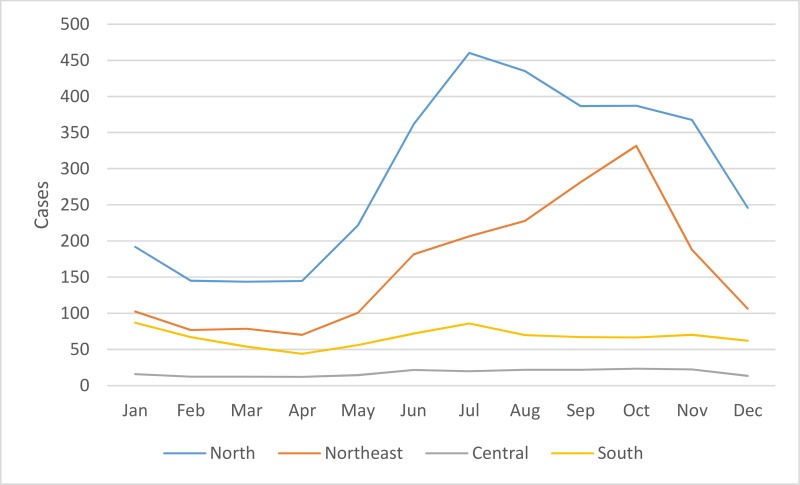
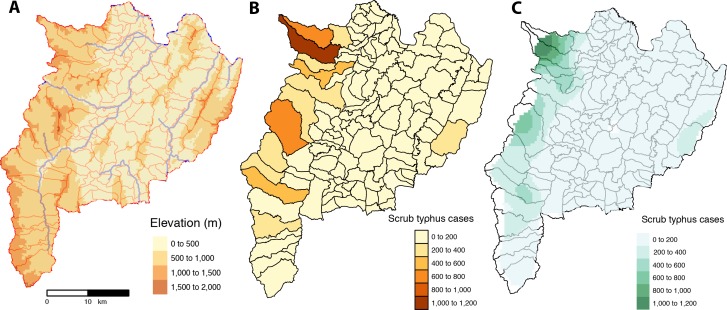
METHODOLOGY/PRINCIPAL FINDINGS: Scrub typhus reporting data from 2003-2018 were collected from the Thai national disease surveillance system. Additional information including the district, sub-district and village of residence, population, geographical, meteorological and satellite imagery data were also collected for Chiangrai, the province with the highest number of reported cases from 2003-2018. From 2003-2018, 103,345 cases of scrub typhus were reported with the number of reported cases increasing substantially over the observed period. There were more men than women, with agricultural workers the main occupational group affected. The majority of cases occurred in the 15-64 year old age group (72,144/99,543, 72%). Disease burden was greatest in the northern region, accounting for 53% of the total reported cases per year (mean). In the northern region, five provinces-Chiangrai, Chiangmai, Tak, Nan and Mae Hong Son-accounted for 84% (46,927/55,872) of the total cases from the northern region or 45% (46,927/103,345) of cases nationally. The majority of cases occurred from June to November but seasonality was less marked in the southern region. In Chiangrai province, elevation, rainfall, temperature, population size, habitat complexity and diversity of land cover contributed to scrub typhus incidence.
The burden of scrub typhus in Thailand is high with disease incidence rising significantly over the last two decades. However, disease burden is not uniform with northern provinces particularly affected. Agricultural activity along with geographical, meteorological and land cover factors are likely to contribute to disease incidence. Our report, along with existing epidemiological data, suggests that scrub typhus is the most clinically important rickettsial disease globally.
恙虫病是热带地区急性发热性疾病的主要病因,在亚太地区的大片地区流行。由于数据有限以及诊断困难,恙虫病的国家和全球负担仍不清楚。
方法/主要发现:从 2003 年至 2018 年,从泰国国家疾病监测系统收集了恙虫病报告数据。还收集了 2003 年至 2018 年报告病例最多的清莱府的居住地区、分区和村庄、人口、地理、气象和卫星图像数据等其他信息。2003 年至 2018 年,报告了 103345 例恙虫病病例,观察期间报告病例数大幅增加。男性多于女性,受影响的主要职业群体是农业工人。大多数病例发生在 15 至 64 岁年龄组(72144/99543,72%)。北部地区的疾病负担最大,占每年报告病例总数的 53%(平均)。在北部地区,清莱、清迈、达府、难府和夜丰颂府五个省占北部地区报告病例总数的 84%(46927/55872)或全国病例总数的 45%(46927/103345)。大多数病例发生在 6 月至 11 月,但南部地区的季节性不太明显。在清莱府,海拔、降雨量、温度、人口规模、生境复杂性和土地覆盖多样性都与恙虫病发病率有关。
泰国的恙虫病负担很高,过去二十年来发病率显著上升。然而,疾病负担并不均匀,北部省份受影响尤为严重。农业活动以及地理、气象和土地覆盖因素可能导致疾病发病率上升。我们的报告以及现有的流行病学数据表明,恙虫病是全球临床上最重要的立克次体病。