• 文献检索
  • 文档翻译
  • 深度研究
  • 学术资讯
  • Suppr Zotero 插件Zotero 插件
  • 邀请有礼
  • 套餐&价格
  • 历史记录
应用&插件
Suppr Zotero 插件Zotero 插件浏览器插件Mac 客户端Windows 客户端微信小程序
定价
高级版会员购买积分包购买API积分包
服务
文献检索文档翻译深度研究API 文档MCP 服务
关于我们
关于 Suppr公司介绍联系我们用户协议隐私条款
关注我们

Suppr 超能文献

核心技术专利:CN118964589B侵权必究
粤ICP备2023148730 号-1Suppr @ 2026

文献检索

告别复杂PubMed语法,用中文像聊天一样搜索,搜遍4000万医学文献。AI智能推荐,让科研检索更轻松。

立即免费搜索

文件翻译

保留排版,准确专业,支持PDF/Word/PPT等文件格式,支持 12+语言互译。

免费翻译文档

深度研究

AI帮你快速写综述,25分钟生成高质量综述,智能提取关键信息,辅助科研写作。

立即免费体验

基于可穿戴物联网传感器的用于识别和控制基孔肯雅病毒的医疗保健系统。

Wearable IoT sensor based healthcare system for identifying and controlling chikungunya virus.

作者信息

Sood Sandeep K, Mahajan Isha

机构信息

Department of Computer Science and Engineering, GNDU, Regional Campus, Gurdaspur, Punjab, India.

出版信息

Comput Ind. 2017 Oct;91:33-44. doi: 10.1016/j.compind.2017.05.006. Epub 2017 Jun 10.

DOI:10.1016/j.compind.2017.05.006
PMID:32287550
原文链接:https://pmc.ncbi.nlm.nih.gov/articles/PMC7114341/
Abstract

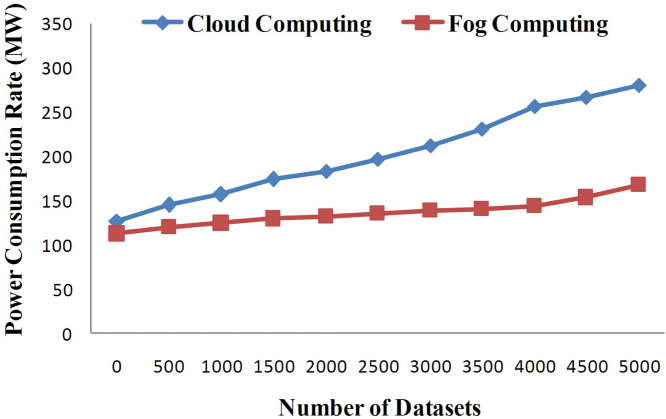
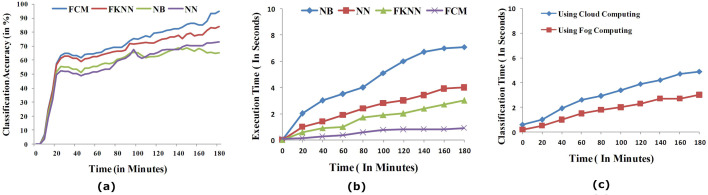
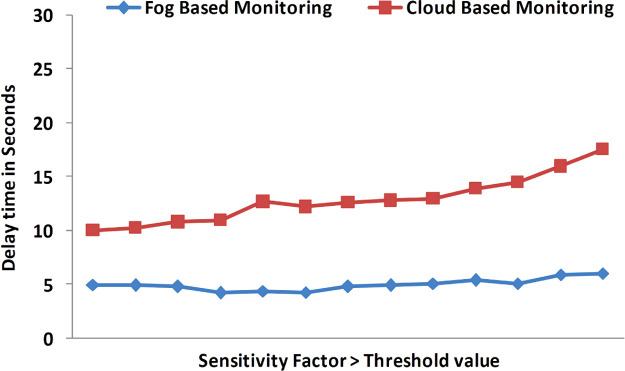
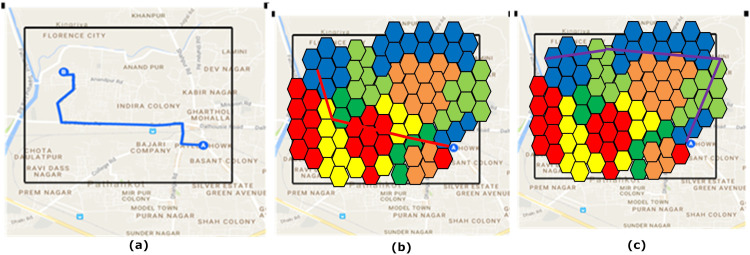
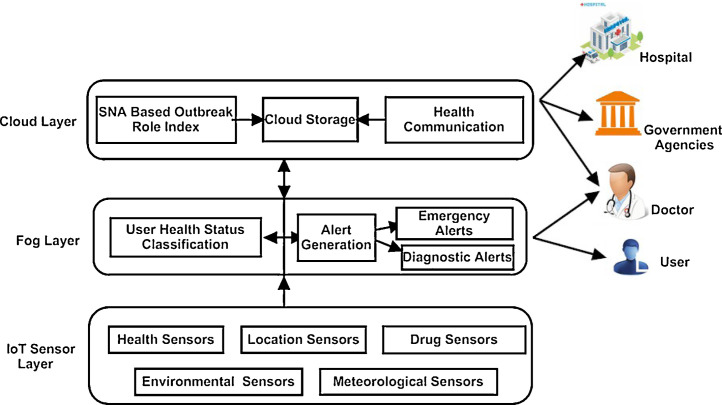
Chikungunya is a vector borne disease that spreads quickly in geographically affected areas. Its outbreak results in acute illness that may lead to chronic phase. Chikungunya virus (CHV) diagnosis solutions are not easily accessible and affordable in developing countries. Also old approaches are very slow in identifying and controlling the spread of CHV outbreak. The sudden development and advancement of wearable internet of things (IoT) sensors, fog computing, mobile technology, cloud computing and better internet coverage have enhanced the quality of remote healthcare services. IoT assisted fog health monitoring system can be used to identify possibly infected users from CHV in an early phase of their illness so that the outbreak of CHV can be controlled. Fog computing provides many benefits such as low latency, minimum response time, high mobility, enhanced service quality, location awareness and notification service itself at the edge of the network. In this paper, IoT and fog based healthcare system is proposed to identify and control the outbreak of CHV. Fuzzy-C means (FCM) is used to diagnose the possibly infected users and immediately generate diagnostic and emergency alerts to users from fog layer. Furthermore on cloud server, social network analysis (SNA) is used to represent the state of CHV outbreak. Outbreak role index is calculated from SNA graph which represents the probability of any user to receive or spread the infection. It also generates warning alerts to government and healthcare agencies to control the outbreak of CHV in risk prone or infected regions. The experimental results highlight the advantages of using both fog computing and cloud computing services together for achieving network bandwidth efficiency, high quality of service and minimum response time in generation of real time notification as compared to a cloud only model.

摘要

基孔肯雅热是一种通过病媒传播的疾病,在受影响地区传播迅速。其爆发会导致急性疾病,可能会发展为慢性阶段。在发展中国家,基孔肯雅病毒(CHV)诊断解决方案不易获得且价格昂贵。此外,传统方法在识别和控制CHV疫情传播方面非常缓慢。可穿戴物联网(IoT)传感器、雾计算、移动技术、云计算以及更好的网络覆盖的突然发展和进步,提高了远程医疗服务的质量。物联网辅助的雾健康监测系统可用于在疾病早期识别可能感染CHV的用户,从而控制CHV的爆发。雾计算具有许多优点,如低延迟、最短响应时间、高移动性、增强的服务质量、位置感知以及在网络边缘的通知服务本身。本文提出了基于物联网和雾的医疗系统来识别和控制CHV的爆发。模糊C均值(FCM)用于诊断可能感染的用户,并立即从雾层向用户生成诊断和紧急警报。此外,在云服务器上,社交网络分析(SNA)用于表示CHV爆发的状态。从SNA图计算爆发角色指数,该指数表示任何用户接收或传播感染的概率。它还会向政府和医疗机构发出警告警报,以控制高风险或受感染地区的CHV爆发。实验结果突出了与仅使用云模型相比,同时使用雾计算和云计算服务在实现网络带宽效率、高服务质量以及生成实时通知的最短响应时间方面的优势。
https://cdn.ncbi.nlm.nih.gov/pmc/blobs/3347/7114341/99d1178673cf/gr6_lrg.jpg
https://cdn.ncbi.nlm.nih.gov/pmc/blobs/3347/7114341/6c918101cf5b/gr1_lrg.jpg
https://cdn.ncbi.nlm.nih.gov/pmc/blobs/3347/7114341/1632fda15f3a/gr2_lrg.jpg
https://cdn.ncbi.nlm.nih.gov/pmc/blobs/3347/7114341/aafa34667a75/gr3_lrg.jpg
https://cdn.ncbi.nlm.nih.gov/pmc/blobs/3347/7114341/a20a66ace5f0/gr4_lrg.jpg
https://cdn.ncbi.nlm.nih.gov/pmc/blobs/3347/7114341/d463ccbe4ab6/gr5_lrg.jpg
https://cdn.ncbi.nlm.nih.gov/pmc/blobs/3347/7114341/99d1178673cf/gr6_lrg.jpg
https://cdn.ncbi.nlm.nih.gov/pmc/blobs/3347/7114341/6c918101cf5b/gr1_lrg.jpg
https://cdn.ncbi.nlm.nih.gov/pmc/blobs/3347/7114341/1632fda15f3a/gr2_lrg.jpg
https://cdn.ncbi.nlm.nih.gov/pmc/blobs/3347/7114341/aafa34667a75/gr3_lrg.jpg
https://cdn.ncbi.nlm.nih.gov/pmc/blobs/3347/7114341/a20a66ace5f0/gr4_lrg.jpg
https://cdn.ncbi.nlm.nih.gov/pmc/blobs/3347/7114341/d463ccbe4ab6/gr5_lrg.jpg
https://cdn.ncbi.nlm.nih.gov/pmc/blobs/3347/7114341/99d1178673cf/gr6_lrg.jpg

相似文献

1
Wearable IoT sensor based healthcare system for identifying and controlling chikungunya virus.基于可穿戴物联网传感器的用于识别和控制基孔肯雅病毒的医疗保健系统。
Comput Ind. 2017 Oct;91:33-44. doi: 10.1016/j.compind.2017.05.006. Epub 2017 Jun 10.
2
Fog-Based Smart Cardiovascular Disease Prediction System Powered by Modified Gated Recurrent Unit.基于雾计算的智能心血管疾病预测系统:由改进门控循环单元驱动
Diagnostics (Basel). 2023 Jun 15;13(12):2071. doi: 10.3390/diagnostics13122071.
3
Remote Pain Monitoring Using Fog Computing for e-Healthcare: An Efficient Architecture.基于雾计算的远程疼痛监测在电子医疗保健中的应用:一种高效架构。
Sensors (Basel). 2020 Nov 18;20(22):6574. doi: 10.3390/s20226574.
4
An analytical model to minimize the latency in healthcare internet-of-things in fog computing environment.一种在雾计算环境中最小化医疗物联网中延迟的分析模型。
PLoS One. 2019 Nov 13;14(11):e0224934. doi: 10.1371/journal.pone.0224934. eCollection 2019.
5
Fog Computing Service in the Healthcare Monitoring System for Managing the Real-Time Notification.医疗监测系统中的雾计算服务,用于管理实时通知。
J Healthc Eng. 2022 Mar 15;2022:5337733. doi: 10.1155/2022/5337733. eCollection 2022.
6
Fog-Internet of things-assisted multi-sensor intelligent monitoring model to analyze the physical health condition.雾-物联网辅助多传感器智能监测模型,用于分析身体健康状况。
Technol Health Care. 2021;29(6):1319-1337. doi: 10.3233/THC-213009.
7
An Evaluation of e-Health Service Performance through the Integration of 5G IoT, Fog, and Cloud Computing.通过集成 5G IoT、雾计算和云计算来评估电子健康服务的性能。
Sensors (Basel). 2023 May 23;23(11):5006. doi: 10.3390/s23115006.
8
Online Workload Allocation via Fog-Fog-Cloud Cooperation to Reduce IoT Task Service Delay.通过雾-雾-云协作进行在线工作负载分配以减少物联网任务服务延迟
Sensors (Basel). 2019 Sep 4;19(18):3830. doi: 10.3390/s19183830.
9
An IoT-Based Fog Computing Model.一种基于物联网的雾计算模型。
Sensors (Basel). 2019 Jun 21;19(12):2783. doi: 10.3390/s19122783.
10
IoT-based cloud framework to control Ebola virus outbreak.基于物联网的云框架用于控制埃博拉病毒爆发。
J Ambient Intell Humaniz Comput. 2018;9(3):459-476. doi: 10.1007/s12652-016-0427-7. Epub 2016 Oct 20.

引用本文的文献

1
Evaluation of an internet of things device for isothermal molecular detection.用于等温分子检测的物联网设备评估
Infection. 2025 Jun 13. doi: 10.1007/s15010-025-02581-1.
2
Development and field validation of a reverse transcription loop-mediated isothermal amplification assay (RT-LAMP) for the rapid detection of chikungunya virus in patient and mosquito samples.开发并现场验证了一种逆转录环介导等温扩增检测法(RT-LAMP),用于快速检测患者和蚊子样本中的基孔肯雅病毒。
Clin Microbiol Infect. 2024 Jun;30(6):810-815. doi: 10.1016/j.cmi.2024.03.004. Epub 2024 Mar 8.
3
Real-Time Remote Patient Monitoring and Alarming System for Noncommunicable Lifestyle Diseases.

本文引用的文献

1
Smart monitoring and controlling of Pandemic Influenza A (H1N1) using Social Network Analysis and cloud computing.利用社交网络分析和云计算对甲型H1N1流感大流行进行智能监测与控制。
J Comput Sci. 2016 Jan;12:11-22. doi: 10.1016/j.jocs.2015.11.001. Epub 2015 Nov 10.
2
An intelligent system for predicting and preventing MERS-CoV infection outbreak.一种用于预测和预防中东呼吸综合征冠状病毒(MERS-CoV)感染爆发的智能系统。
J Supercomput. 2016;72(8):3033-3056. doi: 10.1007/s11227-015-1474-0. Epub 2015 Jul 8.
3
Chikungunya infection: A potential re-emerging global threat.
非传染性生活方式疾病的实时远程患者监测与警报系统
Int J Telemed Appl. 2023 Nov 20;2023:9965226. doi: 10.1155/2023/9965226. eCollection 2023.
4
Heart failure patients monitoring using IoT-based remote monitoring system.基于物联网的远程监测系统对心力衰竭患者进行监测。
Sci Rep. 2023 Nov 6;13(1):19213. doi: 10.1038/s41598-023-46322-6.
5
Remote Health Monitoring Systems for Elderly People: A Survey.老年人远程健康监测系统:调查。
Sensors (Basel). 2023 Aug 10;23(16):7095. doi: 10.3390/s23167095.
6
Monitoring Acute Heart Failure Patients Using Internet-of-Things-Based Smart Monitoring System.使用基于物联网的智能监测系统监测急性心力衰竭患者。
Sensors (Basel). 2023 May 9;23(10):4580. doi: 10.3390/s23104580.
7
Intelligent Healthcare: Integration of Emerging Technologies and Internet of Things for Humanity.智能医疗保健:新兴技术与物联网的融合,造福人类。
Sensors (Basel). 2023 Apr 22;23(9):4200. doi: 10.3390/s23094200.
8
Role of artificial intelligence-internet of things (AI-IoT) based emerging technologies in the public health response to infectious diseases in Bangladesh.基于人工智能物联网(AI-IoT)的新兴技术在孟加拉国应对传染病的公共卫生响应中的作用。
Parasite Epidemiol Control. 2022 Aug;18:e00266. doi: 10.1016/j.parepi.2022.e00266. Epub 2022 Aug 12.
9
Artificial Intelligence-Based Cyber-Physical System for Severity Classification of Chikungunya Disease.基于人工智能的基网络物理系统对基孔肯雅热疾病严重程度的分类。
IEEE J Transl Eng Health Med. 2022 Apr 28;10:3700109. doi: 10.1109/JTEHM.2022.3171078. eCollection 2022.
10
Autonomous service for managing real time notification in detection of COVID-19 virus.用于管理新冠病毒检测中实时通知的自主服务。
Comput Electr Eng. 2022 Jul;101:108117. doi: 10.1016/j.compeleceng.2022.108117. Epub 2022 May 25.
基孔肯雅热感染:一种潜在的重新出现的全球威胁。
Asian Pac J Trop Med. 2016 Oct;9(10):933-937. doi: 10.1016/j.apjtm.2016.07.020. Epub 2016 Aug 10.
4
Simultaneous detection of Zika, Chikungunya and Dengue viruses by a multiplex real-time RT-PCR assay.通过多重实时逆转录聚合酶链反应检测法同时检测寨卡病毒、基孔肯雅病毒和登革热病毒。
J Clin Virol. 2016 Oct;83:66-71. doi: 10.1016/j.jcv.2016.09.001. Epub 2016 Sep 1.
5
Easy and inexpensive molecular detection of dengue, chikungunya and zika viruses in febrile patients.对发热患者的登革热、基孔肯雅热和寨卡病毒进行简便且低成本的分子检测。
Acta Trop. 2016 Nov;163:32-7. doi: 10.1016/j.actatropica.2016.07.021. Epub 2016 Jul 28.
6
Temporal Informative Analysis in Smart-ICU Monitoring: M-HealthCare Perspective.智能重症监护病房监测中的时间信息分析:移动医疗视角
J Med Syst. 2016 Aug;40(8):190. doi: 10.1007/s10916-016-0547-9. Epub 2016 Jul 7.
7
Chikungunya: Evolutionary history and recent epidemic spread.基孔肯雅热:进化史与近期的流行传播。
Antiviral Res. 2015 Aug;120:32-9. doi: 10.1016/j.antiviral.2015.04.016. Epub 2015 May 12.
8
Chikungunya - an emerging infection in Bangladesh: a case series.基孔肯雅热——孟加拉国一种新出现的感染:病例系列
J Med Case Rep. 2014 Feb 23;8:67. doi: 10.1186/1752-1947-8-67.
9
Toward ubiquitous healthcare services with a novel efficient cloud platform.新型高效云平台助力普及医疗服务。
IEEE Trans Biomed Eng. 2013 Jan;60(1):230-4. doi: 10.1109/TBME.2012.2222404. Epub 2012 Oct 5.