Department of Electrical Engineering, The University of Lahore, Lahore 54000, Pakistan.
Industrial Engineering Department, College of Engineering, King Saud University, P.O. Box 800, Riyadh 11421, Saudi Arabia.
Sensors (Basel). 2020 Nov 18;20(22):6574. doi: 10.3390/s20226574.
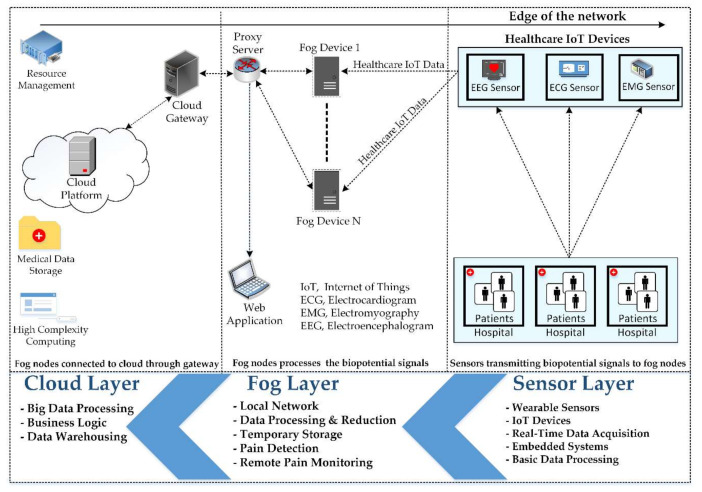
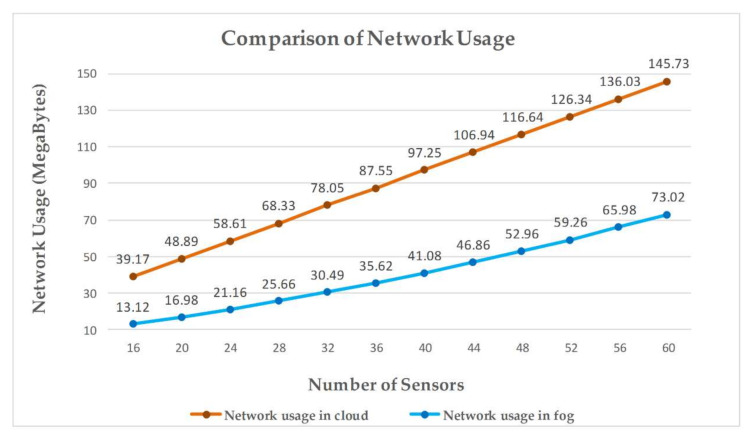
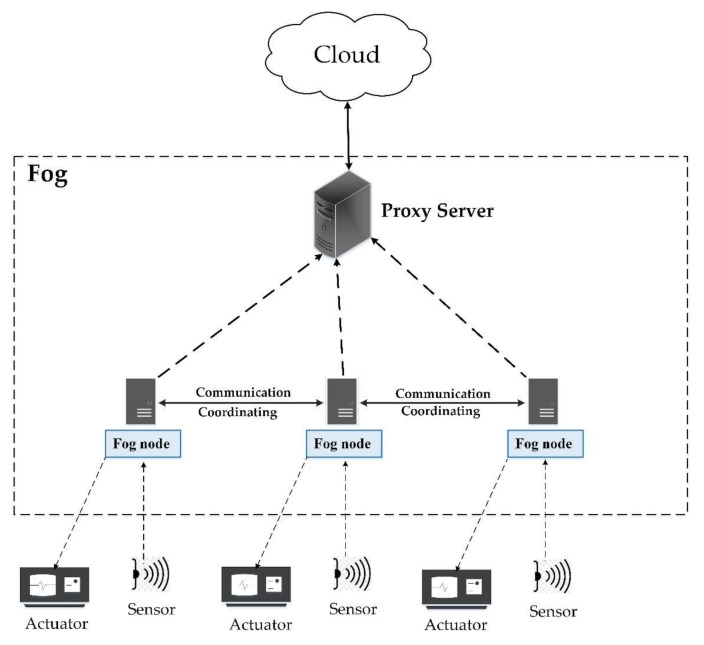
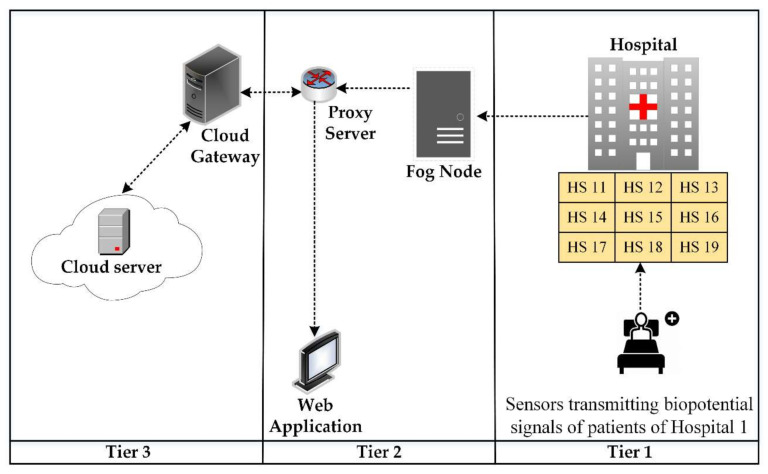
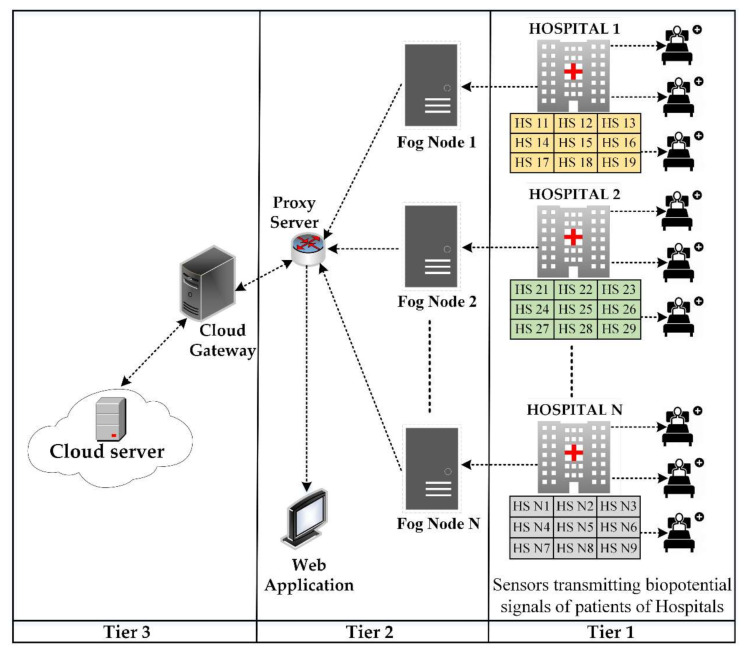
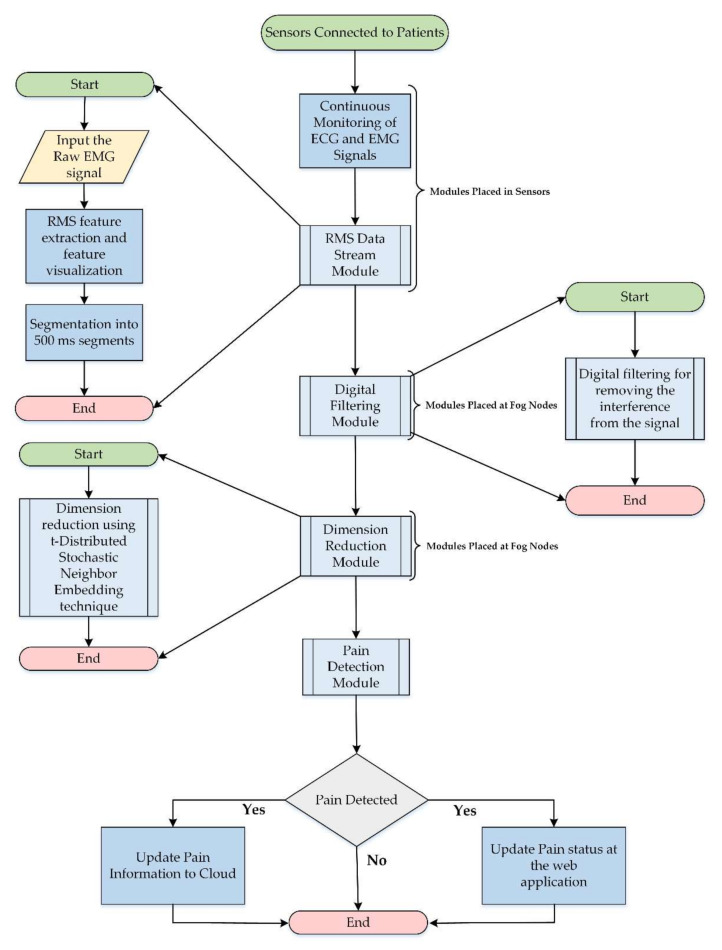
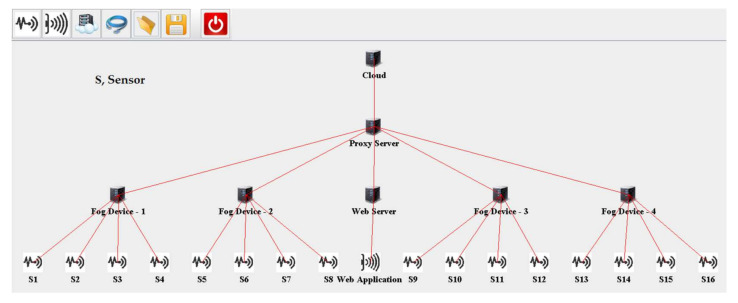
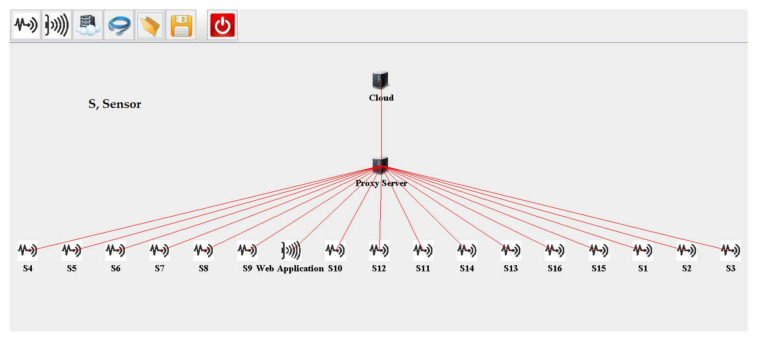
The integration of medical signal processing capabilities and advanced sensors into Internet of Things (IoT) devices plays a key role in providing comfort and convenience to human lives. As the number of patients is increasing gradually, providing healthcare facilities to each patient, particularly to the patients located in remote regions, not only has become challenging but also results in several issues, such as: (i) increase in workload on paramedics, (ii) wastage of time, and (iii) accommodation of patients. Therefore, the design of smart healthcare systems has become an important area of research to overcome these above-mentioned issues. Several healthcare applications have been designed using wireless sensor networks (WSNs), cloud computing, and fog computing. Most of the e-healthcare applications are designed using the cloud computing paradigm. Cloud-based architecture introduces high latency while processing huge amounts of data, thus restricting the large-scale implementation of latency-sensitive e-healthcare applications. Fog computing architecture offers processing and storage resources near to the edge of the network, thus, designing e-healthcare applications using the fog computing paradigm is of interest to meet the low latency requirement of such applications. Patients that are minors or are in intensive care units (ICUs) are unable to self-report their pain conditions. The remote healthcare monitoring applications deploy IoT devices with bio-sensors capable of sensing surface electromyogram (sEMG) and electrocardiogram (ECG) signals to monitor the pain condition of such patients. In this article, fog computing architecture is proposed for deploying a remote pain monitoring system. The key motivation for adopting the fog paradigm in our proposed approach is to reduce latency and network consumption. To validate the effectiveness of the proposed approach in minimizing delay and network utilization, simulations were carried out in iFogSim and the results were compared with the cloud-based systems. The results of the simulations carried out in this research indicate that a reduction in both latency and network consumption can be achieved by adopting the proposed approach for implementing a remote pain monitoring system.
将医学信号处理功能和先进传感器集成到物联网 (IoT) 设备中,对于为人类生活提供舒适和便利起着关键作用。随着患者数量的逐渐增加,为每个患者提供医疗设施,特别是为位于偏远地区的患者提供医疗设施,不仅具有挑战性,而且还会导致一些问题,例如:(i) 增加护理人员的工作量,(ii) 浪费时间,以及 (iii) 容纳患者。因此,设计智能医疗保健系统已成为克服上述问题的重要研究领域。已经使用无线传感器网络 (WSN)、云计算和雾计算设计了几种医疗保健应用程序。大多数电子医疗保健应用程序都是使用云计算范例设计的。基于云的架构在处理大量数据时引入了高延迟,从而限制了对延迟敏感的电子医疗保健应用程序的大规模实施。雾计算架构在网络边缘附近提供处理和存储资源,因此,使用雾计算范例设计电子医疗保健应用程序是为了满足此类应用程序的低延迟要求。未成年人或处于重症监护病房 (ICU) 的患者无法自行报告其疼痛状况。远程医疗监测应用程序部署具有生物传感器的物联网设备,能够感测表面肌电图 (sEMG) 和心电图 (ECG) 信号,以监测此类患者的疼痛状况。在本文中,提出了雾计算架构来部署远程疼痛监测系统。在我们提出的方法中采用雾范例的主要动机是降低延迟和网络消耗。为了验证采用雾范例在最小化延迟和网络利用方面的有效性,在 iFogSim 中进行了模拟,并将结果与基于云的系统进行了比较。本研究中的模拟结果表明,通过采用提出的方法来实施远程疼痛监测系统,可以实现延迟和网络消耗的降低。