Centre for Neural Circuits and Behaviour, University of Oxford, Oxford OX1 3TA, UK.
Centre for Neural Circuits and Behaviour, University of Oxford, Oxford OX1 3TA, UK.
Neuron. 2020 Jun 17;106(6):977-991.e4. doi: 10.1016/j.neuron.2020.03.013. Epub 2020 Apr 13.
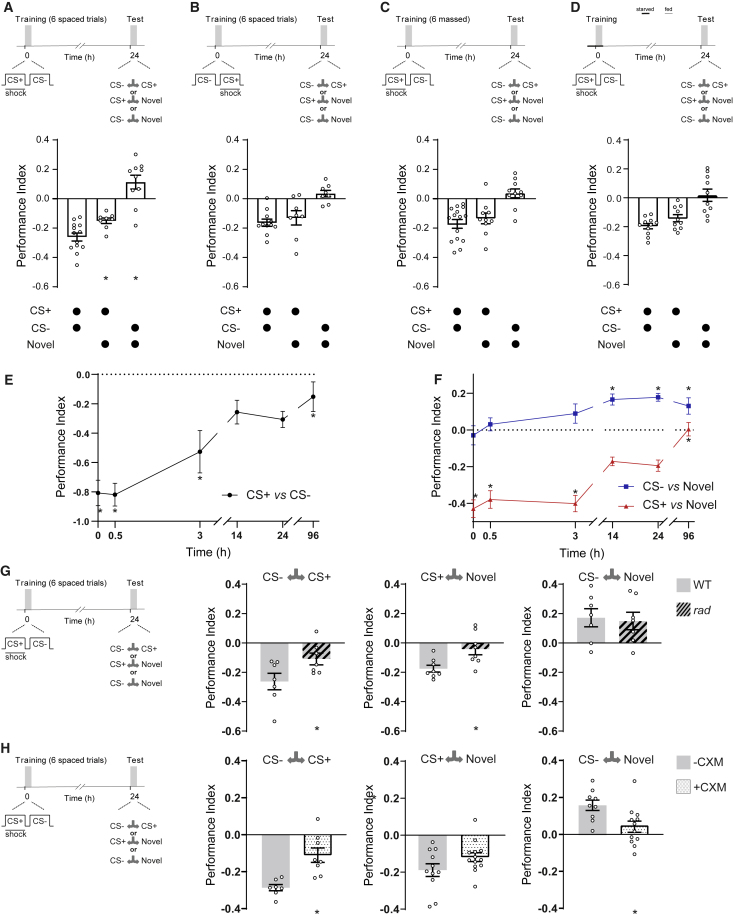
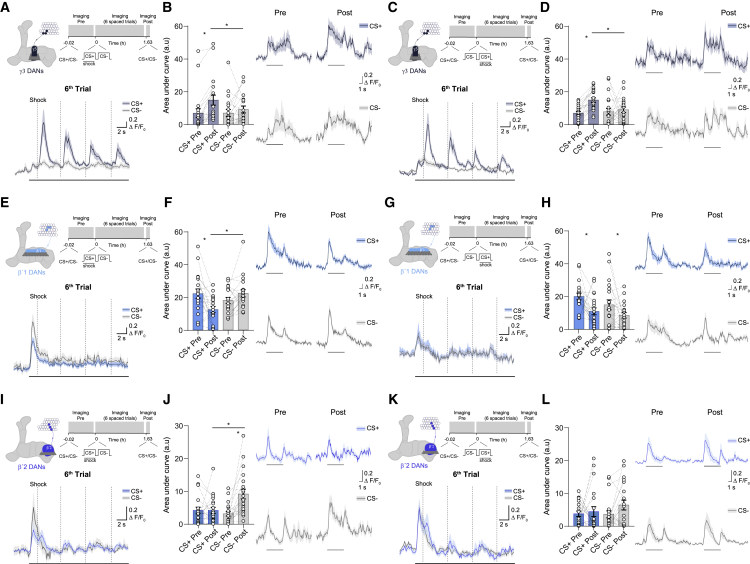
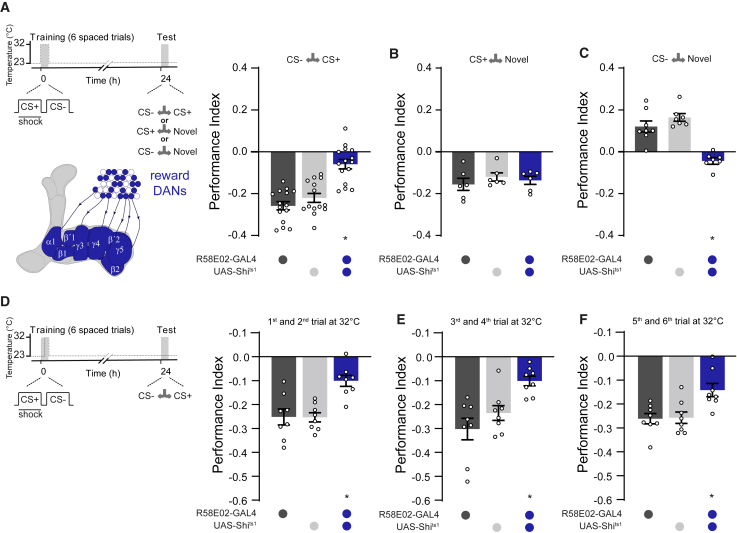
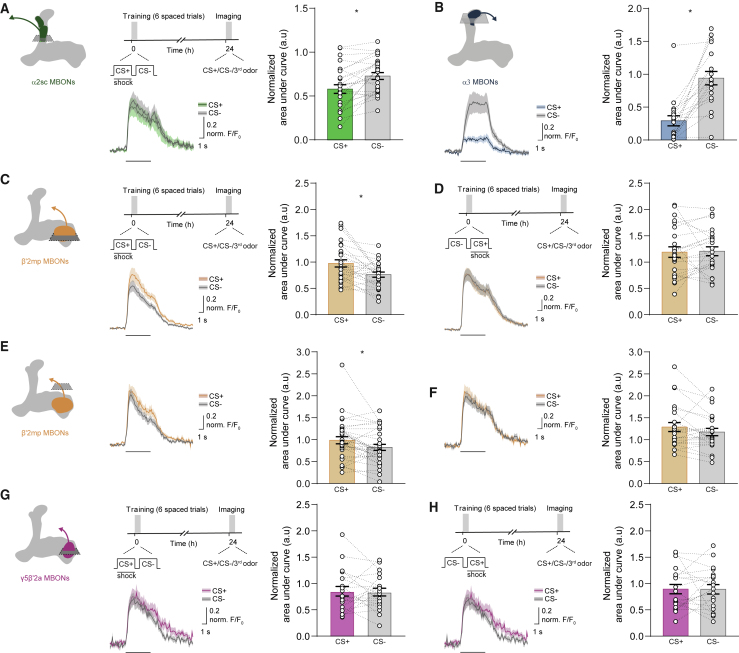
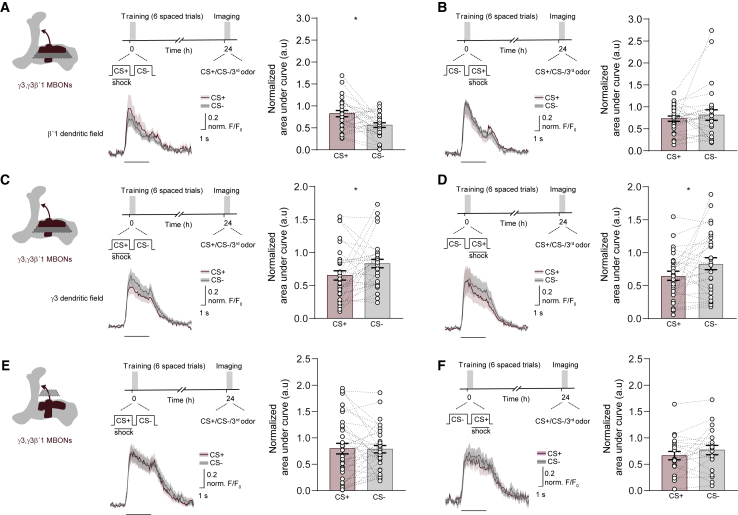
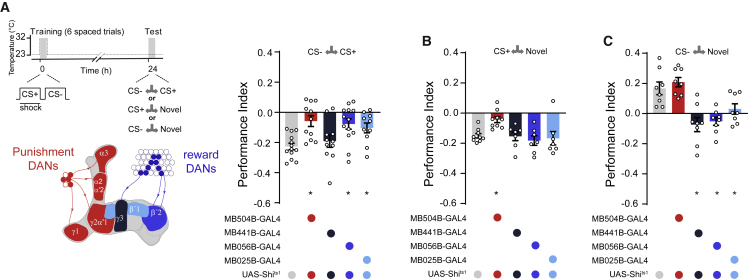
Forming long-term memory (LTM) often requires repetitive experience spread over time. Studies in Drosophila suggest aversive olfactory LTM is optimal after spaced training, multiple trials of differential odor conditioning with rest intervals. Memory after spaced training is frequently compared to that after the same number of trials without intervals. Here we show that, after spaced training, flies acquire additional information and form an aversive memory for the shock-paired odor and a slowly emerging and more persistent "safety-memory" for the explicitly unpaired odor. Safety-memory acquisition requires repetition, order, and spacing of the training trials and relies on triggering specific rewarding dopaminergic neurons. Co-existence of aversive and safety memories is evident as depression of odor-specific responses at different combinations of junctions in the mushroom body output network; combining two outputs appears to signal relative safety. Having complementary aversive and safety memories augments LTM performance after spaced training by making the odor preference more certain.
形成长期记忆(LTM)通常需要随着时间的推移重复经历。果蝇的研究表明,在间隔训练后,经过多次不同气味条件作用并间隔休息的处理,厌恶嗅觉 LTM 效果最佳。间隔训练后的记忆通常与相同次数的无间隔试验后的记忆进行比较。在这里,我们表明,经过间隔训练,果蝇会获得更多信息,并对与电击配对的气味形成厌恶记忆,同时对明确未配对的气味形成缓慢出现且更持久的“安全记忆”。安全记忆的获得需要训练试验的重复、顺序和间隔,并且依赖于触发特定的奖励性多巴胺能神经元。厌恶记忆和安全记忆的共存表现为在蘑菇体输出网络的不同连接点处对特定气味反应的抑制;两种输出的结合似乎表明相对安全。具有互补的厌恶记忆和安全记忆会通过使气味偏好更加确定来增强间隔训练后的 LTM 性能。