Cutie Stephen, Payumo Alexander Y, Lunn Dominic, Huang Guo N
Cardiovascular Research Institute and Department of Physiology, University of California, San Francisco, San Francisco, CA 94158, USA; Eli and Edythe Broad Center for Regeneration Medicine and Stem Cell Research, University of California, San Francisco, San Francisco, CA 94158, USA.
Cardiovascular Research Institute and Department of Physiology, University of California, San Francisco, San Francisco, CA 94158, USA; Eli and Edythe Broad Center for Regeneration Medicine and Stem Cell Research, University of California, San Francisco, San Francisco, CA 94158, USA.
J Mol Cell Cardiol. 2020 May;142:126-134. doi: 10.1016/j.yjmcc.2020.04.013. Epub 2020 Apr 11.
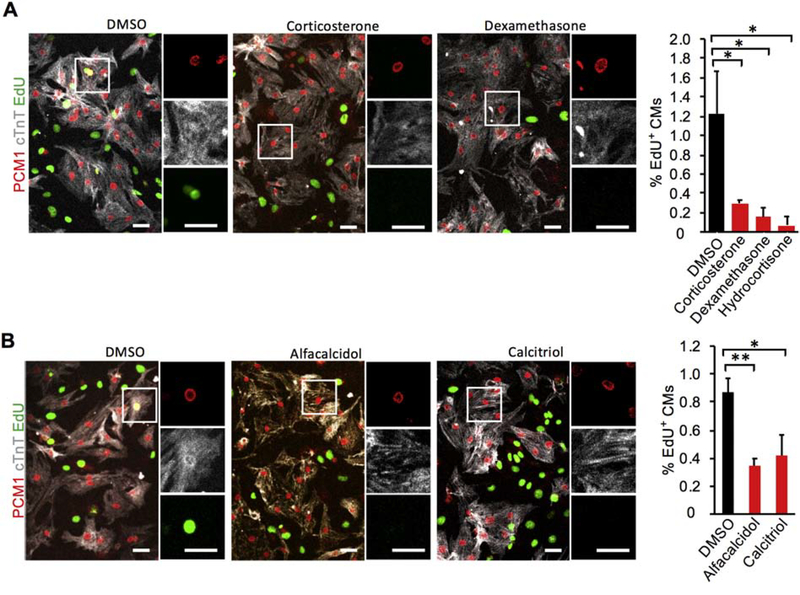
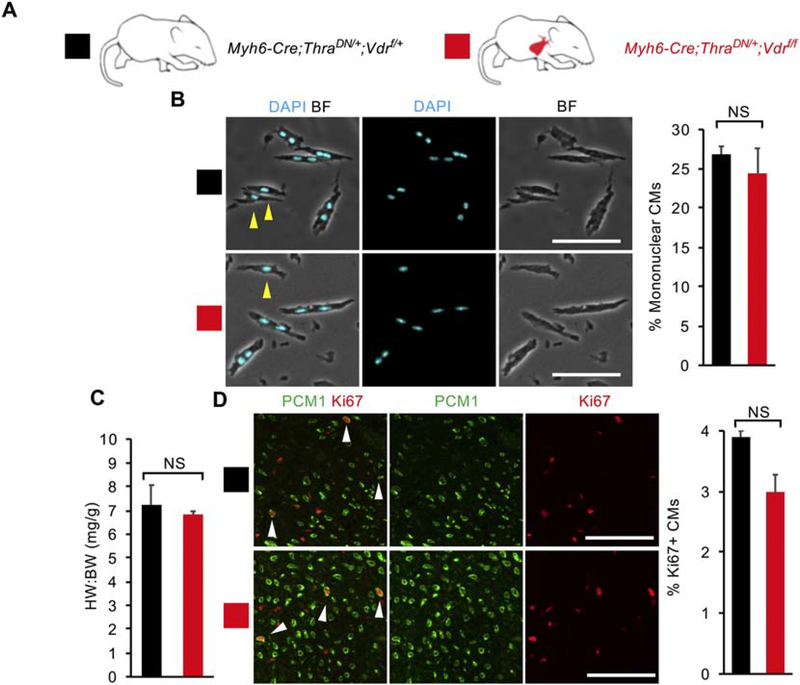
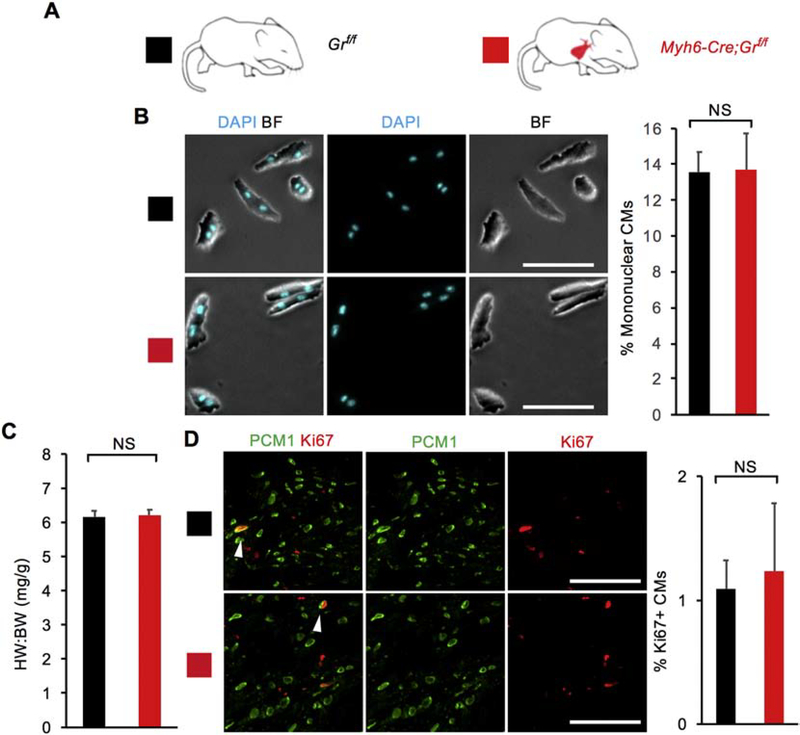
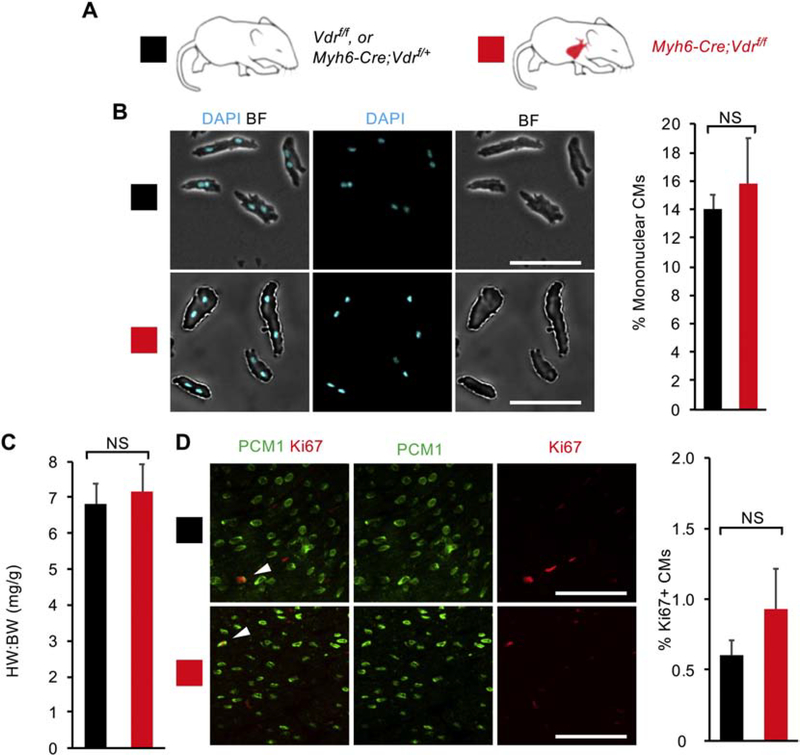
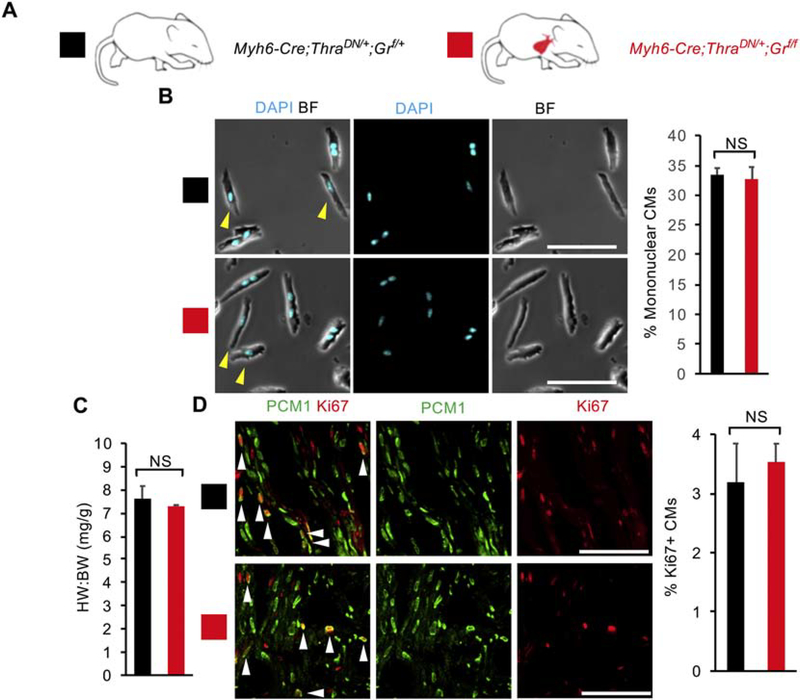
Cardiomyocyte (CM) proliferative potential varies considerably across species. While lower vertebrates and neonatal mammals retain robust capacities for CM proliferation, adult mammalian CMs lose proliferative potential due to cell-cycle withdrawal and polyploidization, failing to mount a proliferative response to regenerate lost CMs after cardiac injury. The decline of murine CM proliferative potential occurs in the neonatal period when the endocrine system undergoes drastic changes for adaptation to extrauterine life. We recently demonstrated that thyroid hormone (TH) signaling functions as a primary factor driving CM proliferative potential loss in vertebrates. Whether other hormonal pathways govern this process remains largely unexplored. Here we showed that agonists of glucocorticoid receptor (GR) and vitamin D receptor (VDR) suppressed neonatal CM proliferation. We next examined CM nucleation and proliferation in neonatal mutant mice lacking GR or VDR specifically in CMs, but we observed no difference between mutant and control littermates at postnatal day 14. Additionally, we generated compound mutant mice that lack GR or VDR and express dominant-negative TH receptor alpha in their CMs, and similarly observed no increase in CM proliferative potential compared to dominant-negative TH receptor alpha mice alone. Thus, although GR and VDR activation is sufficient to inhibit CM proliferation, they seem to be dispensable for neonatal CM cell-cycle exit and polyploidization in vivo. In addition, given the recent report that VDR activation in zebrafish promotes CM proliferation and tissue regeneration, our results suggest distinct roles of VDR in zebrafish and rodent CM cell-cycle regulation.
心肌细胞(CM)的增殖潜力在不同物种间差异很大。虽然低等脊椎动物和新生哺乳动物的CM保留了强大的增殖能力,但成年哺乳动物的CM由于细胞周期停滞和多倍体化而失去增殖潜力,在心脏损伤后无法产生增殖反应来再生丢失的CM。小鼠CM增殖潜力的下降发生在新生儿期,此时内分泌系统会发生剧烈变化以适应宫外生活。我们最近证明,甲状腺激素(TH)信号传导是脊椎动物中驱动CM增殖潜力丧失的主要因素。其他激素途径是否控制这一过程在很大程度上仍未得到探索。在这里,我们表明糖皮质激素受体(GR)和维生素D受体(VDR)的激动剂会抑制新生CM的增殖。接下来,我们检查了在CM中特异性缺乏GR或VDR的新生突变小鼠的CM成核和增殖情况,但在出生后第14天,我们观察到突变小鼠和对照同窝小鼠之间没有差异。此外,我们生成了在CM中缺乏GR或VDR并表达显性负性TH受体α的复合突变小鼠,同样地,与单独的显性负性TH受体α小鼠相比,我们没有观察到CM增殖潜力的增加。因此,尽管GR和VDR的激活足以抑制CM增殖,但它们似乎对于新生CM在体内的细胞周期退出和多倍体化是可有可无的。此外,鉴于最近有报道称斑马鱼中VDR的激活促进CM增殖和组织再生,我们的结果表明VDR在斑马鱼和啮齿动物CM细胞周期调节中具有不同的作用。