Rovera Cesare, Fiori Filippo, Trabattoni Silvia, Romano Diego, Farris Stefano
DeFENS, Department of Food, Environmental and Nutritional Sciences, University of Milan, via Celoria 2, 20133 Milan, Italy.
Department of Materials Science, University of Milano Bicocca, via Cozzi 55, 20125 Milan, Italy.
Nanomaterials (Basel). 2020 Apr 11;10(4):735. doi: 10.3390/nano10040735.
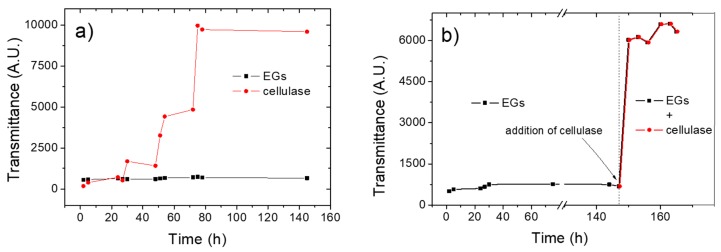
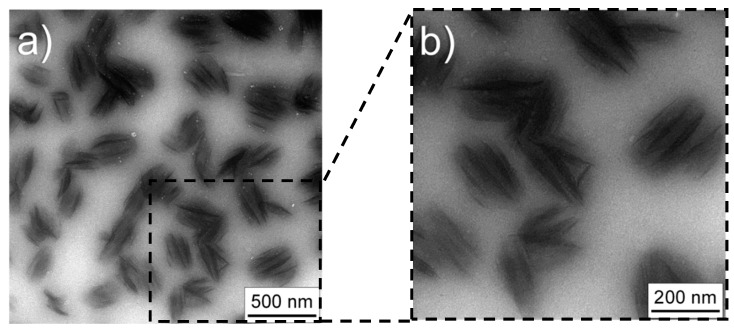
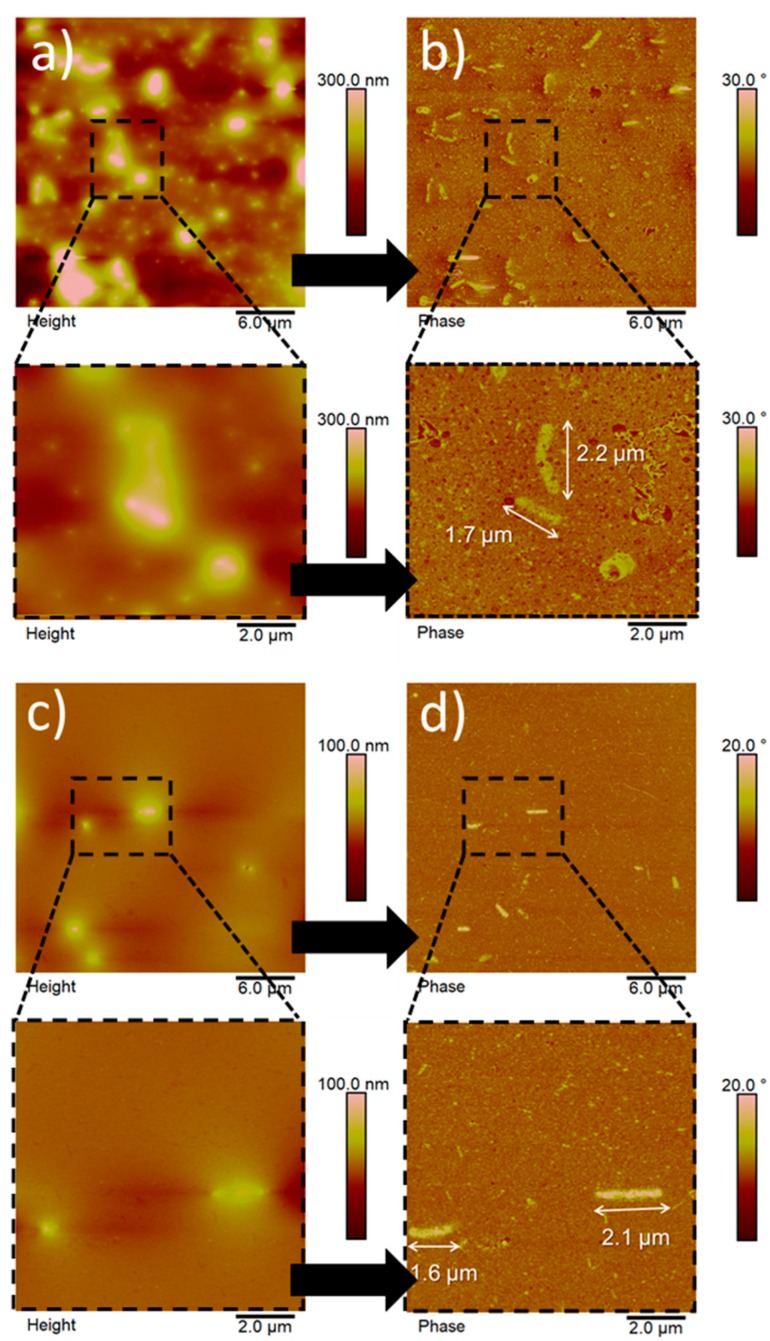
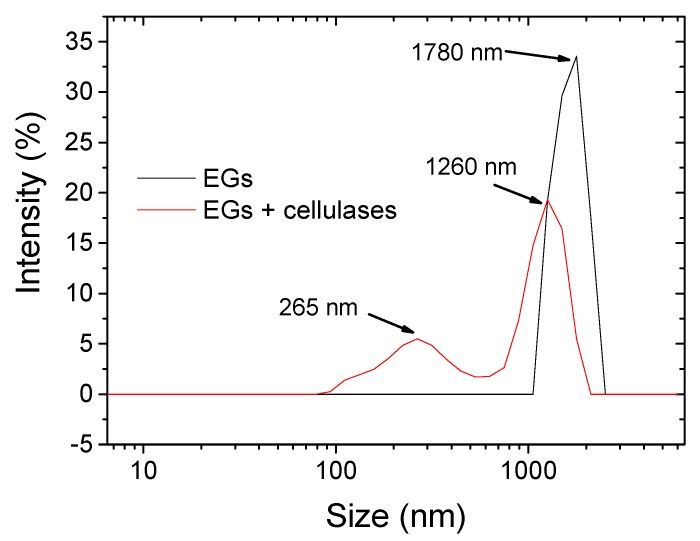
Bacterial cellulose nanocrystals (BCNCs) obtained by enzymatic hydrolysis have been loaded in pullulan biopolymer for use as nanoparticles in the generation of high-oxygen barrier coatings intended for food packaging applications. Bacterial cellulose (BC) produced by was hydrolyzed by two different enzymatic treatments, i.e., using endo-1,4-β-glucanases (EGs) from and cellulase from . The hydrolytic activity was compared by means of turbidity experiments over a period of 145 h, whereas BCNCs in their final state were compared, in terms of size and morphology, by atomic force microscopy (AFM) and dynamic light scattering (DLS). Though both treatments led to particles of similar size, a greater amount of nano-sized particles (≈250 nm) were observed in the system that also included cellulase enzymes. Unexpectedly, transmission electron microscopy (TEM) revealed that cellulose nanoparticles were round-shaped and made of 4-5 short (150-180 nm) piled whiskers. Pullulan/BCNCs nanocomposite coatings allowed an increase in the overall oxygen barrier performance, of more than two and one orders of magnitude (≈0.7 mL·m·24 h), of pure polyethylene terephthalate (PET) (≈120 mL·m·24 h) as well as pullulan/coated PET (≈6 mL·m·24 h), with no significant difference between treatments (hydrolysis mediated by EGs or with the addition of cellulase). BCNCs obtained by enzymatic hydrolysis have the potential to generate high oxygen barrier coatings for the food packaging industry.
通过酶水解获得的细菌纤维素纳米晶体(BCNCs)已被负载到普鲁兰多糖生物聚合物中,用作纳米颗粒,用于制备用于食品包装应用的高氧气阻隔涂层。由[具体菌种]产生的细菌纤维素(BC)通过两种不同的酶处理进行水解,即使用来自[具体来源1]的内切-1,4-β-葡聚糖酶(EGs)和来自[具体来源2]的纤维素酶。通过在145小时内进行的浊度实验比较水解活性,而通过原子力显微镜(AFM)和动态光散射(DLS)比较最终状态下BCNCs的尺寸和形态。尽管两种处理都产生了尺寸相似的颗粒,但在还包含纤维素酶的系统中观察到了更多数量的纳米级颗粒(≈250nm)。出乎意料的是,透射电子显微镜(TEM)显示纤维素纳米颗粒呈圆形,由4-5根短的(150-180nm)堆叠晶须组成。普鲁兰多糖/BCNCs纳米复合涂层使纯聚对苯二甲酸乙二酯(PET)(≈120mL·m·24h)以及普鲁兰多糖/涂层PET(≈6mL·m·24h)的整体氧气阻隔性能提高了两个以上和一个数量级(≈0.7mL·m·24h),两种处理(由EGs介导的水解或添加纤维素酶)之间没有显著差异。通过酶水解获得的BCNCs有潜力为食品包装行业生产高氧气阻隔涂层。