Peña-Ortiz Manuel, García Araceli, Martirani-Von Abercron Sophie Marie, Marín Patricia, Marqués Silvia, Khiari Ramzi, Dufresne Alain, Serrano Luis
Nanoval FQM-383 Research Group, Organic Chemistry Department, University of Córdoba, Marie Curie (C-3) Building, Ctra. Nnal. Km 396, 14014 Córdoba, Spain.
BioPrEn RNM 940 Research Group, Inorganic Chemistry and Chemical Engineering Department, University of Córdoba, Marie Curie (C-3) Building, Ctra. Nnal. Km 396, 14014 Córdoba, Spain.
Polymers (Basel). 2025 May 1;17(9):1240. doi: 10.3390/polym17091240.
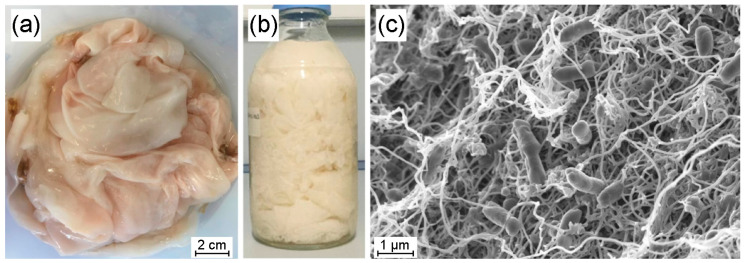
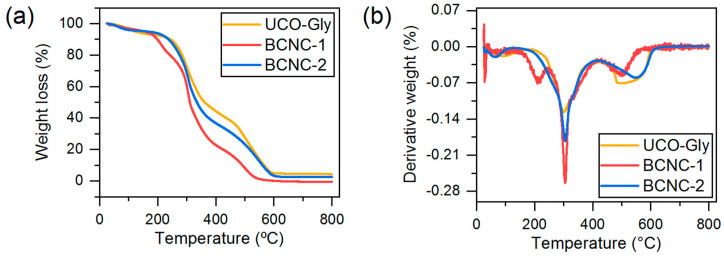
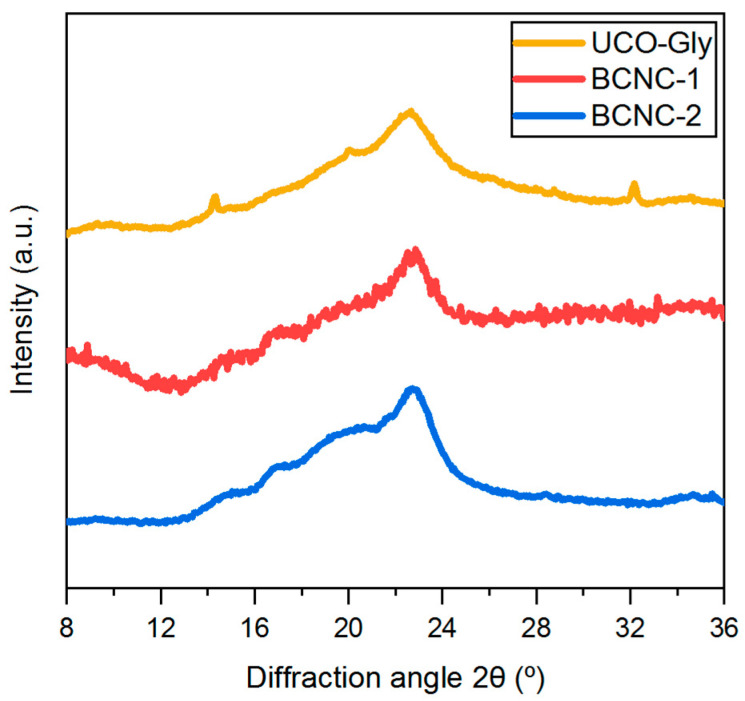
Given the growing interest in the functional properties of nanocellulosic forms, bacterial cellulose nanocrystals (BCNCs) have gained attention as sustainable, high-performance materials for diverse applications. Although recent research has addressed the use of agro-industrial waste for BCNCs production, limited attention has been given to residual crude glycerol, a widespread byproduct of the biodiesel industry. Therefore, this work aimed to synthesize and thoroughly characterize BCNCs from bacterial nanocellulose (BNC) obtained through the metabolism of crude glycerol via the novel bacterial strain sp. STN1A. The influence of sulfuric acid (HSO) hydrolysis time on BCNCs´ morphology and physicochemical properties was evaluated. Severe hydrolysis conditions yielded shorter, narrower nanocrystals (0.91 μm × 40 nm; L/D = 22.8) with increased crystallinity (63%) and high colloidal stability (-40.17 ± 0.68 mV), as well as slightly reduced thermal stability. In contrast, milder conditions produced longer BCNCs (1.13 μm × 42 nm; L/D = 26.9) with similarly high zeta potential (-44.13 ± 0.73 mV), while maintaining the thermal and crystalline features of the starting BNC. These findings demonstrate the potential to tailor BCNCs´ properties through controlled hydrolysis and support the viability of producing versatile nanocellulosic materials from residual byproducts, contributing to both cost-effective production and environmental sustainability.
鉴于对纳米纤维素形式的功能特性的兴趣日益增长,细菌纤维素纳米晶体(BCNCs)作为可持续的高性能材料在各种应用中受到关注。尽管最近的研究涉及利用农业工业废料生产BCNCs,但对生物柴油行业广泛产生的残余粗甘油关注较少。因此,这项工作旨在通过新型细菌菌株sp. STN1A对粗甘油进行代谢获得的细菌纳米纤维素(BNC)合成并全面表征BCNCs。评估了硫酸(HSO)水解时间对BCNCs形态和物理化学性质的影响。剧烈水解条件产生了更短、更窄的纳米晶体(0.91μm×40nm;长径比 = 22.8),结晶度增加(63%),胶体稳定性高(-40.17±0.68mV),热稳定性略有降低。相比之下,较温和的条件产生了更长的BCNCs(1.13μm×42nm;长径比 = 26.9),具有同样高的zeta电位(-44.13±0.73mV),同时保持了起始BNC的热和结晶特性。这些发现证明了通过控制水解来调整BCNCs性质的潜力,并支持从残余副产品生产多功能纳米纤维素材料的可行性,这有助于实现成本效益高的生产和环境可持续性。