Cheng Yang
222 Winston Hall, Department of Communication, North Carolina State University, Raleigh, NC, United States.
Public Relat Rev. 2020 Mar;46(1):101769. doi: 10.1016/j.pubrev.2019.04.003. Epub 2019 May 1.
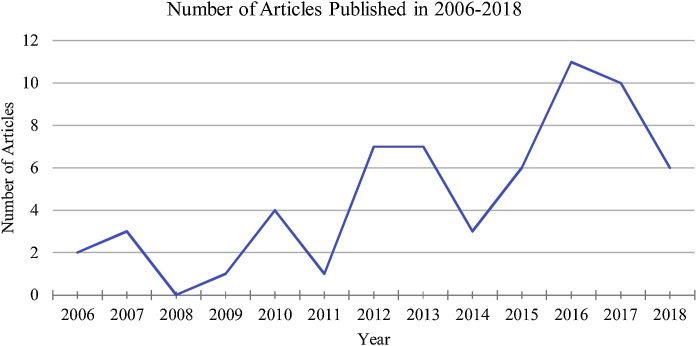
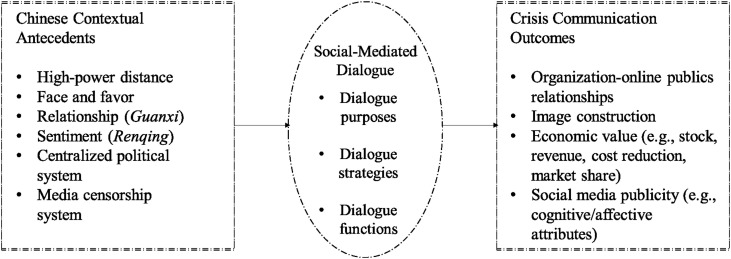
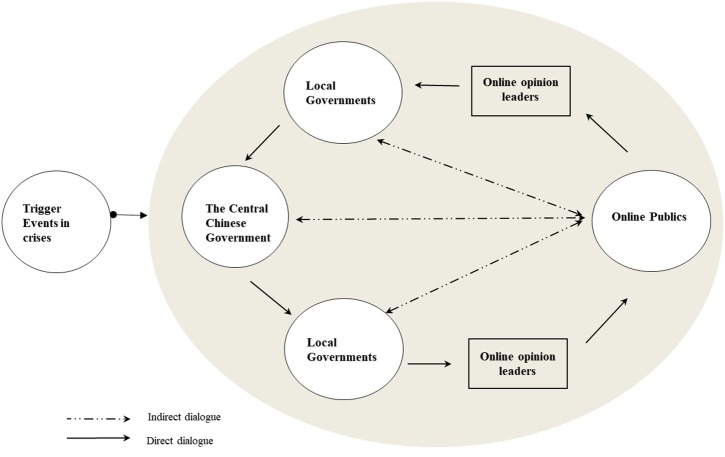
The rapid diffusion of social media is ushering in a new era of crisis communication. To enhance our understanding of the social-mediated dialogue between organizations and their publics in crises of China, this study conducts a content analysis of 61 relevant journal articles published in 2006-2018. Results of this research present an overview of ongoing research trends such as theoretical frameworks and methodological preferences. This research also explores how the unique Chinese social media characteristics affect the dialogue between types of organizations and their publics. Contextual factors such as face and favor, relationship () and sentiment (), and the centralized political system that may facilitate/inhibit dialogue in crises of China are identified as well. Finally, this study suggests promising new directions such as a scholarly assessment tool for the social-mediated crisis communication research in China.
社交媒体的迅速传播正在开启危机沟通的新时代。为了增进我们对中国危机中组织与其公众之间社会媒介对话的理解,本研究对2006年至2018年发表的61篇相关期刊文章进行了内容分析。本研究结果概述了当前的研究趋势,如理论框架和方法偏好。本研究还探讨了中国社交媒体的独特特征如何影响各类组织与其公众之间的对话。诸如面子和人情、关系()和情绪()等情境因素,以及可能促进/抑制中国危机中对话的集权政治体制也被识别出来。最后,本研究提出了一些有前景的新方向,如针对中国社会媒介危机沟通研究的学术评估工具。