Lievens Yolande, Borras Josep M, Grau Cai
Department of Radiation Oncology, Ghent University Hospital and Ghent University, Belgium.
Department of Clinical Sciences, IDIBELL, University of Barcelona, Spain.
Mol Oncol. 2020 Jul;14(7):1461-1469. doi: 10.1002/1878-0261.12690. Epub 2020 May 1.
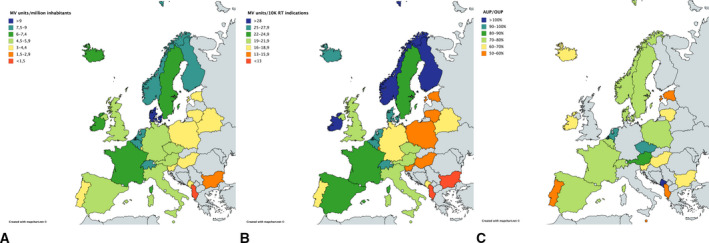
Radiation therapy is one of the core components of multidisciplinary cancer care. Although ~ 50% of all European cancer patients have an indication for radiotherapy at least once in the course of their disease, more than one out of four cancer patients in Europe do not receive the radiotherapy they need. There are multiple reasons for this underutilisation, with limited availability of the necessary resources - in terms of both trained personnel and equipment - being a major underlying cause of suboptimal access to radiotherapy. Moreover, large variations across European countries are observed, not only in available radiotherapy equipment and personnel per inhabitant or per cancer patient requiring radiotherapy, but also in workload. This variation is in part determined by the country's gross national income. Radiation therapy and technology are advancing quickly; hence, recommendations supporting resource planning and investment should reflect this dynamic environment and account for evolving treatment complexity and fractionation schedules. The forecasted increase in cancer incidence, the rapid introduction of innovative cancer treatments and the more active involvement of patients in the healthcare discussion are all factors that should be taken under consideration. In this continuously changing oncology landscape, reliable data on the actual provision and use of radiotherapy, the optimal evidence-based demand and the future needs are crucial to inform cancer care planning and address and overcome the current inequalities in access to radiotherapy in Europe.
放射治疗是多学科癌症护理的核心组成部分之一。尽管在欧洲,约50%的癌症患者在其病程中至少有一次放射治疗指征,但欧洲超过四分之一的癌症患者未接受所需的放射治疗。造成这种利用不足的原因有多种,必要资源(包括专业人员和设备)的可用性有限是放疗可及性欠佳的一个主要根本原因。此外,欧洲各国之间存在很大差异,不仅体现在每居民或每例需要放疗的癌症患者可获得的放射治疗设备和人员方面,还体现在工作量上。这种差异部分由国家的国民总收入决定。放射治疗和技术发展迅速;因此,支持资源规划和投资的建议应反映这种动态环境,并考虑到不断演变的治疗复杂性和分割方案。预测的癌症发病率上升、创新癌症治疗方法的迅速引入以及患者在医疗保健讨论中更积极的参与都是应考虑的因素。在这种不断变化的肿瘤学格局中,关于放射治疗实际提供和使用情况、最佳循证需求以及未来需求的可靠数据对于为癌症护理规划提供信息以及解决和克服目前欧洲放射治疗可及性方面的不平等至关重要。