• 文献检索
  • 文档翻译
  • 深度研究
  • 学术资讯
  • Suppr Zotero 插件Zotero 插件
  • 邀请有礼
  • 套餐&价格
  • 历史记录
应用&插件
Suppr Zotero 插件Zotero 插件浏览器插件Mac 客户端Windows 客户端微信小程序
定价
高级版会员购买积分包购买API积分包
服务
文献检索文档翻译深度研究API 文档MCP 服务
关于我们
关于 Suppr公司介绍联系我们用户协议隐私条款
关注我们

Suppr 超能文献

核心技术专利:CN118964589B侵权必究
粤ICP备2023148730 号-1Suppr @ 2026

文献检索

告别复杂PubMed语法,用中文像聊天一样搜索,搜遍4000万医学文献。AI智能推荐,让科研检索更轻松。

立即免费搜索

文件翻译

保留排版,准确专业,支持PDF/Word/PPT等文件格式,支持 12+语言互译。

免费翻译文档

深度研究

AI帮你快速写综述,25分钟生成高质量综述,智能提取关键信息,辅助科研写作。

立即免费体验

利用人类多能干细胞模型在大数据时代研究自闭症。

Using human pluripotent stem cell models to study autism in the era of big data.

机构信息

Stanley Center for Psychiatric Research, Broad Institute of MIT and Harvard, Cambridge, MA, 02142, USA.

Department of Stem Cell and Regenerative Biology, Harvard University, Cambridge, MA, 02138, USA.

出版信息

Mol Autism. 2020 Mar 23;11(1):21. doi: 10.1186/s13229-020-00322-9.

DOI:10.1186/s13229-020-00322-9
PMID:32293529
原文链接:https://pmc.ncbi.nlm.nih.gov/articles/PMC7087382/
Abstract

Advances in human pluripotent stem cell (hPSC) biology coupled with protocols to generate diverse brain cell types in vitro have provided neuroscientists with opportunities to dissect basic and disease mechanisms in increasingly relevant cellular substrates. At the same time, large data collections and analyses have facilitated unprecedented insights into autism genetics, normal human genetic variation, and the molecular landscape of the developing human brain. While such insights have enabled the investigation of key mechanistic questions in autism, they also highlight important limitations associated with the use of existing hPSC models. In this review, we discuss four such issues which influence the efficacy of hPSC models for studying autism, including (i) sources of variance, (ii) scale and format of study design, (iii) divergence from the human brain in vivo, and (iv) regulatory policies and compliance governing the use of hPSCs. Moreover, we advocate for a set of immediate and long-term priorities to address these issues and to accelerate the generation and reproducibility of data in order to facilitate future fundamental as well as therapeutic discoveries.

摘要

人类多能干细胞(hPSC)生物学的进展,加上体外生成多种脑细胞类型的方案,为神经科学家提供了在日益相关的细胞基质中剖析基本和疾病机制的机会。与此同时,大量的数据收集和分析促进了对自闭症遗传学、正常人类遗传变异以及人类大脑发育的分子景观的前所未有的深入了解。尽管这些见解使人们能够研究自闭症中的关键机制问题,但它们也突出了与使用现有 hPSC 模型相关的重要局限性。在这篇综述中,我们讨论了影响 hPSC 模型研究自闭症功效的四个问题,包括(i)方差来源,(ii)研究设计的规模和格式,(iii)与体内人类大脑的差异,以及(iv)监管政策和合规性,以规范 hPSC 的使用。此外,我们提倡一系列立即和长期的优先事项,以解决这些问题,并加速数据的生成和可重复性,以促进未来的基础和治疗发现。
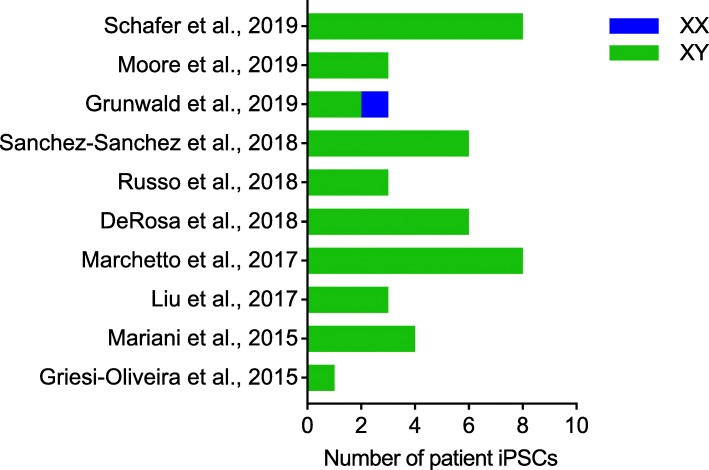
https://cdn.ncbi.nlm.nih.gov/pmc/blobs/3505/7087382/ee269cb8ab81/13229_2020_322_Fig3_HTML.jpg
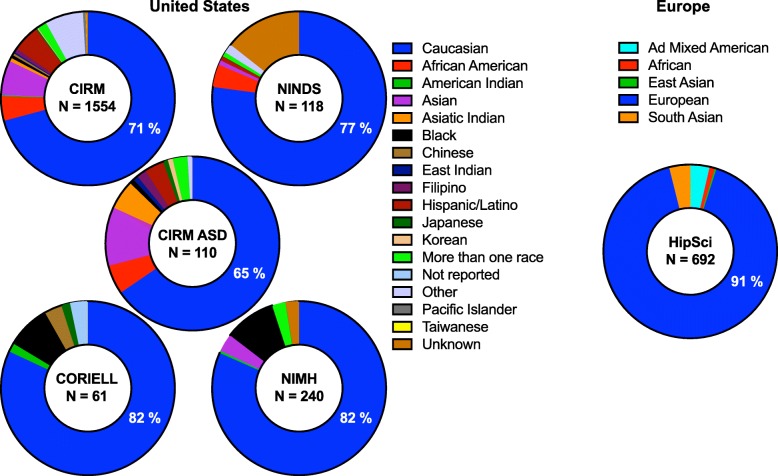
https://cdn.ncbi.nlm.nih.gov/pmc/blobs/3505/7087382/b05941cbb2cc/13229_2020_322_Fig1_HTML.jpg
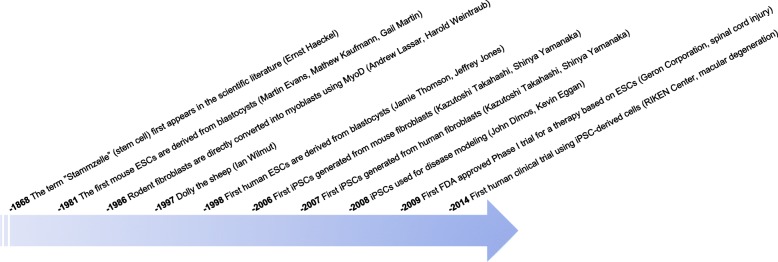
https://cdn.ncbi.nlm.nih.gov/pmc/blobs/3505/7087382/17ff3dac9823/13229_2020_322_Fig2_HTML.jpg
https://cdn.ncbi.nlm.nih.gov/pmc/blobs/3505/7087382/ee269cb8ab81/13229_2020_322_Fig3_HTML.jpg
https://cdn.ncbi.nlm.nih.gov/pmc/blobs/3505/7087382/b05941cbb2cc/13229_2020_322_Fig1_HTML.jpg
https://cdn.ncbi.nlm.nih.gov/pmc/blobs/3505/7087382/17ff3dac9823/13229_2020_322_Fig2_HTML.jpg
https://cdn.ncbi.nlm.nih.gov/pmc/blobs/3505/7087382/ee269cb8ab81/13229_2020_322_Fig3_HTML.jpg

相似文献

1
Using human pluripotent stem cell models to study autism in the era of big data.利用人类多能干细胞模型在大数据时代研究自闭症。
Mol Autism. 2020 Mar 23;11(1):21. doi: 10.1186/s13229-020-00322-9.
2
Human pluripotent stem cell (hPSC) and organoid models of autism: opportunities and limitations.自闭症的人类多能干细胞(hPSC)和类器官模型:机遇与局限。
Transl Psychiatry. 2023 Jun 21;13(1):217. doi: 10.1038/s41398-023-02510-6.
3
Leveraging the Genetic Diversity of Human Stem Cells in Therapeutic Approaches.利用人类干细胞的遗传多样性进行治疗方法。
J Mol Biol. 2022 Feb 15;434(3):167221. doi: 10.1016/j.jmb.2021.167221. Epub 2021 Aug 30.
4
Application of human pluripotent stem cells and pluripotent stem cell-derived cellular models for assessing drug toxicity.人多能干细胞及其衍生细胞模型在药物毒性评估中的应用。
Expert Opin Drug Metab Toxicol. 2019 Jan;15(1):61-75. doi: 10.1080/17425255.2019.1558207. Epub 2018 Dec 17.
5
Exploring the effects of cell seeding density on the differentiation of human pluripotent stem cells to brain microvascular endothelial cells.探究细胞接种密度对人多能干细胞向脑微血管内皮细胞分化的影响。
Fluids Barriers CNS. 2015 May 21;12:13. doi: 10.1186/s12987-015-0007-9.
6
A Multiplex Human Pluripotent Stem Cell Platform Defines Molecular and Functional Subclasses of Autism-Related Genes.多指标人多能干细胞平台定义了与自闭症相关基因的分子和功能亚型。
Cell Stem Cell. 2020 Jul 2;27(1):35-49.e6. doi: 10.1016/j.stem.2020.06.004.
7
Dynamic 3D Combinatorial Generation of hPSC-Derived Neuromesodermal Organoids With Diverse Regional and Cellular Identities.动态 3D 组合生成具有不同区域和细胞特征的 hPSC 衍生神经中胚层类器官。
Curr Protoc. 2022 Oct;2(10):e568. doi: 10.1002/cpz1.568.
8
Female human pluripotent stem cells rapidly lose X chromosome inactivation marks and progress to a skewed methylation pattern during culture.女性人多能干细胞在培养过程中会迅速失去X染色体失活标记,并发展为一种偏向性的甲基化模式。
Mol Hum Reprod. 2016 Apr;22(4):285-98. doi: 10.1093/molehr/gaw004. Epub 2016 Jan 19.
9
The safety of human pluripotent stem cells in clinical treatment.人类多能干细胞在临床治疗中的安全性。
Ann Med. 2015;47(5):370-80. doi: 10.3109/07853890.2015.1051579. Epub 2015 Jul 6.
10
Molecular analyses of neurogenic defects in a human pluripotent stem cell model of fragile X syndrome.脆性X综合征人类多能干细胞模型中神经源性缺陷的分子分析。
Brain. 2017 Mar 1;140(3):582-598. doi: 10.1093/brain/aww357.

引用本文的文献

1
Combining phenomics with transcriptomics reveals cell-type-specific morphological and molecular signatures of the 22q11.2 deletion.将表型组学与转录组学相结合,揭示了22q11.2缺失的细胞类型特异性形态和分子特征。
Nat Commun. 2025 Jul 9;16(1):6332. doi: 10.1038/s41467-025-61547-x.
2
Genomic, molecular, and cellular divergence of the human brain.人类大脑的基因组、分子和细胞差异。
Trends Neurosci. 2024 Jul;47(7):491-505. doi: 10.1016/j.tins.2024.05.009. Epub 2024 Jun 18.
3
[Nature and immune mechanisms of mental illnesses].[精神疾病的本质与免疫机制]

本文引用的文献

1
Vascularized human cortical organoids (vOrganoids) model cortical development in vivo.血管化人类皮质类器官(vOrganoids)模拟体内皮质发育。
PLoS Biol. 2020 May 13;18(5):e3000705. doi: 10.1371/journal.pbio.3000705. eCollection 2020 May.
2
Large-Scale Exome Sequencing Study Implicates Both Developmental and Functional Changes in the Neurobiology of Autism.大规模外显子组测序研究表明自闭症的神经生物学既有发育性变化也有功能性变化。
Cell. 2020 Feb 6;180(3):568-584.e23. doi: 10.1016/j.cell.2019.12.036. Epub 2020 Jan 23.
3
Generation of complex human organoid models including vascular networks by incorporation of mesodermal progenitor cells.
Nervenarzt. 2023 Nov;94(11):1010-1018. doi: 10.1007/s00115-023-01554-9. Epub 2023 Oct 10.
4
Recent Developments in Autism Genetic Research: A Scientometric Review from 2018 to 2022.自闭症遗传学研究的最新进展:2018 年至 2022 年的科学计量学综述。
Genes (Basel). 2022 Sep 14;13(9):1646. doi: 10.3390/genes13091646.
5
Organoids: Expanding Applications Enabled by Emerging Technologies: Organoids: emerging technologies and applications.类器官:新兴技术推动的应用拓展:类器官:新兴技术与应用
J Mol Biol. 2022 Feb 15;434(3):167411. doi: 10.1016/j.jmb.2021.167411. Epub 2021 Dec 20.
6
iPSC toolbox for understanding and repairing disrupted brain circuits in autism.用于理解和修复自闭症中大脑回路紊乱的 iPSC 工具包。
Mol Psychiatry. 2022 Jan;27(1):249-258. doi: 10.1038/s41380-021-01288-7. Epub 2021 Sep 8.
7
Mind the translational gap: using iPS cell models to bridge from genetic discoveries to perturbed pathways and therapeutic targets.注意翻译的差距:利用 iPS 细胞模型从遗传发现到受干扰的途径和治疗靶点进行桥接。
Mol Autism. 2021 Feb 8;12(1):10. doi: 10.1186/s13229-021-00417-x.
8
Massively parallel techniques for cataloguing the regulome of the human brain.大规模平行技术用于编目人类大脑的调控组。
Nat Neurosci. 2020 Dec;23(12):1509-1521. doi: 10.1038/s41593-020-00740-1. Epub 2020 Nov 16.
通过纳入中胚层祖细胞生成包含脉管网络的复杂人类类器官模型。
Sci Rep. 2019 Oct 30;9(1):15663. doi: 10.1038/s41598-019-52204-7.
4
Engineering of human brain organoids with a functional vascular-like system.人类脑类器官与功能性类血管系统的构建。
Nat Methods. 2019 Nov;16(11):1169-1175. doi: 10.1038/s41592-019-0586-5. Epub 2019 Oct 7.
5
The application of human pluripotent stem cells to model the neuronal and glial components of neurodevelopmental disorders.人类多能干细胞在神经发育障碍的神经元和神经胶质成分模型中的应用。
Mol Psychiatry. 2020 Feb;25(2):368-378. doi: 10.1038/s41380-019-0495-0. Epub 2019 Aug 27.
6
Comparative characterization of human induced pluripotent stem cells (hiPSC) derived from patients with schizophrenia and autism.比较精神分裂症和自闭症患者来源的诱导多能干细胞(hiPSC)的特征。
Transl Psychiatry. 2019 Jul 29;9(1):179. doi: 10.1038/s41398-019-0517-3.
7
Genetic analyses of diverse populations improves discovery for complex traits.对不同人群的遗传分析可提高复杂性状的发现能力。
Nature. 2019 Jun;570(7762):514-518. doi: 10.1038/s41586-019-1310-4. Epub 2019 Jun 19.
8
Downregulation of an Evolutionary Young miR-1290 in an iPSC-Derived Neural Stem Cell Model of Autism Spectrum Disorder.在自闭症谱系障碍的诱导多能干细胞衍生神经干细胞模型中,进化上较年轻的miR-1290的表达下调。
Stem Cells Int. 2019 May 2;2019:8710180. doi: 10.1155/2019/8710180. eCollection 2019.
9
Individual brain organoids reproducibly form cell diversity of the human cerebral cortex.个体脑类器官可重现形成人类大脑皮层的细胞多样性。
Nature. 2019 Jun;570(7762):523-527. doi: 10.1038/s41586-019-1289-x. Epub 2019 Jun 5.
10
Modeling neuropsychiatric disorders using human induced pluripotent stem cells.使用人类诱导多能干细胞建模神经精神疾病。
Protein Cell. 2020 Jan;11(1):45-59. doi: 10.1007/s13238-019-0638-8. Epub 2019 May 27.