Division of Cardiovascular Sciences Department of Medicine University of South Florida Tampa FL.
Center for Experimental Therapeutics and Reperfusion Injury Department of Anesthesiology, Perioperative and Pain Medicine Brigham and Women's Hospital Harvard Medical School, Boston MA.
J Am Heart Assoc. 2020 Apr 21;9(8):e015672. doi: 10.1161/JAHA.119.015672. Epub 2020 Apr 16.
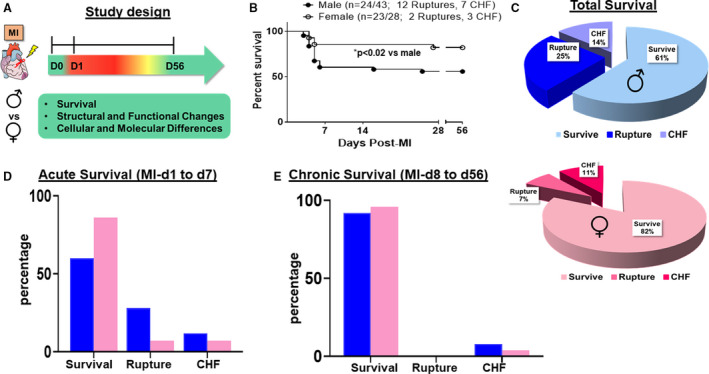
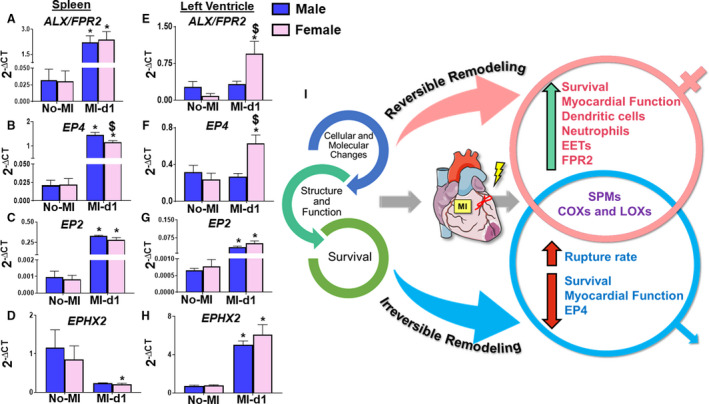
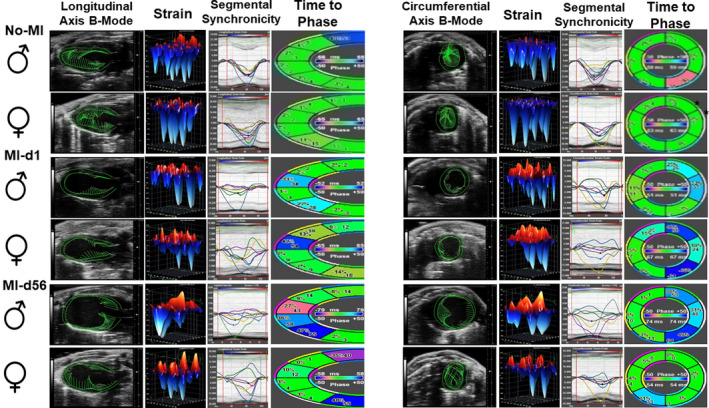
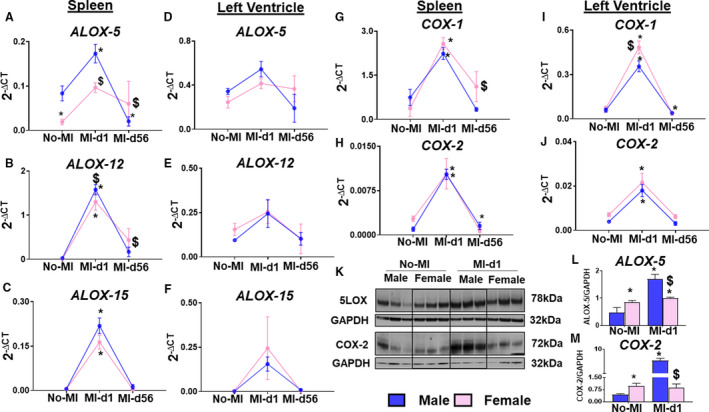
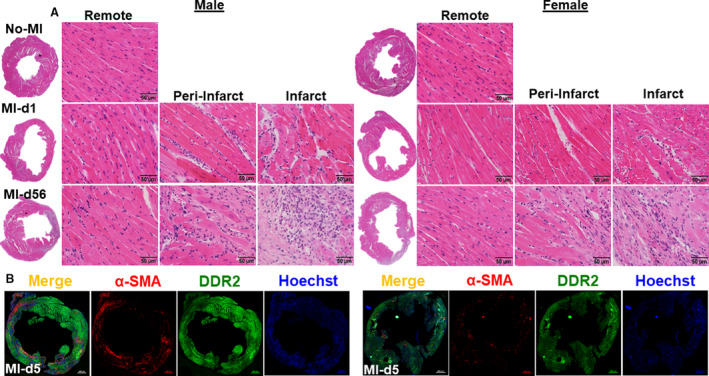
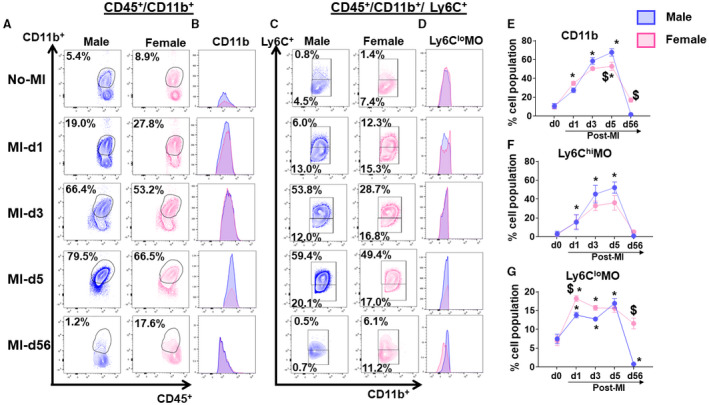
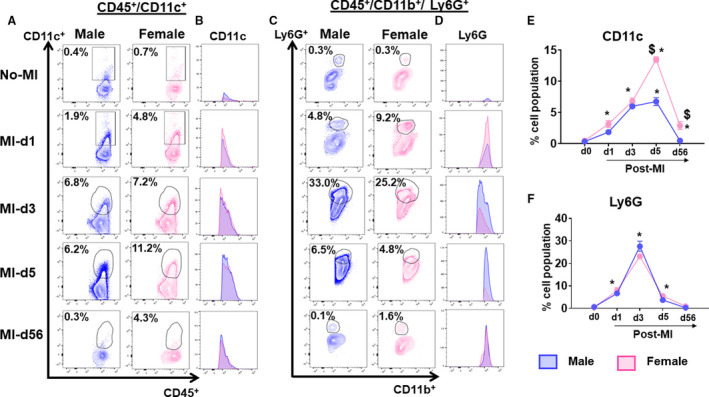
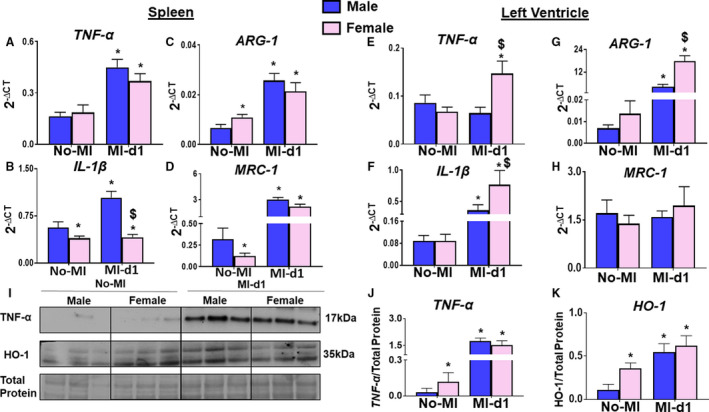
Background Leukocyte-directed biosynthesis of specialized proresolving mediators (SPMs) orchestrates physiological inflammation after myocardial infarction. Deficiency of SPMs drives pathological and nonresolving inflammation, leading to heart failure (HF). Differences in SPMs and inflammatory responses caused by sex-specific differences are of interest. We differentiated leukocyte-directed biosynthesis of lipid mediators in male and female mice, focusing on leukocyte populations, structural remodeling, functional recovery, and survival rates. Methods and Results Risk-free male and female C57BL/6 mice were selected as naïve controls or subjected to myocardial infarction surgery. Molecular and cellular mechanisms that differentiate survival, heart function, and structure and leukocyte-directed lipid mediators were quantified to describe physiological inflammation after myocardial infarction. Female mice show improved survival in acute HF but no statistical difference during chronic HF compared with male mice. Female mice improved survival is marked with functional recovery and limited remodeling compared with male mice. Male and female mice are similarly responsive to arachidonate lipoxygenase (, , -15) or cyclooxygenase (, ) in acute HF and particularly male infarcted heart had overall increased SPMs. Female cardiac healing is marked with the biosynthesis of differential p450-derived product, particularly 11,12 epoxyeicosatrienoic acid in acute HF. A sex-specific difference of dendritic cells in acute HF is distinct, with limited changes in chronic HF. Conclusions Cardiac repair is marked with increased SPM biosynthesis in male mice and amplified epoxyeicosatrienoic acid in female mice. Female mice showed improved survival, functional recovery, and limited remodeling, which are signs of fine-tuned physiological inflammation after myocardial infarction. These results rationalize the sex-specific precise therapies and differential treatments in acute and chronic HF.
白细胞定向合成的特异性促炎消退介质(SPM)在心肌梗死后调节生理性炎症。SPM 的缺乏会导致病理性和非消退性炎症,进而导致心力衰竭(HF)。性别特异性差异导致的 SPM 和炎症反应的差异引起了人们的关注。我们研究了雄性和雌性小鼠中白细胞定向合成脂质介质的情况,重点关注白细胞群体、结构重塑、功能恢复和存活率。
选择无风险的雄性和雌性 C57BL/6 小鼠作为对照,或进行心肌梗死手术。量化了区分生存、心脏功能、结构和白细胞定向脂质介质的分子和细胞机制,以描述心肌梗死后的生理性炎症。与雄性小鼠相比,雌性小鼠在急性心力衰竭时的存活率提高,但在慢性心力衰竭时没有统计学差异。雌性小鼠的存活率提高与功能恢复和有限的重塑有关,与雄性小鼠相比。雄性和雌性小鼠对花生四烯酸脂氧合酶(,,-15)或环氧化酶(,)在急性心力衰竭中的反应相似,特别是雄性梗死心脏的 SPM 总体增加。雌性心脏愈合的特征是合成差异的 p450 衍生产物,特别是急性心力衰竭中的 11,12 环氧二十碳三烯酸。急性心力衰竭中树突状细胞的性别特异性差异明显,慢性心力衰竭时变化有限。
雄性小鼠心脏修复以 SPM 生物合成增加为特征,雌性小鼠以环氧二十碳三烯酸增加为特征。雌性小鼠的存活率提高、功能恢复和有限的重塑,这些都是心肌梗死后生理性炎症精细调节的标志。这些结果为急性和慢性心力衰竭的性别特异性精确治疗和差异化治疗提供了依据。