Kim Ji-Hyung, Ki Yoonhee, Lee Hoyeon, Hur Moon Seong, Baik Bukyung, Hur Jin-Hoe, Nam Dougu, Lim Chunghun
School of Life Sciences, Ulsan National Institute of Science and Technology (UNIST), Ulsan, 44919, Republic of Korea.
UNIST Optical Biomed Imaging Center, UNIST, Ulsan, 44919, Republic of Korea.
Commun Biol. 2020 Apr 15;3(1):174. doi: 10.1038/s42003-020-0902-8.
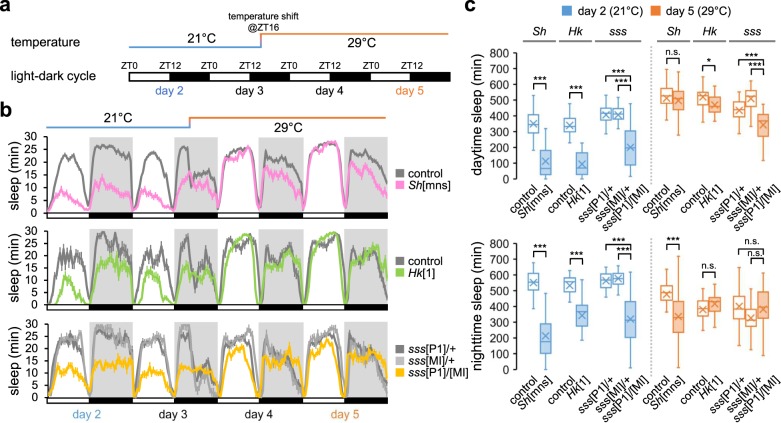
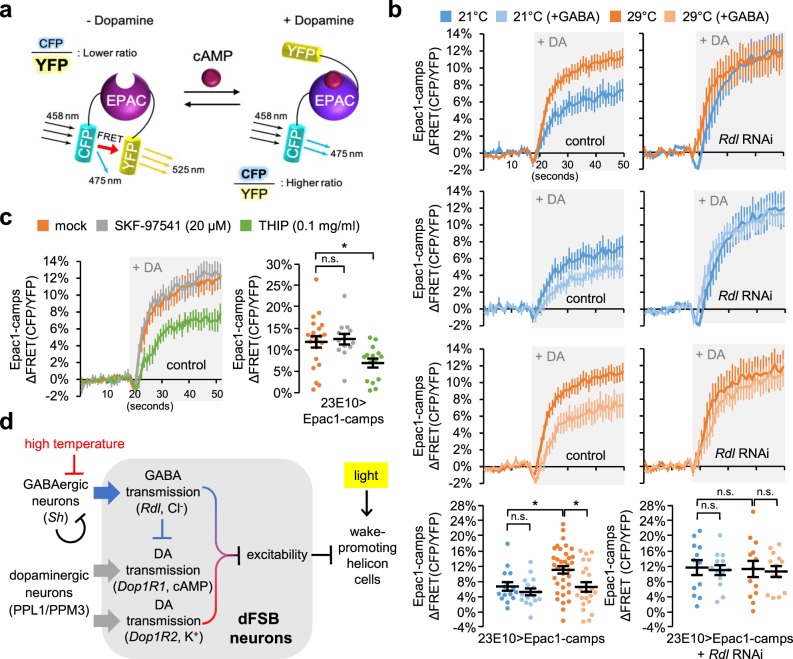
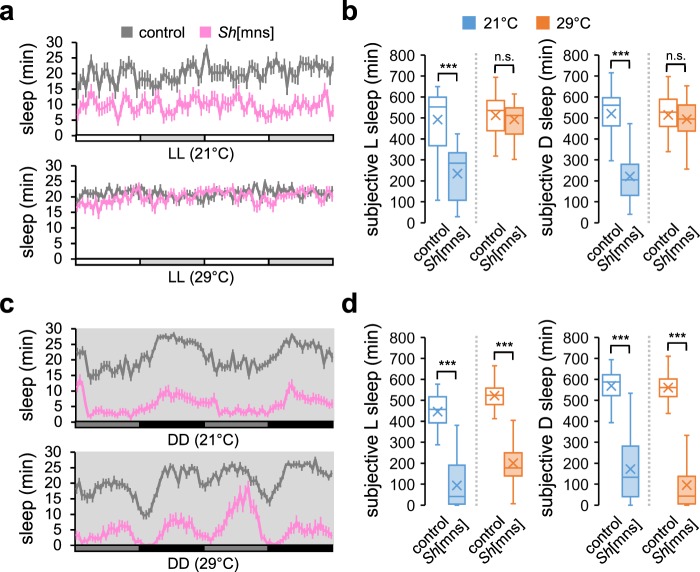
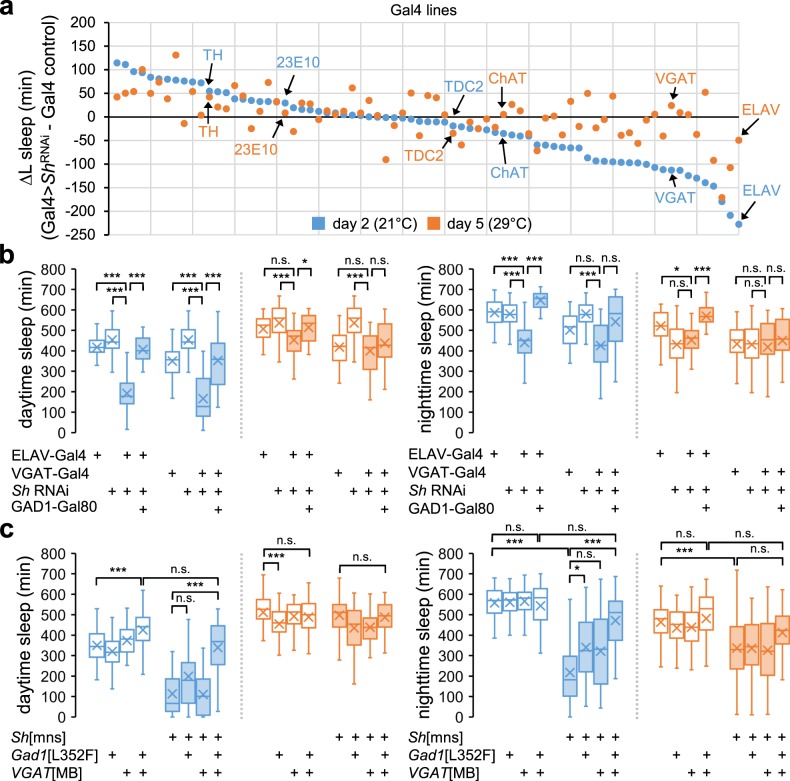
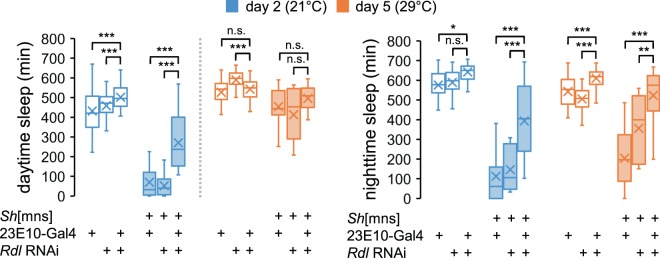
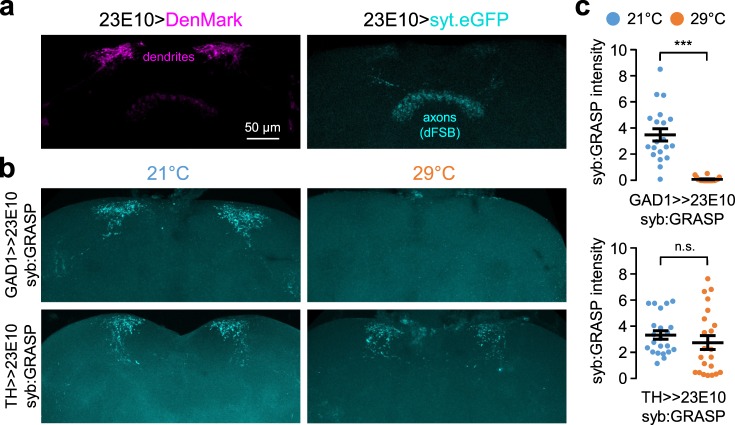
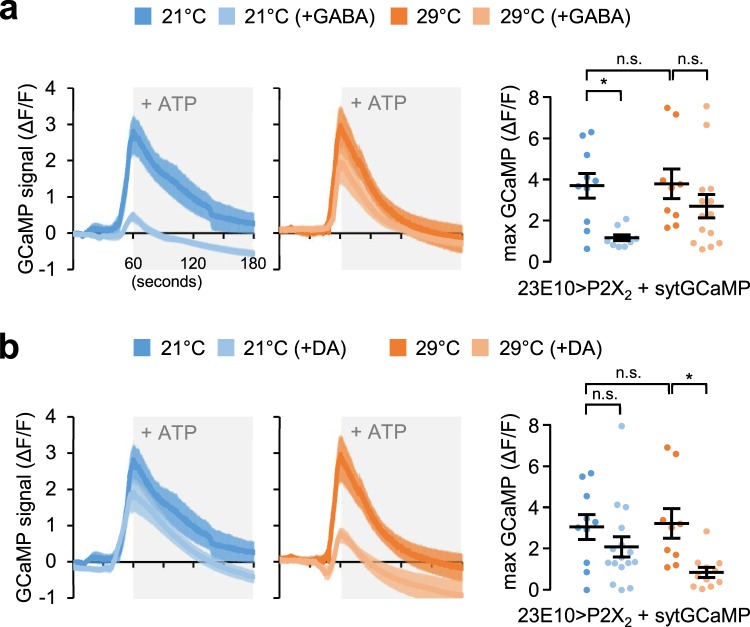
Genes and neural circuits coordinately regulate animal sleep. However, it remains elusive how these endogenous factors shape sleep upon environmental changes. Here, we demonstrate that Shaker (Sh)-expressing GABAergic neurons projecting onto dorsal fan-shaped body (dFSB) regulate temperature-adaptive sleep behaviors in Drosophila. Loss of Sh function suppressed sleep at low temperature whereas light and high temperature cooperatively gated Sh effects on sleep. Sh depletion in GABAergic neurons partially phenocopied Sh mutants. Furthermore, the ionotropic GABA receptor, Resistant to dieldrin (Rdl), in dFSB neurons acted downstream of Sh and antagonized its sleep-promoting effects. In fact, Rdl inhibited the intracellular cAMP signaling of constitutively active dopaminergic synapses onto dFSB at low temperature. High temperature silenced GABAergic synapses onto dFSB, thereby potentiating the wake-promoting dopamine transmission. We propose that temperature-dependent switching between these two synaptic transmission modalities may adaptively tune the neural property of dFSB neurons to temperature shifts and reorganize sleep architecture for animal fitness.
基因和神经回路协同调节动物睡眠。然而,这些内源性因素如何在环境变化时塑造睡眠仍不清楚。在这里,我们证明投射到背侧扇形体(dFSB)的表达Shaker(Sh)的GABA能神经元调节果蝇的温度适应性睡眠行为。Sh功能缺失在低温下抑制睡眠,而光照和高温协同控制Sh对睡眠的影响。GABA能神经元中Sh的缺失部分模拟了Sh突变体的表型。此外,dFSB神经元中的离子型GABA受体狄氏剂抗性(Rdl)在Sh的下游起作用,并拮抗其促进睡眠的作用。事实上,Rdl在低温下抑制了dFSB上组成型活性多巴胺能突触的细胞内cAMP信号传导。高温使dFSB上的GABA能突触沉默,从而增强促进觉醒的多巴胺传递。我们提出,这两种突触传递方式之间的温度依赖性转换可能会使dFSB神经元的神经特性适应温度变化,并重新组织睡眠结构以提高动物的适应性。