Department of Surgical Oncology (Breast Center) of The Second Affiliated Hospital, Zhejiang University School of Medicine, Hangzhou 310058, China.
Department of Pathology and Pathophysiology, Zhejiang University School of Medicine, Hangzhou 310058, China.
Cancer Biol Med. 2020 Feb 15;17(1):44-59. doi: 10.20892/j.issn.2095-3941.2019.0210.
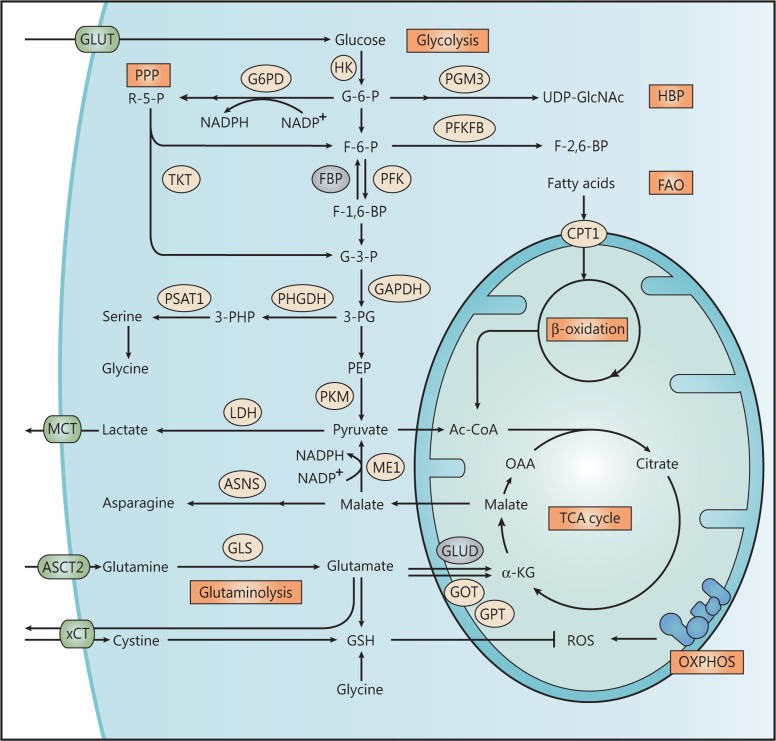
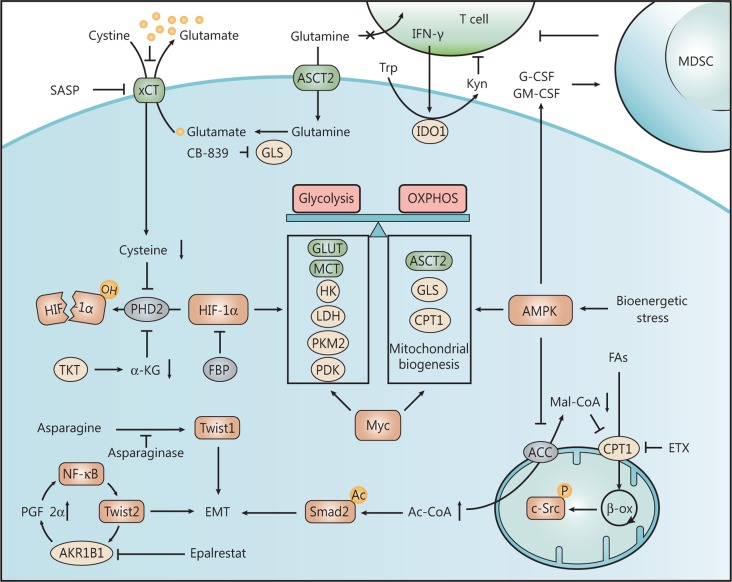
Since triple-negative breast cancer (TNBC) was first defined over a decade ago, increasing studies have focused on its genetic and molecular characteristics. Patients diagnosed with TNBC, compared to those diagnosed with other breast cancer subtypes, have relatively poor outcomes due to high tumor aggressiveness and lack of targeted treatment. Metabolic reprogramming, an emerging hallmark of cancer, is hijacked by TNBC to fulfill bioenergetic and biosynthetic demands; maintain the redox balance; and further promote oncogenic signaling, cell proliferation, and metastasis. Understanding the mechanisms of metabolic remodeling may guide the design of metabolic strategies for the effective intervention of TNBC. Here, we review the metabolic reprogramming of glycolysis, oxidative phosphorylation, amino acid metabolism, lipid metabolism, and other branched pathways in TNBC and explore opportunities for new biomarkers, imaging modalities, and metabolically targeted therapies.
自十多年前首次定义三阴性乳腺癌(TNBC)以来,越来越多的研究集中在其遗传和分子特征上。与其他乳腺癌亚型相比,诊断为 TNBC 的患者由于肿瘤侵袭性高且缺乏靶向治疗,预后相对较差。代谢重编程是癌症的一个新兴标志,被 TNBC 劫持以满足生物能量和生物合成需求;维持氧化还原平衡;并进一步促进致癌信号、细胞增殖和转移。了解代谢重塑的机制可能有助于设计代谢策略,以有效干预 TNBC。在这里,我们回顾了 TNBC 中糖酵解、氧化磷酸化、氨基酸代谢、脂质代谢和其他分支途径的代谢重编程,并探讨了新的生物标志物、成像方式和代谢靶向治疗的机会。