Department of Environmental Sciences, Soil Biology Group, Wageningen University & Research, P.O. Box 47, 6700 AA, Wageningen, The Netherlands.
Laboratory of Plant Physiology, Wageningen University & Research, Wageningen, The Netherlands.
Mycorrhiza. 2020 May;30(2-3):315-328. doi: 10.1007/s00572-020-00953-z. Epub 2020 Apr 15.
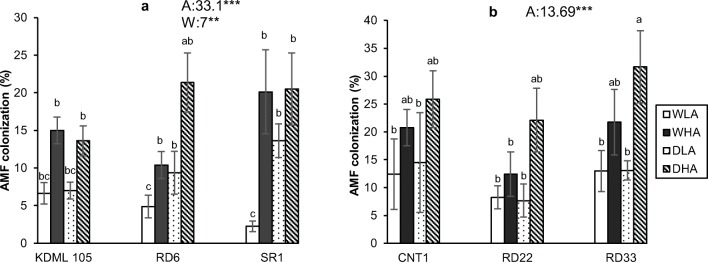
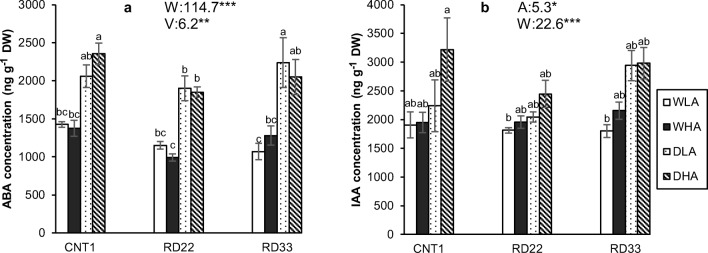
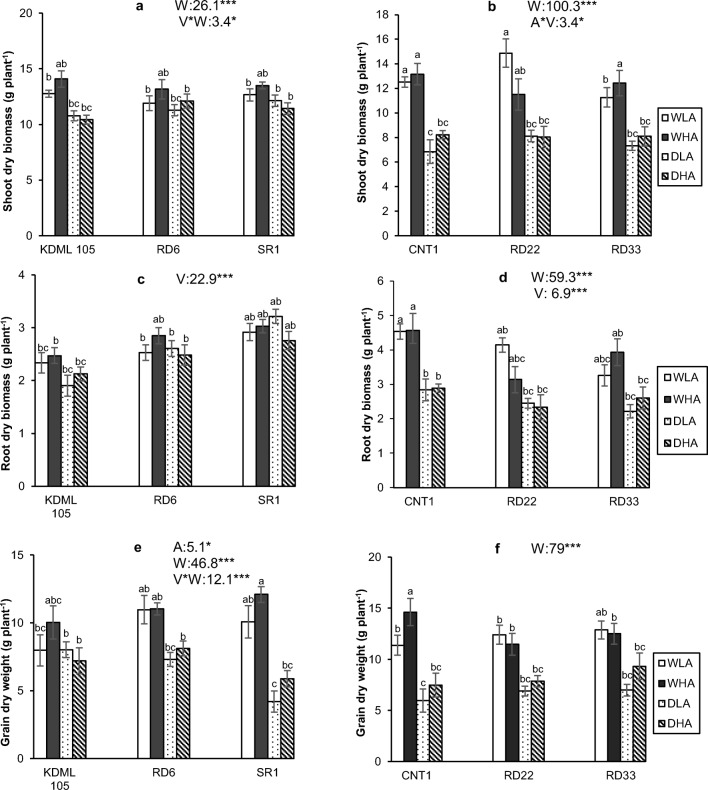
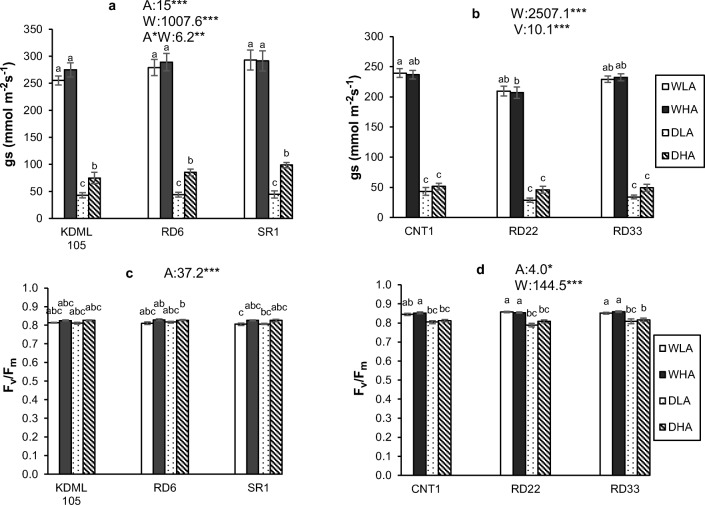
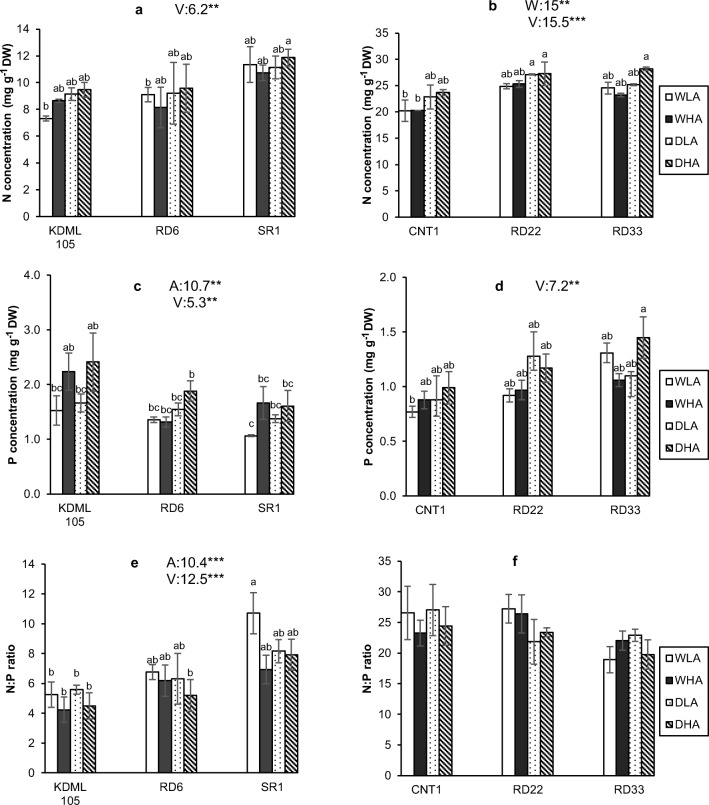
Drought reduces the availability of soil water and the mobility of nutrients, thereby limiting the growth and productivity of rice. Under drought, arbuscular mycorrhizal fungi (AMF) increase P uptake and sustain rice growth. However, we lack knowledge of how the AMF symbiosis contributes to drought tolerance of rice. In the greenhouse, we investigated mechanisms of AMF symbiosis that confer drought tolerance, such as enhanced nutrient uptake, stomatal conductance, chlorophyll fluorescence, and hormonal balance (abscisic acid (ABA) and indole acetic acid (IAA)). Two greenhouse pot experiments comprised three factors in a full factorial design with two AMF treatments (low- and high-AMF colonization), two water treatments (well-watered and drought), and three rice varieties. Soil water potential was maintained at 0 kPa in the well-watered treatment. In the drought treatment, we reduced soil water potential to - 40 kPa in experiment 1 (Expt 1) and to - 80 kPa in experiment 2 (Expt 2). Drought reduced shoot and root dry biomass and grain yield of rice in both experiments. The reduction of grain yield was less with higher AMF colonization. Plants with higher AMF colonization showed higher leaf P concentrations than plants with lower colonization in Expt 1, but not in Expt 2. Plants with higher AMF colonization exhibited higher stomatal conductance and chlorophyll fluorescence than plants with lower colonization, especially under drought. Drought increased the levels of ABA and IAA, and AMF colonization also resulted in higher levels of IAA. The results suggest both nutrient-driven and plant hormone-driven pathways through which AMF confer drought tolerance to rice.
干旱会减少土壤水分的可利用性和养分的流动性,从而限制水稻的生长和生产力。在干旱条件下,丛枝菌根真菌(AMF)会增加磷的吸收,维持水稻的生长。然而,我们对 AMF 共生体如何有助于提高水稻的耐旱性知之甚少。在温室中,我们研究了 AMF 共生体赋予水稻耐旱性的机制,例如增强养分吸收、气孔导度、叶绿素荧光和激素平衡(脱落酸(ABA)和吲哚乙酸(IAA))。两个温室盆栽实验包含三个因素的完全析因设计,有两个 AMF 处理(低和高 AMF 定植)、两个水分处理(充分浇水和干旱)和三个水稻品种。在充分浇水处理中,土壤水势保持在 0 kPa。在干旱处理中,我们在实验 1(Expt 1)中将土壤水势降低到-40 kPa,在实验 2(Expt 2)中降低到-80 kPa。干旱减少了两个实验中水稻的地上部和地下部干生物量和籽粒产量。较高的 AMF 定植减少了籽粒产量的减少。在 Expt 1 中,与较低定植的植物相比,具有较高 AMF 定植的植物具有更高的叶片磷浓度,但在 Expt 2 中则不然。具有较高 AMF 定植的植物表现出较高的气孔导度和叶绿素荧光,尤其是在干旱条件下。干旱增加了 ABA 和 IAA 的水平,而 AMF 定植也导致 IAA 水平升高。结果表明,AMF 赋予水稻耐旱性的途径既有营养驱动的途径,也有植物激素驱动的途径。