Department of Epidemiology, Ministry of Education Key Lab of Hazard Assessment and Control in Special Operational Environment, School of Public Health, Air Force Medical University, Xi'an, 710032, China.
Health Commission of Shaanxi Province, Xi'an, 710003, China.
BMC Public Health. 2020 Apr 16;20(1):506. doi: 10.1186/s12889-020-08599-4.
Brucellosis is a serious public health problem primarily affecting livestock workers. The strong seasonality of the disease indicates that climatic factors may play important roles in the transmission of the disease. However, the associations between climatic variability and human brucellosis are still poorly understood.
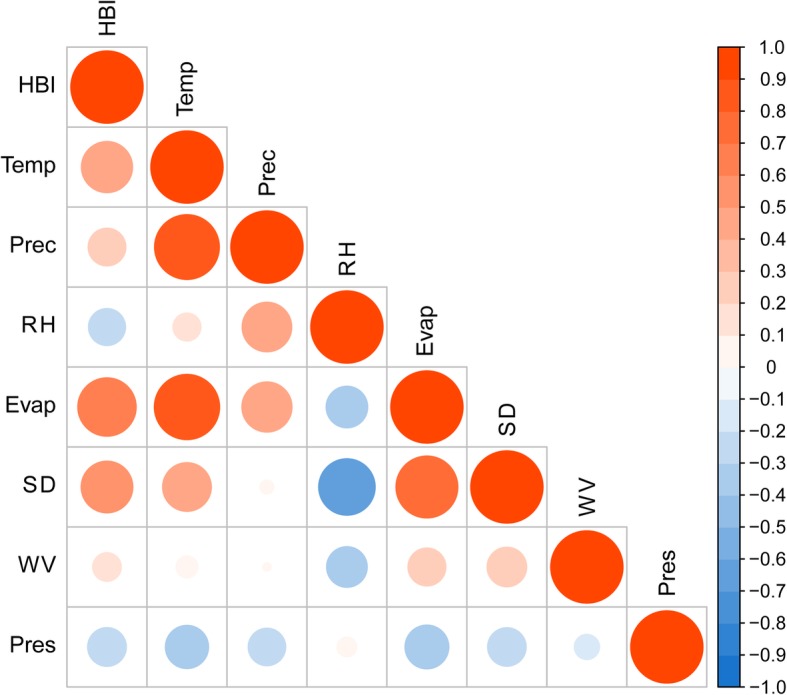
Data for a 14-year series of human brucellosis cases and seven climatic factors were collected in Yulin City from 2005 to 2018, one of the most endemic areas in northern China. Using cross-correlation analysis, the Granger causality test, and a distributed lag non-linear model (DLNM), we assessed the quantitative relationships and exposure-lag-response effects between monthly climatic factors and human brucellosis.
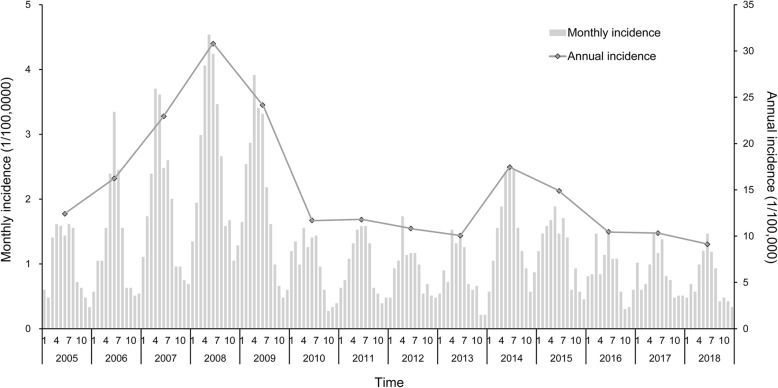
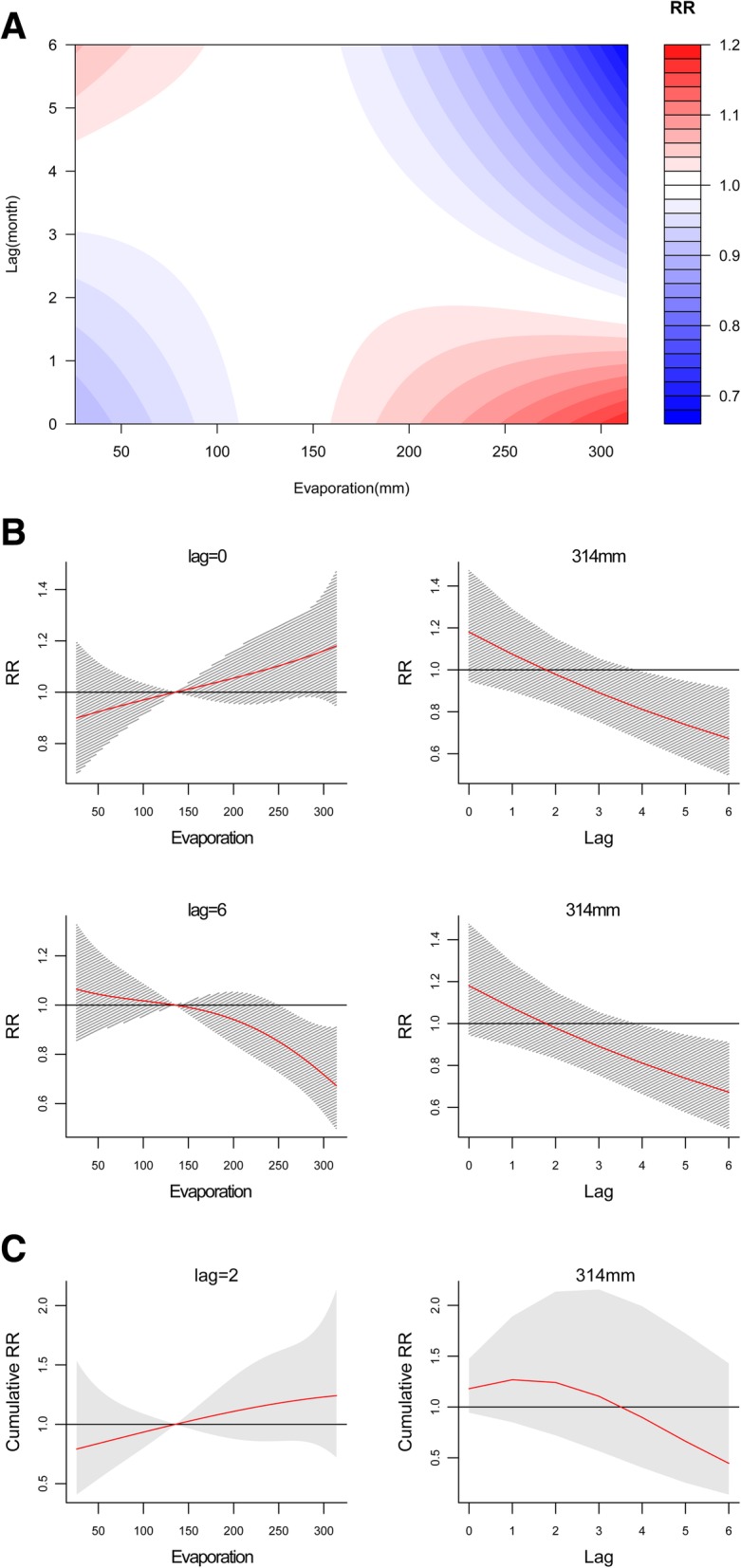
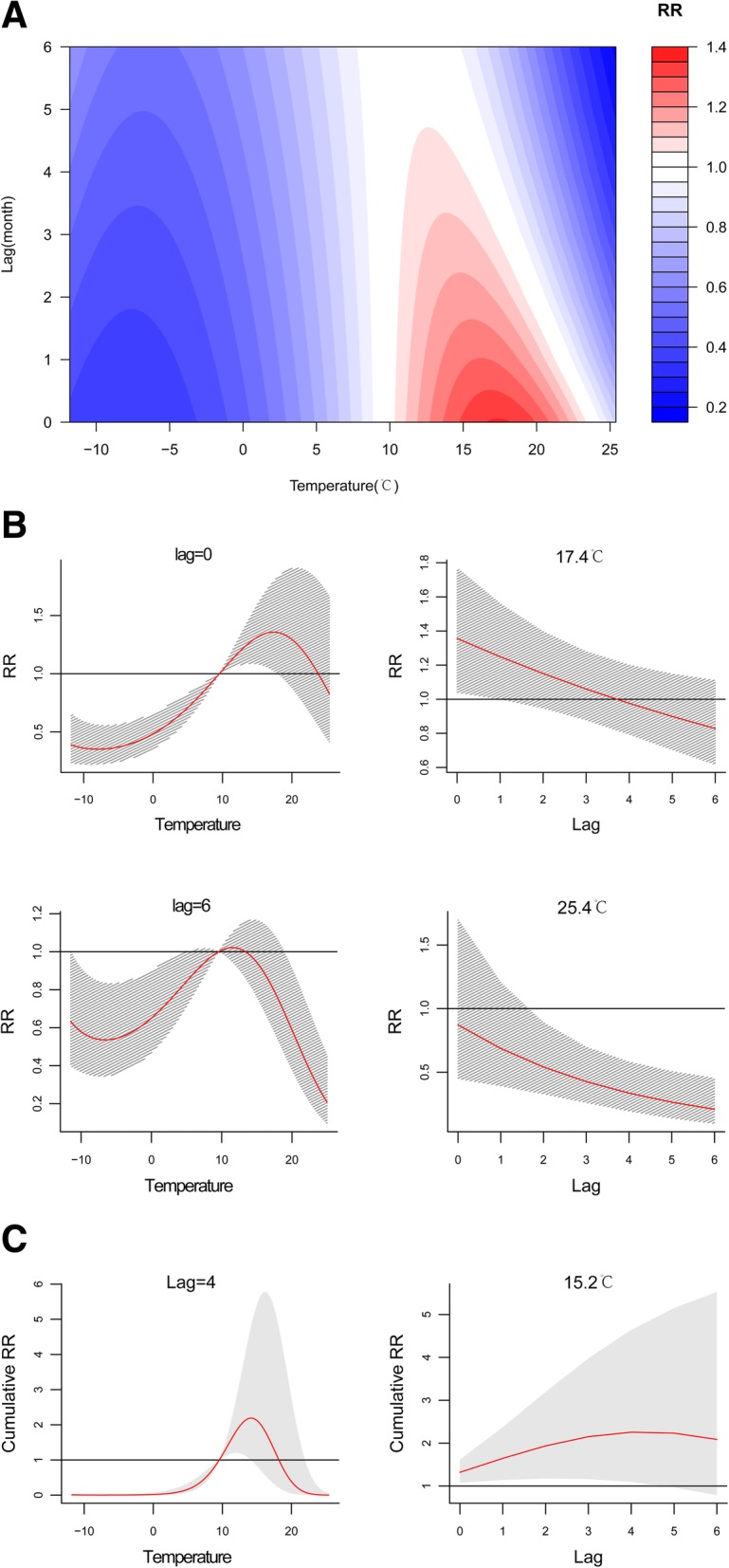
A total of 7103 cases of human brucellosis were reported from 2005 to 2018 in Yulin City with a distinct peak between April and July each year. Seasonal fluctuations in the transmission of human brucellosis were significantly affected by temperature, sunshine duration, and evaporation. The effects of climatic factors were non-linear over the 6-month period, and higher values of these factors usually increased disease incidence. The maximum separate relative risk (RR) was 1.36 (95% confidence interval [CI], 1.03-1.81) at a temperature of 17.4 °C, 1.12 (95% CI, 1.03-1.22) with 311 h of sunshine, and 1.18 (95% CI, 0.94-1.48) with 314 mm of evaporation. In addition, the effects of these three climatic factors were cumulative, with the highest RRs of 2.27 (95% CI, 1.09-4.57), 1.54 (95% CI, 1.10-2.18), and 1.27 (95% CI, 0.73-2.14), respectively.
In Yulin, northern China, variations in climatic factors, especially temperature, sunshine duration, and evaporation, contributed significantly to seasonal fluctuations of human brucellosis within 6 months. The key determinants of brucellosis transmission and the identified complex associations are useful references for developing strategies to reduce the disease burden.
布鲁氏菌病是一个严重的公共卫生问题,主要影响畜牧业工作者。该病具有明显的季节性,表明气候因素可能在疾病传播中发挥重要作用。然而,气候变异性与人类布鲁氏菌病之间的关联仍知之甚少。
收集了 2005 年至 2018 年中国北方流行地区之一榆林市的 14 年人类布鲁氏菌病病例和 7 种气候因素数据。采用交叉相关分析、格兰杰因果检验和分布滞后非线性模型(DLNM),评估了每月气候因素与人类布鲁氏菌病之间的定量关系和暴露-滞后-反应效应。
2005 年至 2018 年榆林市共报告 7103 例人类布鲁氏菌病病例,每年 4 月至 7 月呈明显高峰。人类布鲁氏菌病传播的季节性波动明显受温度、日照时间和蒸发的影响。这些因素在 6 个月的时间内存在非线性影响,这些因素的较高值通常会增加疾病的发病率。温度为 17.4°C 时,最大独立相对风险(RR)为 1.36(95%置信区间[CI],1.03-1.81),日照时间为 311 小时时为 1.12(95% CI,1.03-1.22),蒸发量为 314 毫米时为 1.18(95% CI,0.94-1.48)。此外,这三个气候因素的影响是累积的,RR 最高分别为 2.27(95% CI,1.09-4.57)、1.54(95% CI,1.10-2.18)和 1.27(95% CI,0.73-2.14)。
在中国北方的榆林市,气候因素的变化,尤其是温度、日照时间和蒸发量,在 6 个月内对人类布鲁氏菌病的季节性波动有重要贡献。布鲁氏菌病传播的关键决定因素和确定的复杂关联为制定减少疾病负担的策略提供了有用的参考。