Departamento de Inmunología, Instituto de Investigaciones Biomédicas, Universidad Nacional Autónoma de México, Ciudad de México, Mexico.
Tecnológico de Monterrey, Escuela de Medicina y Ciencias de la Salud, Monterrey, Mexico.
Front Immunol. 2020 Apr 2;11:375. doi: 10.3389/fimmu.2020.00375. eCollection 2020.
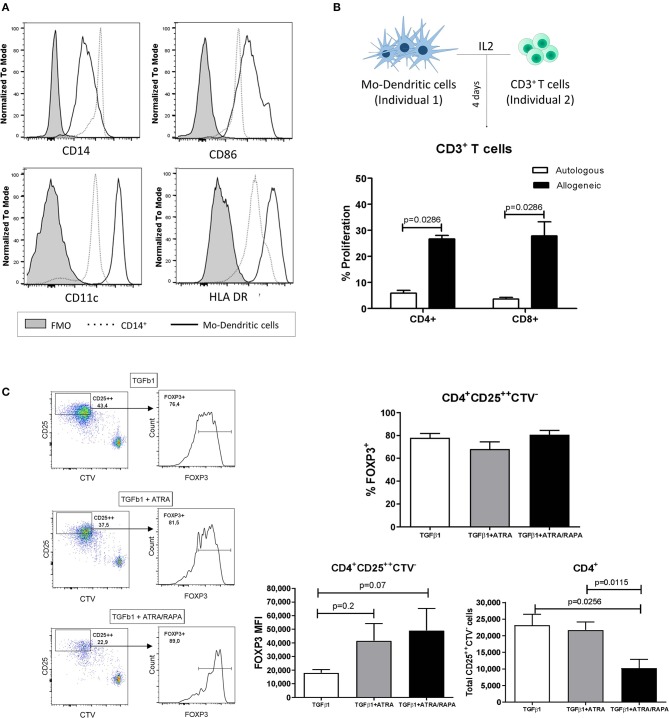
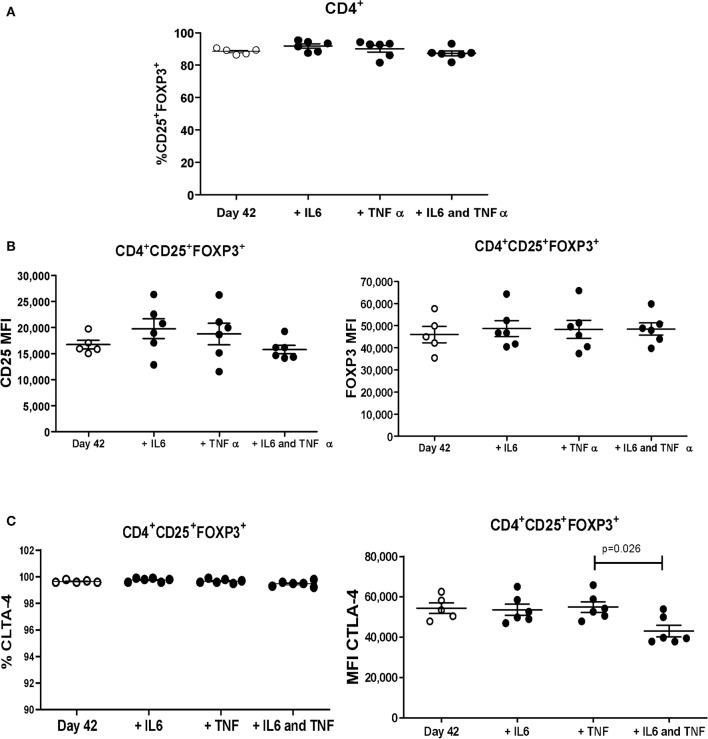
Regulatory T cells play an important role in the control of autoimmune diseases and maintenance of tolerance. In the context of transplantation, regulatory T cells (Tregs) have been proposed as new therapeutic tools that may induce allospecific tolerance toward the graft, avoiding the side effects induced by generalized immunosuppressors. Although most clinical trials are based on the use of thymic Tregs in adoptive therapy, some reports suggest the potential use of induced Tregs (iTregs), based on their functional stability under inflammatory conditions, indicating an advantage in a setting of allograft rejection. The aim of this work was to generate and expand large numbers of allospecific Tregs that maintain stable suppressive function in the presence of pro-inflammatory cytokines. Dendritic cells were derived from monocytes isolated from healthy donors and were co-cultured with CTV-labeled naïve T cells from unrelated individuals, in the presence of TGF-β1, IL-2, and retinoic acid. After 7 days of co-culture, proliferating CD4CD25CTV cells (allospecific iTregs) were sorted and polyclonally expanded for 6 weeks in the presence of TGF-β1, IL-2, and rapamycin. After 6 weeks of polyclonal activation, iTregs were expanded 230,000 times, giving rise to 4,600 million allospecific iTregs. Allospecific iTregs were able to specifically suppress the proliferation of autologous CD4 and CD8 T cells in response to the allo-MoDCs used for iTreg generation, but not to third-party allo-MoDCs. Importantly, 88.5% of the expanded cells were CD4CD25FOXP3, expressed high levels of CCR4 and CXCR3, and maintained their phenotype and suppressive function in the presence of TNF-α and IL-6. Finally, analysis of the methylation status of the FOXP3 TSDR locus demonstrated a 40% demethylation in the purified allospecific iTreg, prior to the polyclonal expansion. Interestingly, the phenotype and suppressive activity of expanded allospecific iTregs were maintained after 6 weeks of expansion, despite an increase in the methylation status of the FOXP3 TSDR. In conclusion, this is the first report that demonstrates a large-scale generation of allospecific iTregs that preserve a stable phenotype and suppressor function in the presence of pro-inflammatory cytokines and pave the way for adoptive cell therapy with iTregs in transplanted patients.
调节性 T 细胞在控制自身免疫性疾病和维持耐受中发挥重要作用。在移植背景下,调节性 T 细胞(Tregs)被提议作为新的治疗工具,可能诱导对移植物的同种特异性耐受,避免全身性免疫抑制剂引起的副作用。尽管大多数临床试验基于在过继疗法中使用胸腺 Tregs,但一些报告表明,诱导的 Tregs(iTregs)具有潜在用途,因为它们在炎症条件下具有功能稳定性,这表明在同种异体排斥的情况下具有优势。本工作的目的是生成和扩增大量同种特异性 Tregs,使其在存在促炎细胞因子的情况下保持稳定的抑制功能。树突状细胞(DCs)源自健康供体分离的单核细胞,并与来自无关个体的 CTV 标记的幼稚 T 细胞在 TGF-β1、IL-2 和维甲酸存在下共培养。共培养 7 天后,增殖的 CD4CD25CTV 细胞(同种特异性 iTregs)被分选,并在 TGF-β1、IL-2 和雷帕霉素存在下进行 6 周的多克隆扩增。多克隆激活 6 周后,iTregs 扩增 230,000 倍,产生 46 亿个同种特异性 iTregs。同种特异性 iTregs 能够特异性抑制对用于 iTreg 生成的同种异体 MoDCs 的自身 CD4 和 CD8 T 细胞的增殖,但不能抑制对第三方同种异体 MoDCs 的增殖。重要的是,扩增的细胞中有 88.5%为 CD4CD25FOXP3,表达高水平的 CCR4 和 CXCR3,并在存在 TNF-α和 IL-6 的情况下保持其表型和抑制功能。最后,FOXP3 TSDR 基因座的甲基化状态分析表明,在多克隆扩增前,纯化的同种特异性 iTreg 中发生了 40%的去甲基化。有趣的是,尽管 FOXP3 TSDR 的甲基化状态增加,但扩增的同种特异性 iTregs 的表型和抑制活性在 6 周的扩增后仍得到维持。总之,这是首次报道大规模生成同种特异性 iTregs,这些细胞在存在促炎细胞因子的情况下保持稳定的表型和抑制功能,为移植患者中 iTreg 的过继细胞治疗铺平了道路。