Skelton Dawn A, Mavroeidi Alexandra
School of Health and Life Sciences, Glasgow Caledonian University, Glasgow, UK.
J Frailty Sarcopenia Falls. 2018 Jun 1;3(2):74-84. doi: 10.22540/JFSF-03-074. eCollection 2018 Jun.
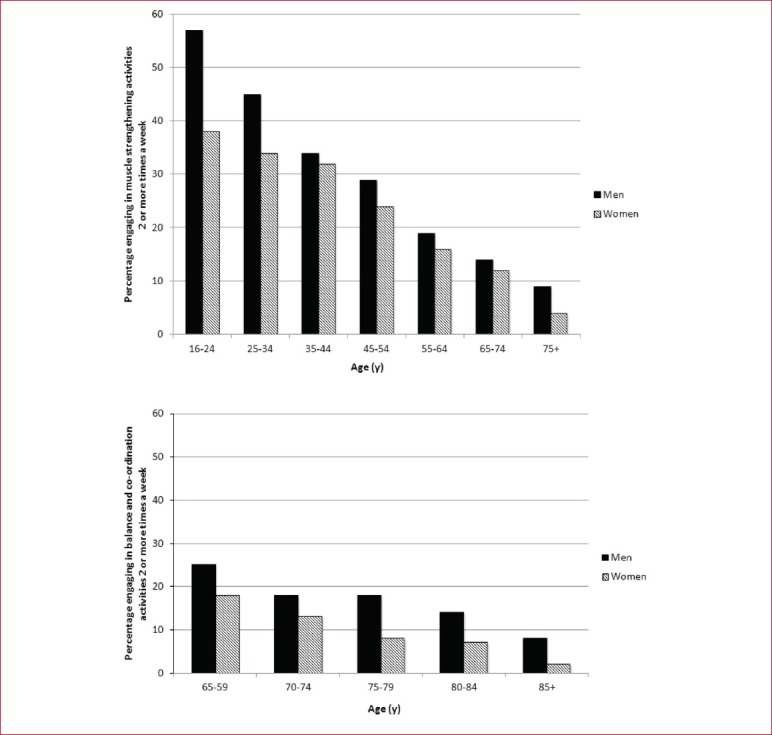
This narrative review focuses on the role of strength and balance activities throughout the lifecycle to improve physical capacity and reduce all-cause mortality. The evidence suggests strong associations in middle and older age, with poor balance, poor strength or poor physical function having strong associations with mortality. Currently in the UK, the proportions of adults (69% of men and 76% of women) not meeting the strength and balance guidelines (of 2 or more sessions/week) is concerning. This report identifies specific time points in the lifecycle where specific promotion of and engagement with strength and balance activities would be most beneficial for health: 18-24y to maximize bone and muscle mass gains, 40-50y to maintain strength and reduce that downward cycle, and over 65s to preserve balance and strength and maintain independence). This review also suggests specific transition points/events in life where there may be an increase in sedentary behaviour or loss of muscle function (pregnancy, menopause, onset of on diagnosis of disease, retirement, on becoming a carer and following hospitalization), where it would be useful to initiate additional strength and balance exercises to improve future health outcomes.
本叙述性综述聚焦于力量和平衡活动在整个生命周期中对提高身体能力及降低全因死亡率的作用。证据表明,在中年及老年人群中,平衡能力差、力量不足或身体功能不佳与死亡率密切相关。目前在英国,未达到力量和平衡指南(每周2次或更多次)的成年人比例令人担忧(69%的男性和76%的女性)。本报告确定了生命周期中的特定时间点,在这些时间点特别推广和参与力量与平衡活动对健康最为有益:18 - 24岁可使骨骼和肌肉量增长最大化,40 - 50岁可维持力量并减少身体机能下降周期,65岁以上可保持平衡和力量并维持独立)。本综述还指出了生活中特定的过渡点/事件,这些时候久坐行为可能增加或肌肉功能丧失(怀孕、绝经、疾病诊断开始时、退休、成为照顾者以及住院后),此时开展额外的力量和平衡锻炼对改善未来健康状况会很有帮助。