The W Clinic, Seoul, Korea.
Department of Surgery, Breast and Thyroid Cancer Center, Ewha Womans University School of Medicine, Seoul, Korea.
J Korean Med Sci. 2020 Apr 20;35(15):e103. doi: 10.3346/jkms.2020.35.e103.
Korea is no longer safe from the risk of breast implant-associated anaplastic large cell lymphoma (BIA-ALCL); the first reported case was a Korean woman in her 40s who had a 7-year-history of receiving an implant-based augmentation mammaplasty using a textured implant. We conducted this study to discuss the emerging crisis of stakeholders in implant-based augmentation mammaplasty and to propose a multi-disciplinary approach to early detection of its complications.
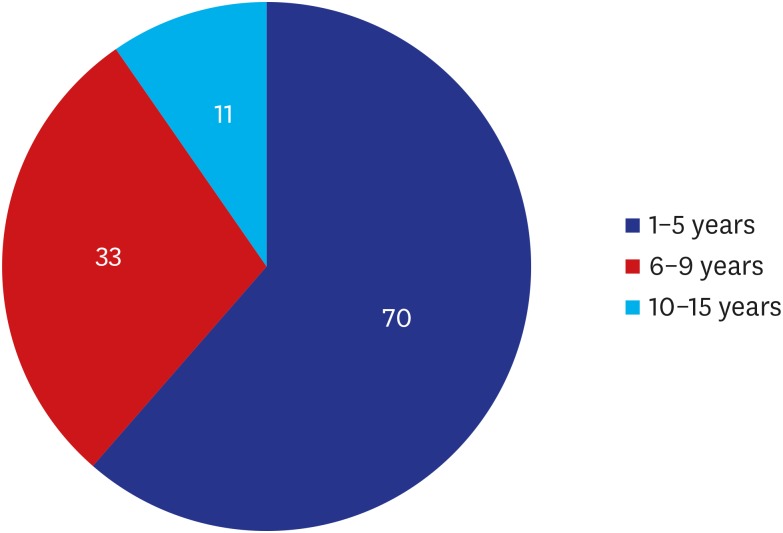
We analyzed medical examination data that was collected from patients who visited us between August 12 and September 27, 2019. We evaluated a total of 114 women (n = 114) in the current study. They were evaluated for whether they were in healthy condition. Moreover, their baseline characteristics were also examined; these included age, gender, height (cm), weight (kg), duration since surgery (years), possession of a breast implant card, the site of surgical incision, side of symptoms and reasons for outpatient visit. Furthermore, the patients were also evaluated for their subjective awareness of the manufacturer, surface and shape of the breast implant. Potential complications include malrotation, folding, seroma, capsule thickening, upside-down rotation, rupture, capsule mass and breast mass.
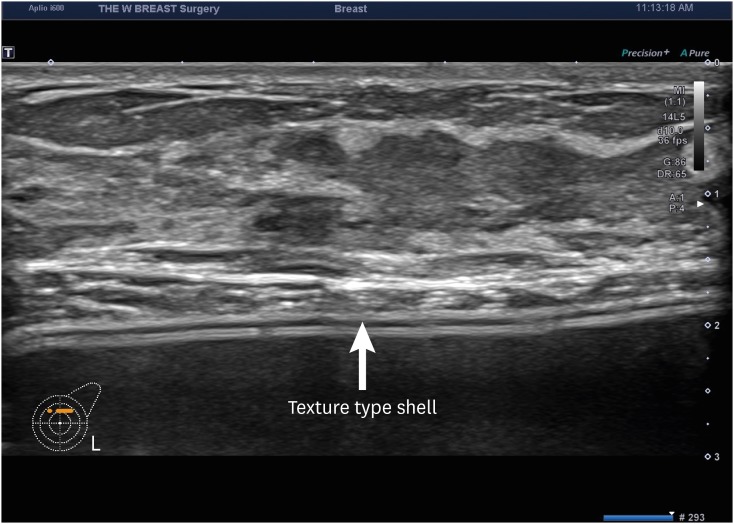
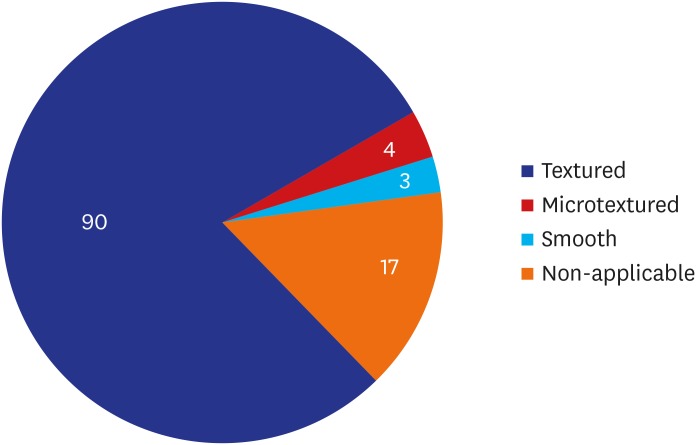
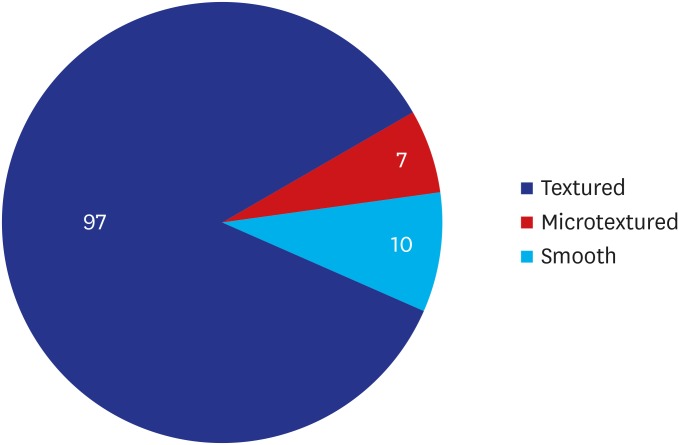
A majority of the patients had a past history of receiving textured implants. The corresponding percentage was 78.95% (90/114) and 85.09% (97/114) based on their subjective awareness of a breast implant and sonographic findings, respectively. That is, it was slightly increased with the use of a breast ultrasound.
Here, we propose the following approaches. First, patient data should be prospectively collected. By tracking outcomes and complications of an implant-based augmentation mammaplasty, both high-quality care and patient safety can be ensured. Second, stakeholders in implant-based augmentation mammaplasty should collaborate with customers and regulatory authorities. Third, surgeons should consider applying imaging modalities for early detection of postoperative complications.
韩国不再免受乳房植入物相关间变性大细胞淋巴瘤(BIA-ALCL)的风险;首例报告的病例是一名 40 多岁的韩国女性,她有 7 年接受基于植入物的隆胸术的历史,使用的是纹理植入物。我们进行这项研究是为了讨论基于植入物的隆胸术利益相关者面临的新危机,并提出一种多学科方法来早期发现其并发症。
我们分析了 2019 年 8 月 12 日至 9 月 27 日期间来我院就诊的患者的体检数据。本研究共评估了 114 名女性(n=114)。评估了她们的健康状况。此外,还检查了她们的基线特征,包括年龄、性别、身高(cm)、体重(kg)、手术时间(年)、是否持有乳房植入物卡、手术切口部位、症状部位和就诊原因。此外,还评估了患者对乳房植入物制造商、表面和形状的主观意识。潜在的并发症包括旋转不良、折叠、血清肿、包膜增厚、倒置旋转、破裂、包膜肿块和乳房肿块。
大多数患者有接受纹理植入物的既往史。基于患者对乳房植入物的主观意识和超声检查结果,分别有 78.95%(90/114)和 85.09%(97/114)的患者有此病史。也就是说,使用乳房超声检查时略有增加。
在这里,我们提出以下方法。首先,应前瞻性收集患者数据。通过跟踪基于植入物的隆胸术的结果和并发症,可以确保高质量的护理和患者安全。其次,基于植入物的隆胸术利益相关者应与客户和监管机构合作。第三,外科医生应考虑应用成像方式来早期发现术后并发症。