Vincent Center for Reproductive Biology, Massachusetts General Hospital, Boston, MA 02114, USA.
Department of Obstetrics, Gynecology and Reproductive Biology, Harvard Medical School, Boston, MA 02115, USA.
Aging (Albany NY). 2020 Apr 17;12(8):7313-7333. doi: 10.18632/aging.103080.
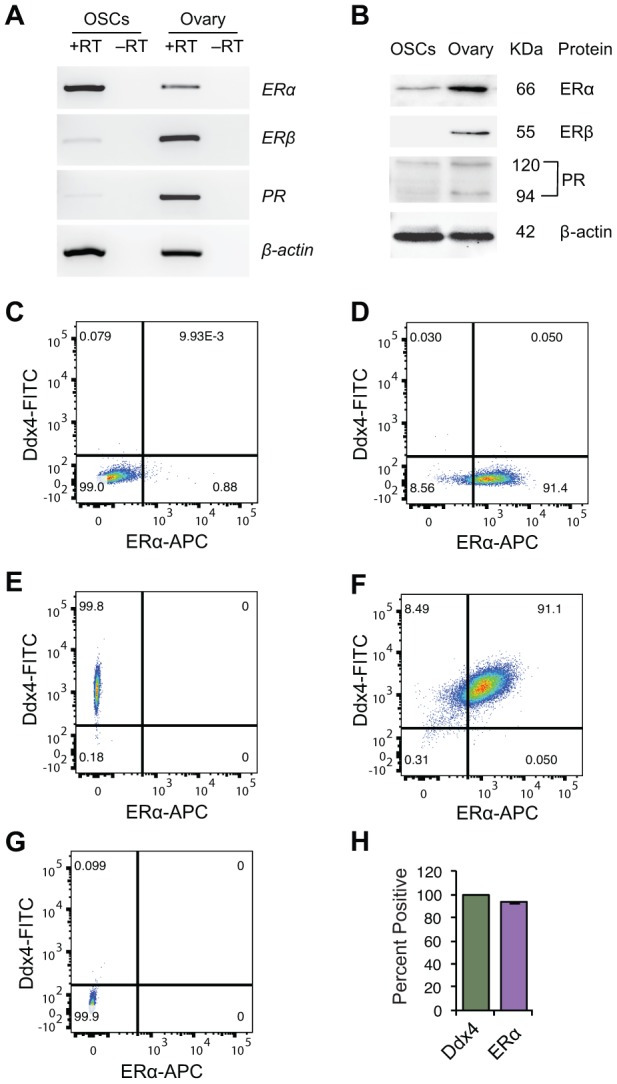
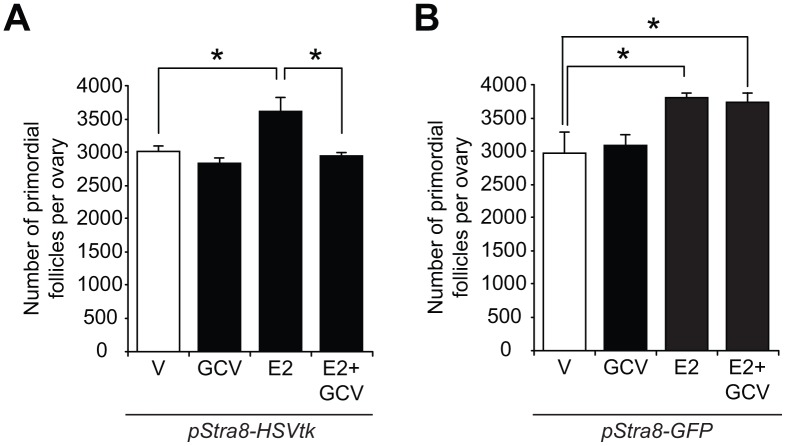
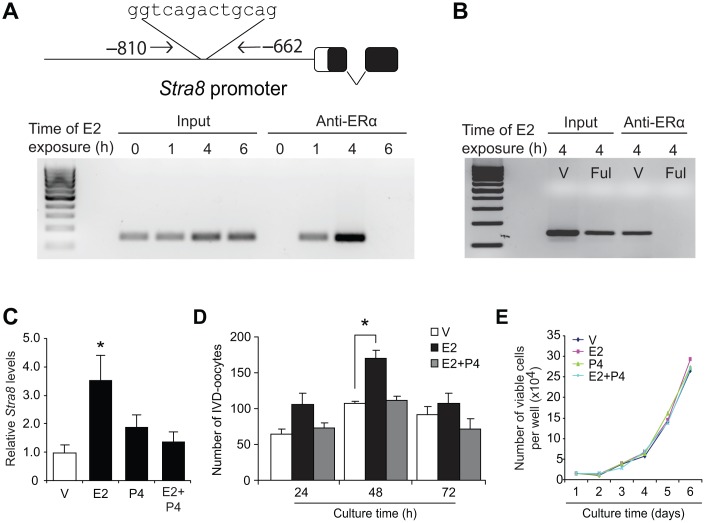
Progressive loss of ovarian estrogen (E2) production is a hallmark feature of, if not a driving force behind, reproductive aging and the menopause. Recent genetic studies in mice have shown that female germline or oogonial stem cells (OSCs) contribute to maintenance of adult ovarian function and fertility under physiological conditions through support of oogenesis. Here we show that mouse OSCs express E2 receptor-α (ERα). In the presence of E2, ERα interacts with the () promoter to drive expression followed by oogenesis. Treatment of mice with E2 increases expression and oogenesis, and these effects are nullified by (), but not (), gene disruption. Although mice lacking ERα are born with a normal quota of oocytes, ERα-deficient females develop premature ovarian insufficiency in adulthood due to impaired oogenesis. Lastly, mice treated with reversible ER antagonists show a loss of expression and oocyte numbers; however, both endpoints rebound to control levels after ceasing drug treatment. These findings establish a key physiological role for E2-ERα signaling in promoting OSC differentiation as a potential mechanism to maintain adequate numbers of ovarian follicles during reproductive life.
卵巢雌激素 (E2) 产生的逐渐丧失是生殖衰老和绝经的标志特征,如果不是其背后的驱动力的话。最近在小鼠中的遗传研究表明,雌性生殖细胞或卵原干细胞 (OSC) 通过支持卵子发生,在生理条件下有助于维持成年卵巢功能和生育能力。在这里,我们发现小鼠 OSCs 表达 E2 受体-α (ERα)。在 E2 的存在下,ERα 与 () 启动子相互作用,驱动 表达,随后进行卵子发生。用 E2 处理小鼠会增加 表达和卵子发生,而这些效应被 () 但不是 () 基因缺失所消除。尽管缺乏 ERα 的小鼠出生时带有正常数量的卵母细胞,但由于卵子发生受损,ERα 缺陷型雌性在成年后会发展为卵巢早衰。最后,用可逆 ER 拮抗剂处理的小鼠表现出 表达和卵母细胞数量减少;然而,在停止药物治疗后,这两个终点都反弹到对照水平。这些发现确立了 E2-ERα 信号在促进 OSC 分化中的关键生理作用,作为在生殖生命期间维持足够数量的卵巢卵泡的潜在机制。