Yang Liuqing, Zhao Ying, Xu Hongbin, Ma Yang, Wang Lin, Ma Jing, Zhang Qin
Department of TCM Gynecology, Hangzhou TCM Hospital, Zhejiang Chinese Medical University, Hangzhou 310007, China.
Zhejiang Chinese Medical University, Hangzhou 310053, China.
Evid Based Complement Alternat Med. 2022 Jun 6;2022:8361808. doi: 10.1155/2022/8361808. eCollection 2022.
He's Yangchao formula (HSYC) has been clinically proven to be effective in treating diminished ovarian reserve (DOR). However, the underlying molecular mechanisms of HSYC in DOR are unclear.
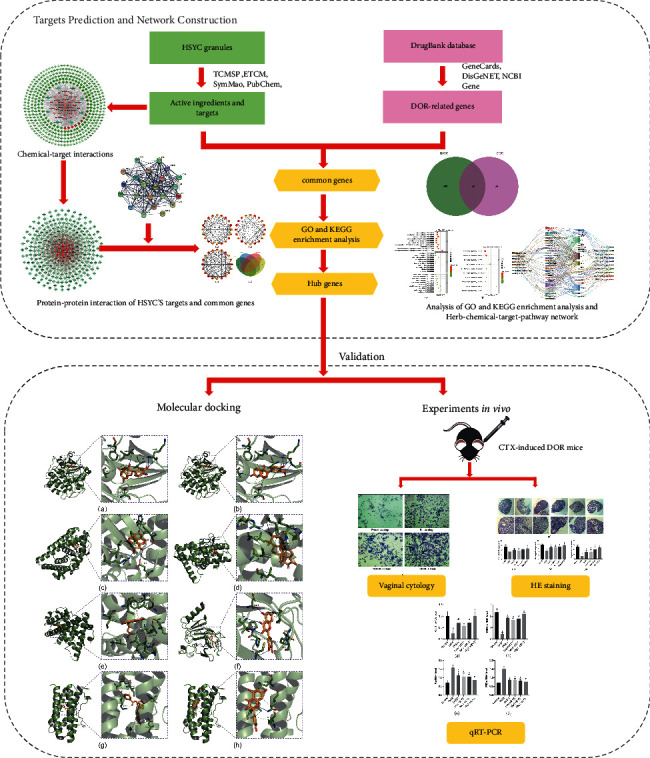
This study aims to predict the underlying mechanisms of He's Yangchao formula (HSYC) against DOR through network pharmacology strategies and verify .
Systematic network pharmacology was used to speculate the bioactive components, potential targets, and the underlying mechanism of HSYC in the treatment of DOR. Then, the CTX-induced DOR mouse model was established to verify the effect of HSYC against DOR and the possible molecular mechanisms as predicted in the network pharmacology approach.
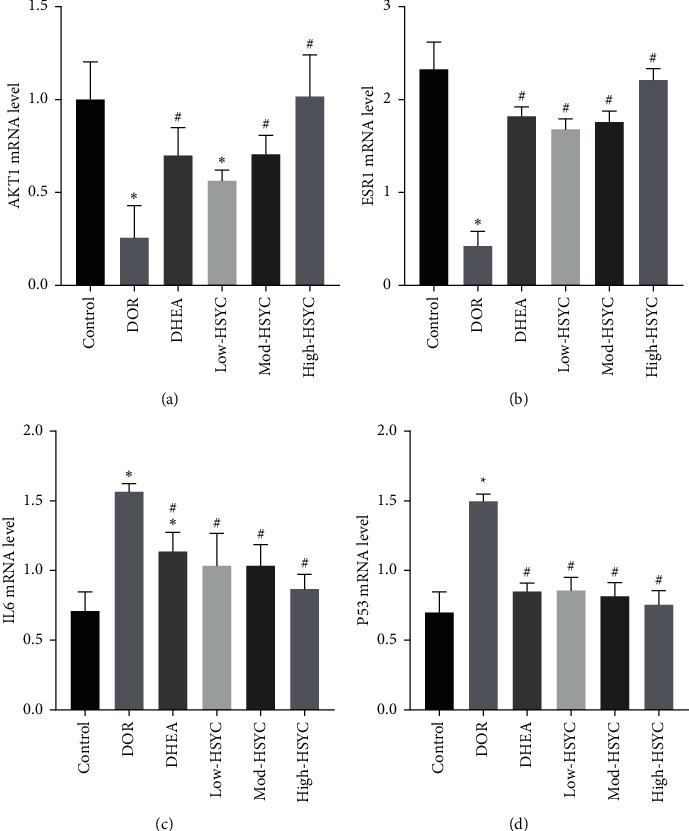
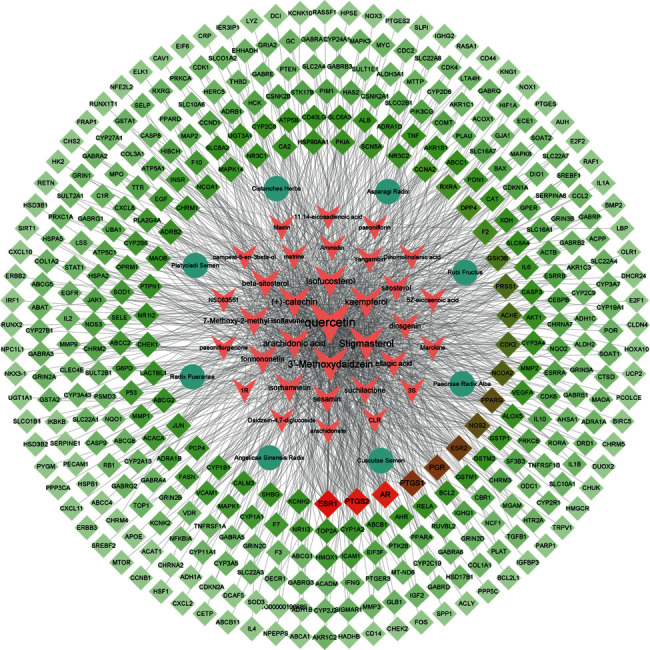
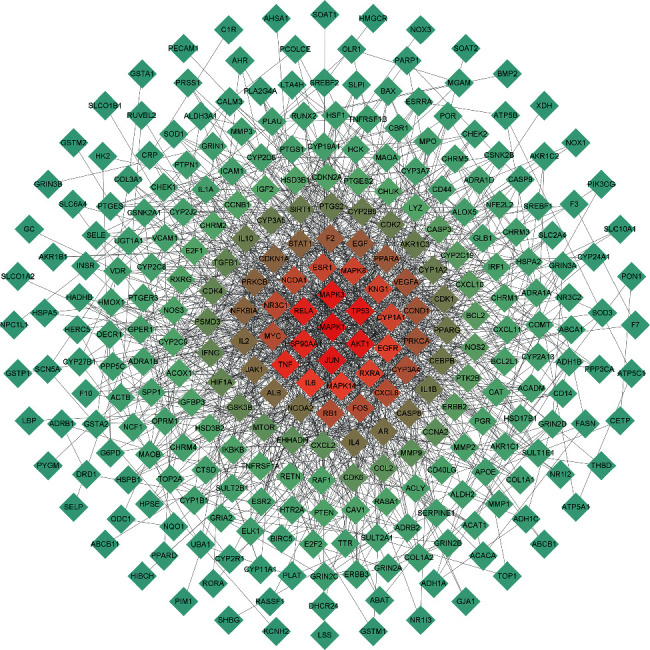
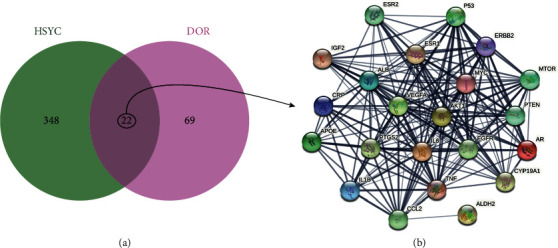
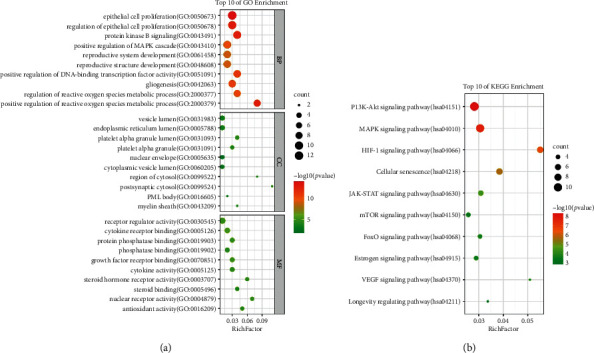
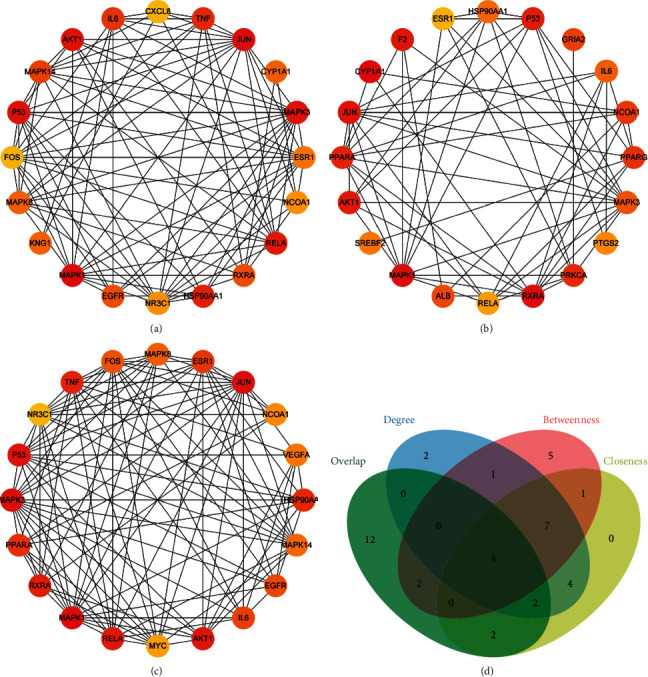
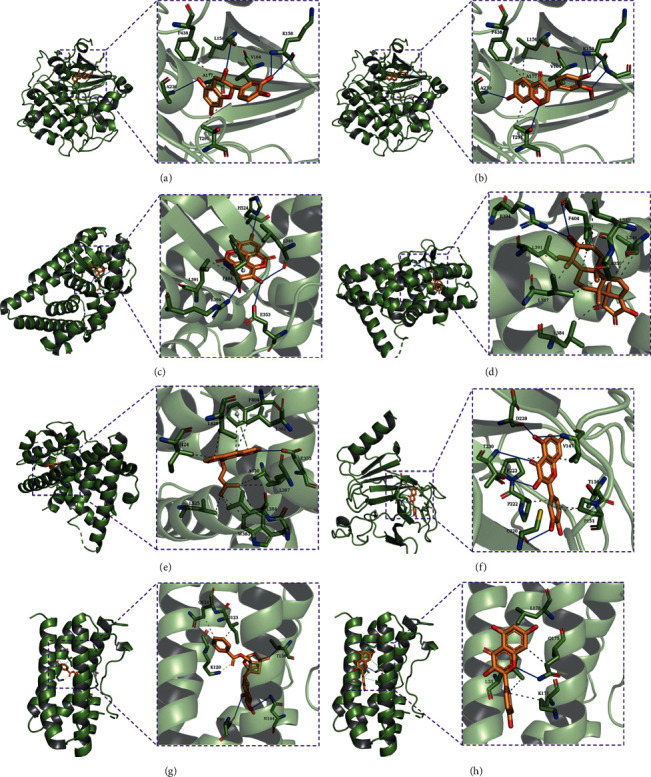
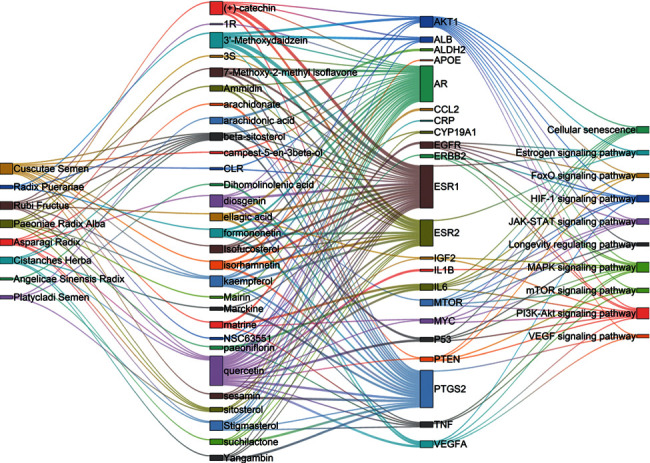
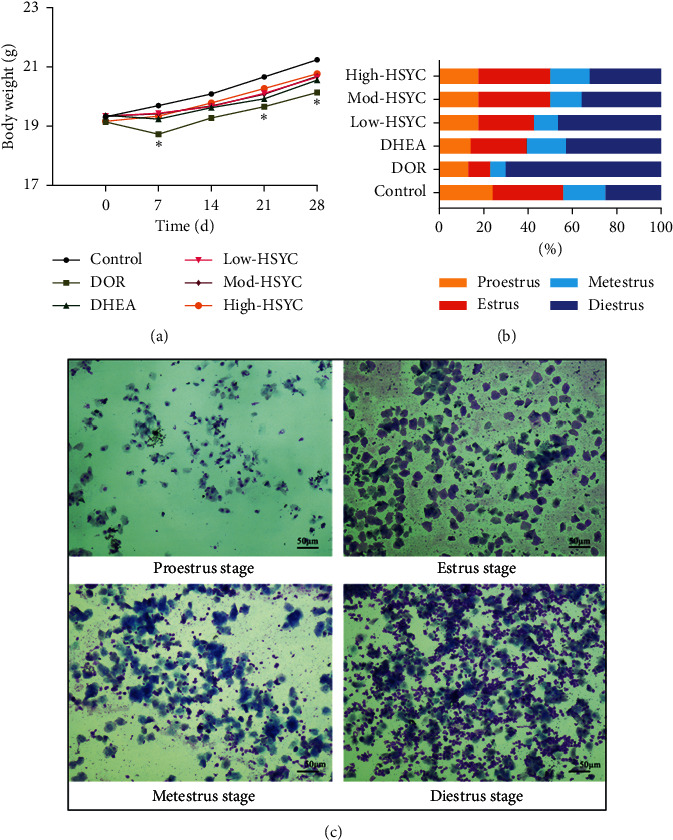
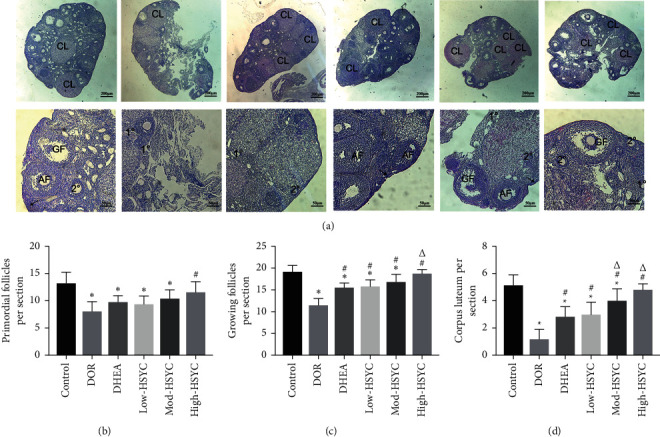
A total of 44 active components and 423 potential targets were obtained in HSYC. In addition, 91 targets of DOR were also screened. The identified hub genes were AKT1, ESR1, IL6, and P53. Further molecular docking showed that the four hub targets were well-bound with their corresponding compounds. experiments showed that HSYC could promote the recovery of the estrous cycle and increase the number of primordial, growing follicles and corpora lutea. Besides, The results of qRT-PCR showed HSYC could regulate the expression of AKT1, ESR1, P53, and IL6 in DOR mice.
It was demonstrated that HSYC could increase ovarian reserves, and AKT1, ESR1, IL6, and P53 may play an essential role in this effect, which provided a new reference for the current lack of active interventions of DOR.
何氏养巢方(HSYC)已在临床上被证明对治疗卵巢储备功能减退(DOR)有效。然而,HSYC治疗DOR的潜在分子机制尚不清楚。
本研究旨在通过网络药理学策略预测何氏养巢方(HSYC)治疗DOR的潜在机制并进行验证。
运用系统网络药理学推测HSYC治疗DOR的生物活性成分、潜在靶点及潜在机制。然后,建立环磷酰胺(CTX)诱导的DOR小鼠模型,以验证HSYC对DOR的作用及网络药理学预测的可能分子机制。
HSYC中共获得44种活性成分和423个潜在靶点。此外,还筛选出91个DOR的靶点。确定的枢纽基因是AKT1、ESR1、IL6和P53。进一步的分子对接表明,这四个枢纽靶点与其相应化合物结合良好。实验表明,HSYC可促进动情周期的恢复,增加原始卵泡、生长卵泡和黄体的数量。此外,qRT-PCR结果显示,HSYC可调节DOR小鼠中AKT1、ESR1、P53和IL6的表达。
证明HSYC可增加卵巢储备,AKT1、ESR1、IL6和P53可能在这一作用中起重要作用,为目前DOR缺乏有效干预提供了新的参考。