School of Nursing, Huzhou University, Huzhou Central Hospital, 759 Erhuan Rd, Huzhou, 313000 Zhejiang, People's Republic of China.
School of Medicine, Huzhou University, Huzhou Central Hospital, 759 Erhuan Rd, Huzhou, 313000 Zhejiang, People's Republic of China.
BMC Cardiovasc Disord. 2020 Apr 17;20(1):179. doi: 10.1186/s12872-020-01442-z.
Aliskiren is a newly developed drug. Its role in lowering BP has been recognized. However, the role of aliskiren in treating heart and renal diseases are still controversial.
To evaluate the existing evidence about clinical efficacy, safety and tolerability of aliskiren monotherapy (AM).
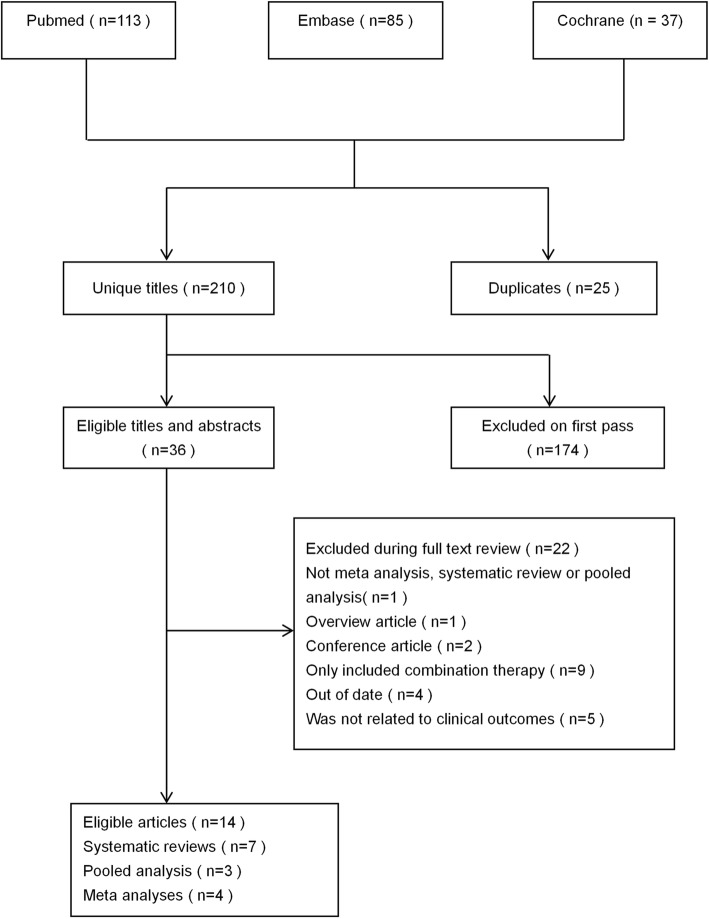
An umbrella review of systematic reviews of interventional studies. We searched Pubmed, Embase and Cochrane Library up to June 2019. Two reviewers applied inclusion criteria to the select potential articles independently. The extract and analyze of accessible data were did by two reviewers independently too. Discrepancies were resolved with discussion or the arbitration of the third author.
Eventually, our review identified 14 eligible studies. Results showed that for essential hypertension patients, aliskiren showed a great superiority over placebo in BP reduction, BP response rate and BP control rate. Aliskiren and placebo, ARBs or ACEIs showed no difference in the number or extent of adverse events. For heart failure patients, AM did not reduce BNP levels (SMD -0.08, - 0.31 to 0.15) or mortality rate (RR 0.76, 0.32 to 1.80), but it decreased NT-proBNP (SMD -0.12, - 0.21 to - 0.03) and PRA levels (SMD 0.52, 0.30 to 0.75), increased PRC levels (SMD -0.66, - 0.8 to - 0.44). For patients who are suffered from hypertension and diabetes and/or nephropathy or albuminuria at the same time, aliskiren produced no significant effects (RR 0.97, 0.81 to 1.16).
We found solid evidence to support the benefits of aliskiren in the treatment of essential hypertension, aliskiren can produce significant effects in lowering BP and reliable safety. However, the effects of aliskiren in cardiovascular and renal outcomes were insignificant.
Study has been registered in PROSPERO (CRD42019142141).
阿利吉仑是一种新开发的药物。其降低血压的作用已得到认可。然而,阿利吉仑在治疗心脏和肾脏疾病方面的作用仍存在争议。
评估阿利吉仑单药治疗(AM)的临床疗效、安全性和耐受性的现有证据。
对干预性研究的系统评价进行伞式评价。我们检索了 Pubmed、Embase 和 Cochrane Library,检索时间截至 2019 年 6 月。两位审查员独立应用纳入标准筛选潜在文章。两位审查员也独立地进行了可获取数据的提取和分析。如有分歧,则通过讨论或第三方裁决解决。
最终,我们的综述确定了 14 项符合条件的研究。结果表明,对于原发性高血压患者,阿利吉仑在降低血压、血压反应率和血压控制率方面优于安慰剂。阿利吉仑与安慰剂、ARB 或 ACEI 在不良事件的数量或程度方面没有差异。对于心力衰竭患者,AM 并未降低 BNP 水平(SMD-0.08,-0.31 至 0.15)或死亡率(RR0.76,0.32 至 1.80),但降低了 NT-proBNP(SMD-0.12,-0.21 至-0.03)和 PRA 水平(SMD0.52,0.30 至 0.75),增加了 PRC 水平(SMD-0.66,-0.8 至-0.44)。对于同时患有高血压、糖尿病和/或肾病或蛋白尿的患者,阿利吉仑没有产生显著效果(RR0.97,0.81 至 1.16)。
我们发现了有力的证据支持阿利吉仑在治疗原发性高血压中的益处,阿利吉仑在降低血压方面具有显著效果且安全可靠。然而,阿利吉仑在心血管和肾脏结局方面的效果并不显著。
该研究已在 PROSPERO(CRD42019142141)注册。