GSK Consumer Healthcare, St George's Avenue, Weybridge, Surrey, KT13 0DE, UK.
GSK Consumer Healthcare, Route de l'Etraz 2, 1260, Nyon, Switzerland.
BMC Oral Health. 2020 Apr 17;20(1):118. doi: 10.1186/s12903-020-01081-y.
A novel sodium fluoride toothpaste containing lactate ion and polyvinylmethylether-maleic anhydride has been developed to promote enamel remineralisation and resistance to demineralisation. In this in situ study, we compared this toothpaste ('Test') with a stannous fluoride-zinc citrate (SnF-Zn) toothpaste ('Reference') (both 1100-1150 ppm fluoride) and a fluoride-free toothpaste ('Placebo') using an enamel dental erosion-rehardening model.
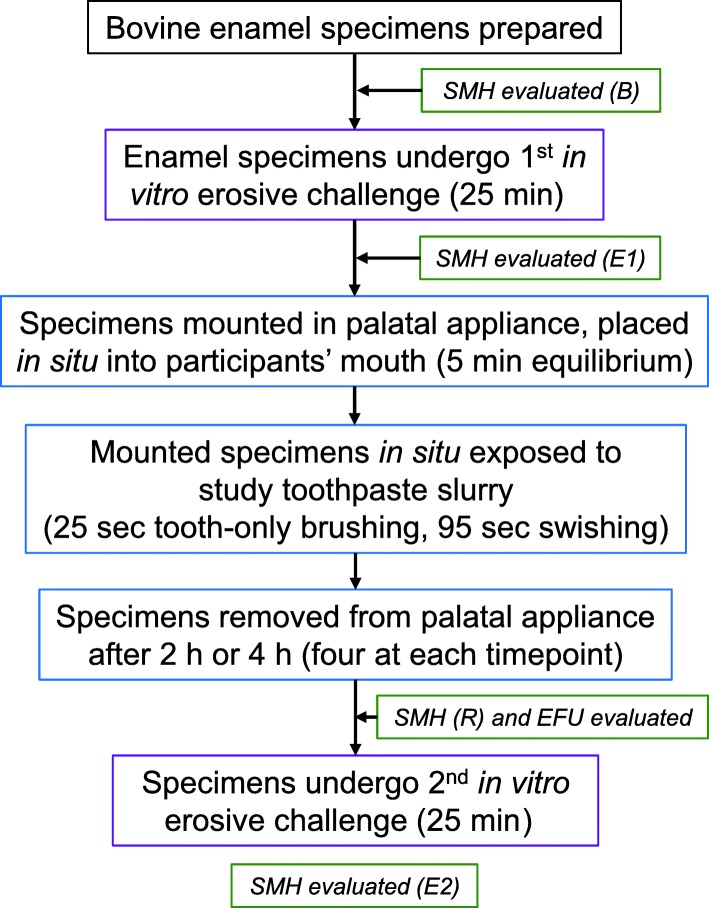
In each phase of this randomised, investigator-blind, crossover study, participants wore palatal appliances holding bovine enamel specimens with erosive lesions. They brushed their natural teeth with either the Test, Reference or Placebo toothpastes, then swished the resultant slurry. Specimens were removed at 2 h and 4 h post-brushing and exposed to an in vitro acid challenge. Surface microhardness was measured at each stage; enamel fluoride uptake was measured after in situ rehardening. Surface microhardness recovery, relative erosion resistance, enamel fluoride uptake and acid resistance ratio were calculated at both timepoints.
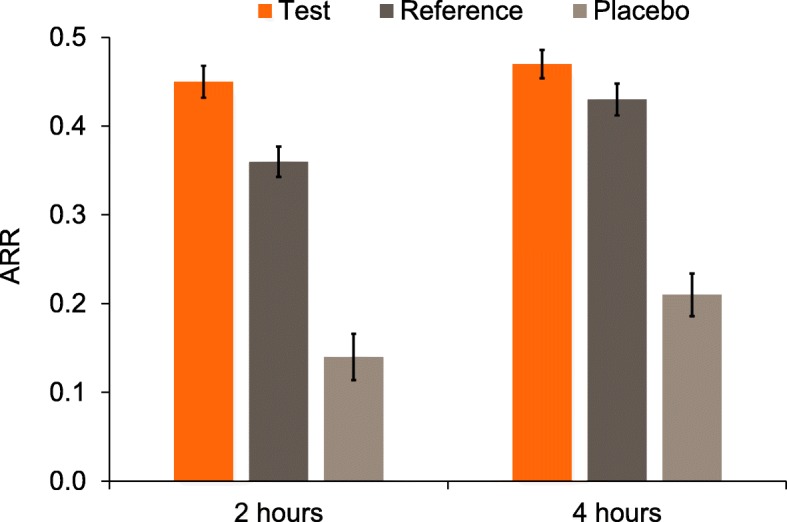
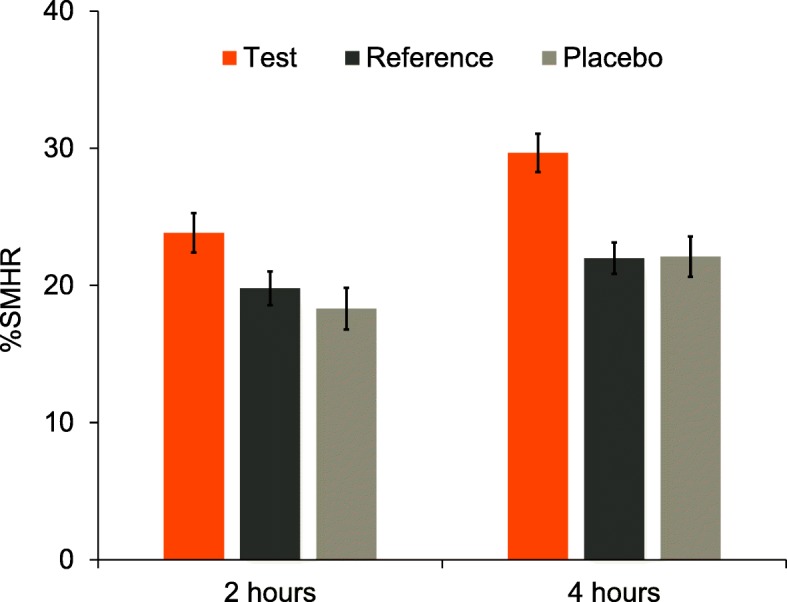
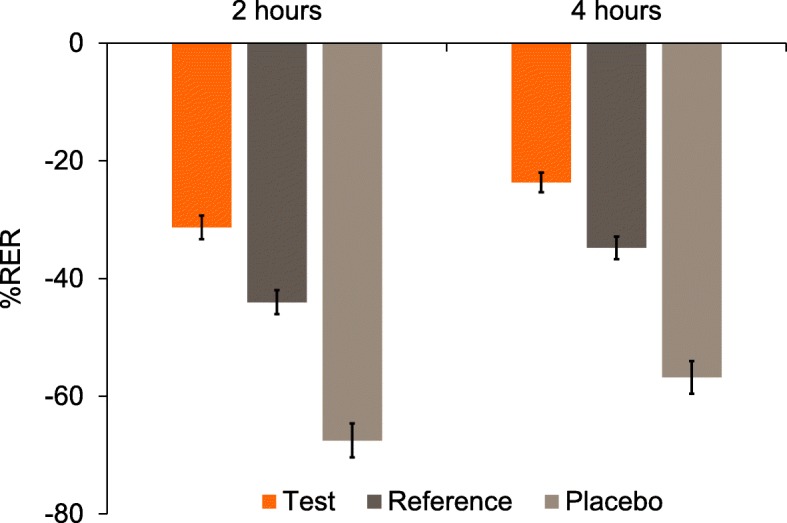
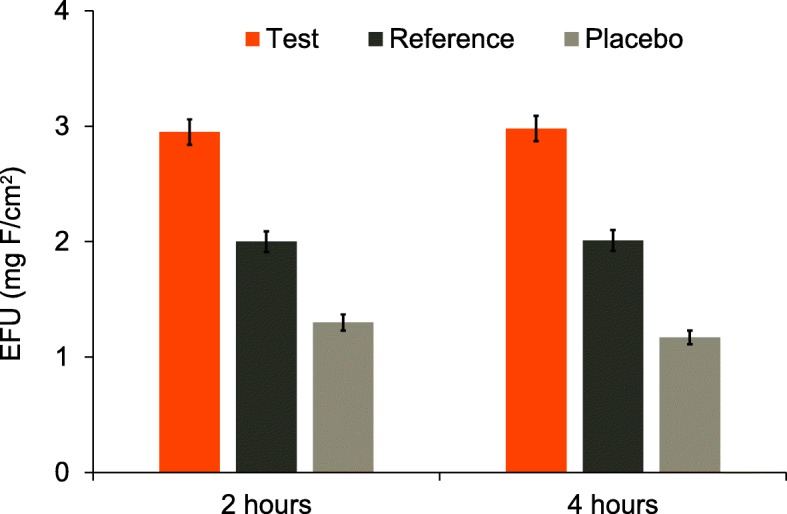
Sixty two randomised participants completed the study. Test toothpaste treatment yielded significantly greater surface microhardness recovery, relative erosion resistance and enamel fluoride uptake values than either Reference or Placebo toothpastes after 2 and 4 h. The acid resistance ratio value for Test toothpaste was significantly greater than either of the other treatments after 2 h; after 4 h, it was significantly greater versus Placebo only. No treatment-related adverse events were reported.
In this in situ model, the novel-formulation sodium fluoride toothpaste enhanced enamel rehardening and overall protection against demineralisation compared with a fluoride-free toothpaste and a marketed SnF-Zn toothpaste.
ClinicalTrials.gov; NCT03296072; registered September 28, 2017.
一种新型的含乳酸根离子和聚乙烯基甲醚-马来酸酐的氟化钠牙膏被开发出来,以促进牙釉质再矿化和增强抗脱矿能力。在这项原位研究中,我们使用牙釉质牙齿酸蚀再矿化模型,比较了这种牙膏(“试验”)与一种氟化亚锡-柠檬酸锌(SnF-Zn)牙膏(“对照”)(均含 1100-1150ppm 氟化物)和一种无氟牙膏(“安慰剂”)。
在这项随机、研究者盲、交叉研究的每一个阶段,参与者都佩戴了一个带有牛牙釉质标本的腭部装置,这些标本上有侵蚀性病变。他们用试验、对照或安慰剂牙膏刷牙,然后漱口。在刷牙后 2 小时和 4 小时取出标本,并暴露于体外酸蚀挑战中。在每个阶段测量表面显微硬度;在原位再矿化后测量牙釉质氟摄取量。在两个时间点计算表面显微硬度恢复率、相对抗蚀性、牙釉质氟摄取量和酸抵抗比。
62 名随机参与者完成了这项研究。与对照或安慰剂牙膏相比,试验牙膏处理在 2 小时和 4 小时后显著提高了表面显微硬度恢复率、相对抗蚀性和牙釉质氟摄取量。试验牙膏的酸抵抗比在 2 小时后显著大于其他两种处理方法;在 4 小时后,它与安慰剂相比显著更大。没有报告与治疗相关的不良事件。
在这项原位模型研究中,与无氟牙膏和市售的 SnF-Zn 牙膏相比,这种新型氟化钠牙膏增强了牙釉质再矿化和整体抗脱矿能力。
ClinicalTrials.gov;NCT03296072;2017 年 9 月 28 日注册。