Centre for Pharmacoepidemiology and Drug Safety, Division of Pharmacy and Optometry, School of Health Sciences, University of Manchester, Manchester, UK.
NIHR Greater Manchester Patient Safety Translational Research Centre, University of Manchester, Manchester Academic Health Sciences Centre (MAHSC), Manchester, UK.
BMC Med Inform Decis Mak. 2020 Apr 17;20(1):69. doi: 10.1186/s12911-020-1084-5.
Improving medication safety is a major concern in primary care settings worldwide. The Salford Medication safety dASHboard (SMASH) intervention provided general practices in Salford (Greater Manchester, UK) with feedback on their safe prescribing and monitoring of medications through an online dashboard, and input from practice-based trained clinical pharmacists. In this study we explored how staff working in general practices used the SMASH dashboard to improve medication safety, through interactions with the dashboard to identify potential medication safety hazards and their workflow to resolve identified hazards.
We used a mixed-methods study design involving quantitative data from dashboard user interaction logs from 43 general practices during the first year of receiving the SMASH intervention, and qualitative data from semi-structured interviews with 22 pharmacists and physicians from 18 practices in Salford.
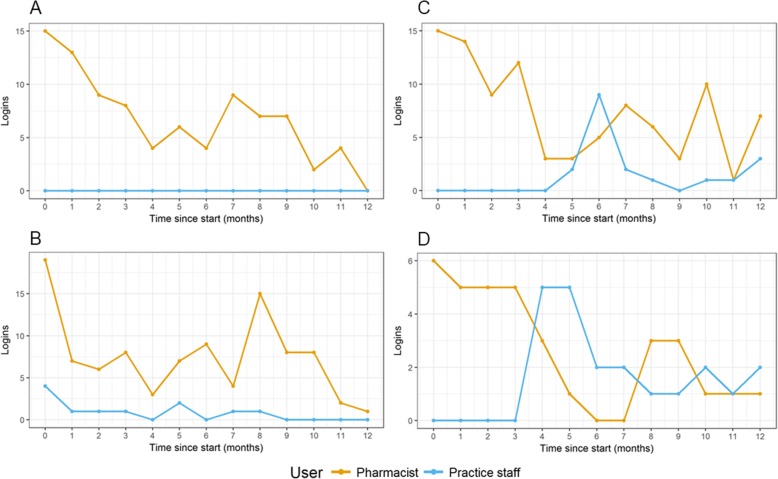
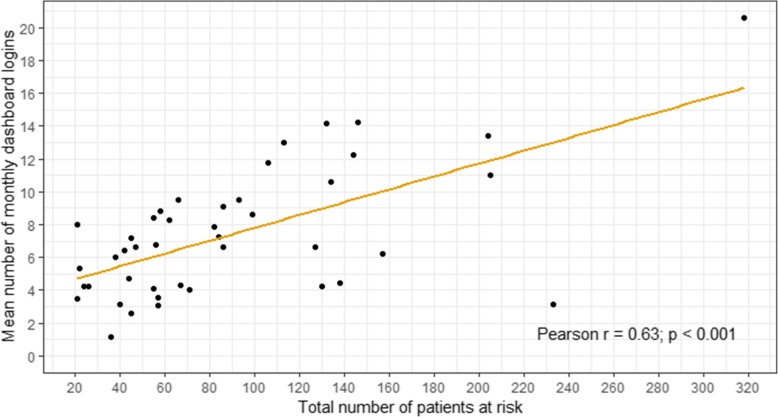
Practices interacted with the dashboard a median of 12.0 (interquartile range, 5.0-15.2) times per month during the first quarter of use to identify and resolve potential medication safety hazards, typically starting with the most prevalent hazards or those they perceived to be most serious. Having observed a potential hazard, pharmacists and practice staff worked together to resolve that in a sequence of steps (1) verifying the dashboard information, (2) reviewing the patient's clinical records, and (3) deciding potential changes to the patient's medicines. Over time, dashboard use transitioned towards regular but less frequent (median of 5.5 [3.5-7.9] times per month) checks to identify and resolve new cases. The frequency of dashboard use was higher in practices with a larger number of at-risk patients. In 24 (56%) practices only pharmacists used the dashboard; in 12 (28%) use by other practice staff increased as pharmacist use declined after the initial intervention period; and in 7 (16%) there was mixed use by both pharmacists and practice staff over time.
An online medication safety dashboard enabled pharmacists to identify patients at risk of potentially hazardous prescribing. They subsequently worked with GPs to resolve risks on a case-by-case basis, but there were marked variations in processes between some practices. Workload diminished over time as it shifted towards resolving new cases of hazardous prescribing.
提高用药安全性是全球初级保健领域的主要关注点。Salford 用药安全 dASHboard(SMASH)干预措施通过在线仪表板为索尔福德(英国大曼彻斯特)的全科医生提供有关安全处方和监测药物的反馈,并由基于实践的培训临床药剂师提供投入。在这项研究中,我们探讨了工作人员如何通过与仪表板的交互来识别潜在的用药安全隐患,以及他们解决已识别的用药安全隐患的工作流程,从而利用 SMASH 仪表板来提高用药安全性。
我们采用混合方法研究设计,在接受 SMASH 干预的第一年,从 43 家全科医生的仪表板用户交互日志中获得了定量数据,并对来自索尔福德 18 家实践的 22 名药剂师和医生进行了半结构化访谈,获得了定性数据。
在使用的第一个季度,实践每月与仪表板交互中位数为 12.0 次(四分位距,5.0-15.2 次),以识别和解决潜在的用药安全隐患,通常从最常见的或他们认为最严重的隐患开始。在观察到潜在的危险后,药剂师和实践工作人员共同合作,按照一系列步骤(1)验证仪表板信息,(2)审查患者的临床记录,(3)决定患者药物的潜在变化,来解决该问题。随着时间的推移,仪表板的使用逐渐过渡到定期但不那么频繁(中位数为每月 5.5 次(3.5-7.9 次)),以识别和解决新病例。在有更多高危患者的实践中,仪表板的使用频率更高。在 24 家(56%)实践中,仅药剂师使用仪表板;在 12 家(28%)实践中,在初始干预阶段后,随着药剂师使用量的减少,其他实践工作人员的使用量增加;在 7 家(16%)实践中,药剂师和实践工作人员的混合使用随着时间的推移而变化。
在线用药安全仪表板使药剂师能够识别有潜在危险处方风险的患者。他们随后与全科医生合作,逐个解决风险,但一些实践之间的流程存在明显差异。随着工作重心转移到解决新的危险处方病例上,工作量随着时间的推移而减少。