Kovatchev Boris, Meng Zhaoling, Cali Anna M G, Perfetti Riccardo, Breton Marc D
Center for Diabetes Technology, University of Virginia, Charlottesville, VA, USA.
Sanofi, Bridgewater, NJ, USA.
Diabetes Ther. 2020 Jun;11(6):1293-1302. doi: 10.1007/s13300-020-00808-y. Epub 2020 Apr 17.
We examined differences in hypoglycaemia risk between insulin glargine 300 U/mL (Gla-300) and insulin glargine 100 U/mL (Gla-100) in individuals with type 2 diabetes (T2DM) using the low blood glucose index (LBGI).
Daily profiles of self-monitored plasma glucose (SMPG) from the EDITION 2, EDITION 3 and SENIOR treat-to-target trials of Gla-300 versus Gla-100 were used to compute the LBGI, which is an established metric of hypoglycaemia risk. The analysis also examined documented (blood glucose readings < 3.0 mmol/L [54 mg/dL]) symptomatic hypoglycaemia (DSH).
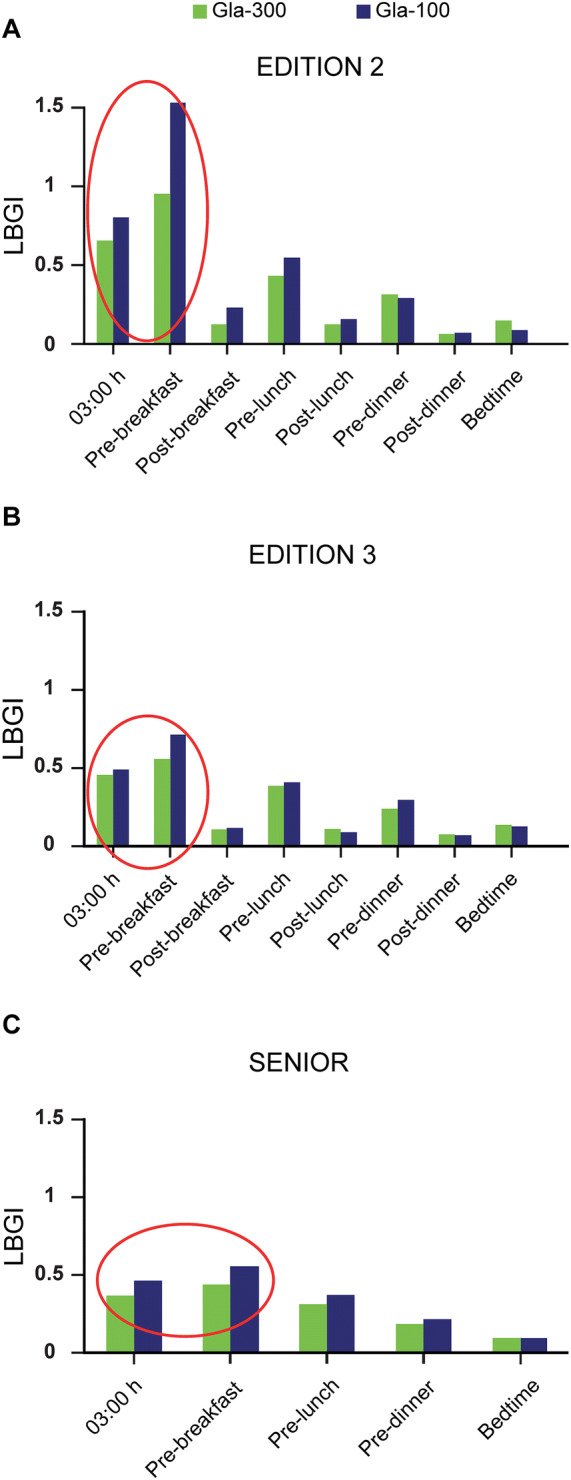
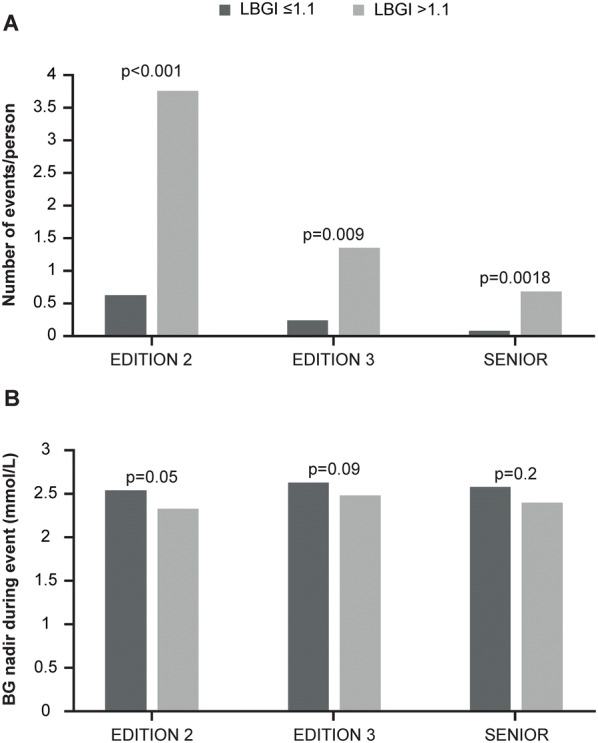
Overall LBGI in EDITION 2 and SENIOR and night-time LBGI in all three trials were significantly (p < 0.05) lower with Gla-300 versus Gla-100. The largest differences between Gla-300 and Gla-100 were observed during the night. In all three trials, individual LBGI results correlated with the observed number of DSH episodes per participant (EDITION 2 [r = 0.35, p < 0.001]; EDITION 3 [r = 0.26, p < 0.001]; SENIOR [r = 0.30, p < 0.001]). Participants at moderate risk of experiencing hypoglycaemia (defined as LBGI > 1.1) reported 4- to 8-fold more frequent DSH events than those at minimal risk (LBGI ≤ 1.1) (p ≤ 0.009).
The LBGI identified individuals with T2DM at risk for hypoglycaemia using SMPG data and correlated with the number of DSH events. Using the LBGI metric, a lower risk of hypoglycaemia with Gla-300 than Gla-100 was observed in all three trials. The finding that differences in LBGI are greater at night is consistent with previously published differences in the pharmacokinetic profiles of Gla-300 and Gla-100, which provides the physiological foundation for the presented results.
我们使用低血糖指数(LBGI)研究了2型糖尿病(T2DM)患者中甘精胰岛素300 U/mL(Gla-300)与甘精胰岛素100 U/mL(Gla-100)之间低血糖风险的差异。
来自Gla-300与Gla-100对比的2期、3期和SENIOR达标治疗试验的自我监测血糖(SMPG)每日数据用于计算LBGI,LBGI是一种既定的低血糖风险指标。该分析还检查了记录在案的(血糖读数<3.0 mmol/L [54 mg/dL])有症状低血糖(DSH)情况。
在2期和SENIOR试验中,总体LBGI以及在所有三项试验中的夜间LBGI,与Gla-100相比,Gla-300均显著更低(p<0.05)。Gla-300与Gla-100之间的最大差异出现在夜间。在所有三项试验中,个体LBGI结果与每位参与者观察到的DSH发作次数相关(2期[r = 0.35,p<0.001];3期[r = 0.26,p<0.001];SENIOR[r = 0.30,p<0.001])。低血糖中度风险参与者(定义为LBGI>1.1)报告的DSH事件频率比最低风险参与者(LBGI≤1.1)高4至8倍(p≤0.009)。
LBGI使用SMPG数据识别出有低血糖风险的T2DM患者,并与DSH事件数量相关。使用LBGI指标,在所有三项试验中均观察到Gla-300的低血糖风险低于Gla-100。LBGI夜间差异更大这一发现与先前发表的Gla-300和Gla-100药代动力学特征差异一致,这为所呈现的结果提供了生理基础。