Department of Neurobiology, Weizmann Institute of Science, Rehovot 76100, Israel.
Philos Trans R Soc Lond B Biol Sci. 2020 Jun 8;375(1800):20190372. doi: 10.1098/rstb.2019.0372. Epub 2020 Apr 20.
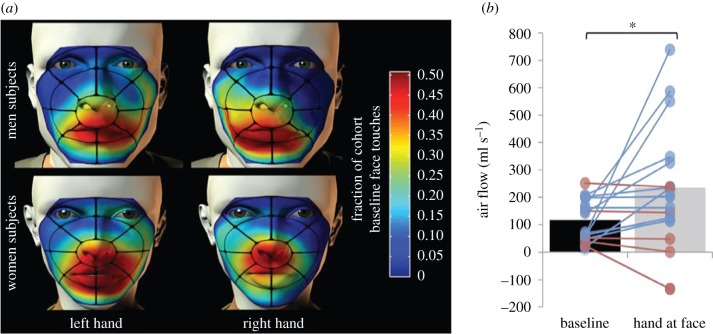
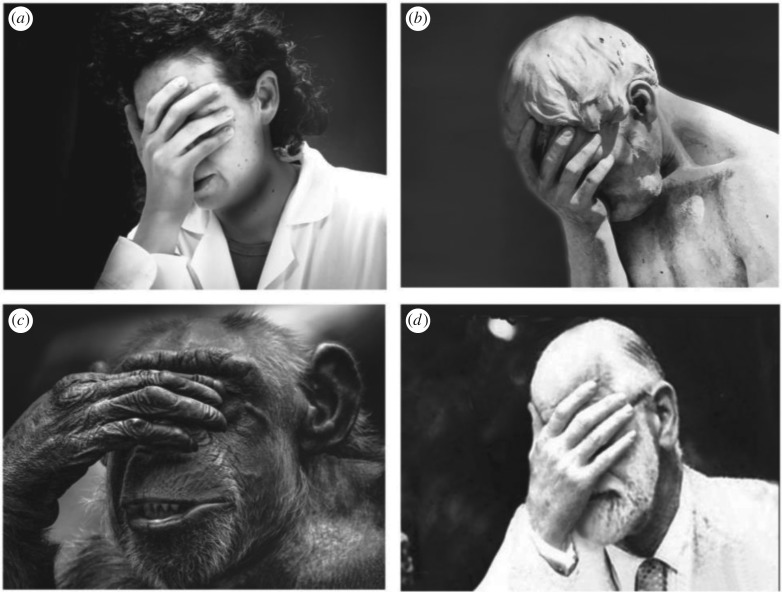
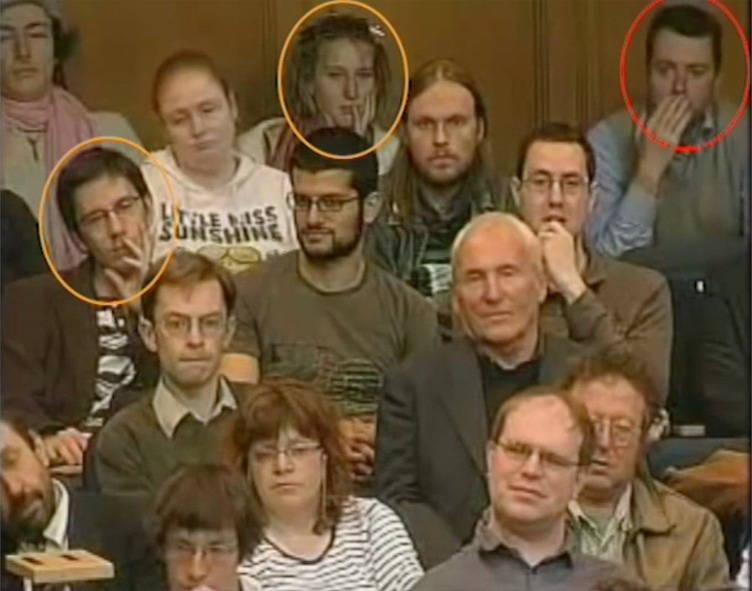
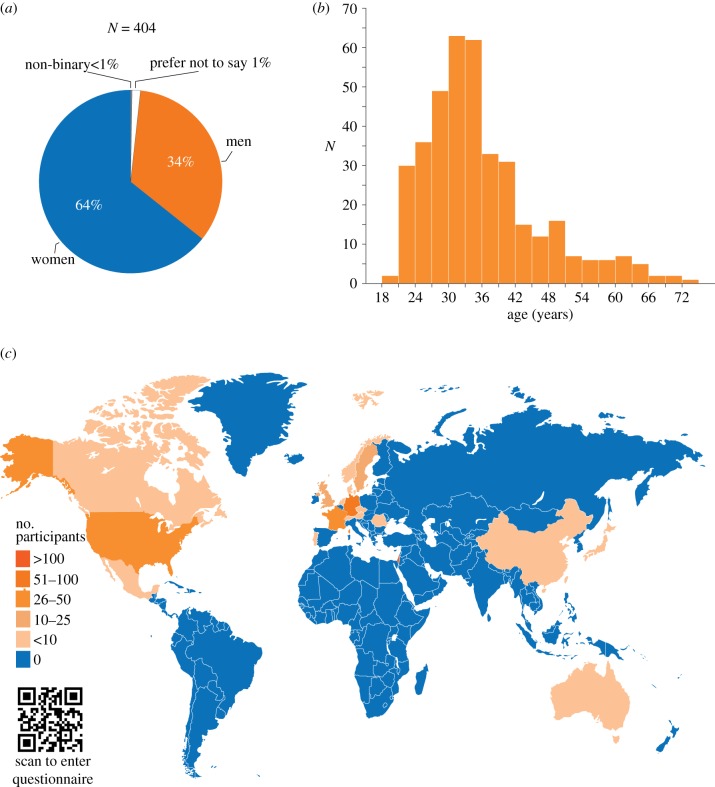
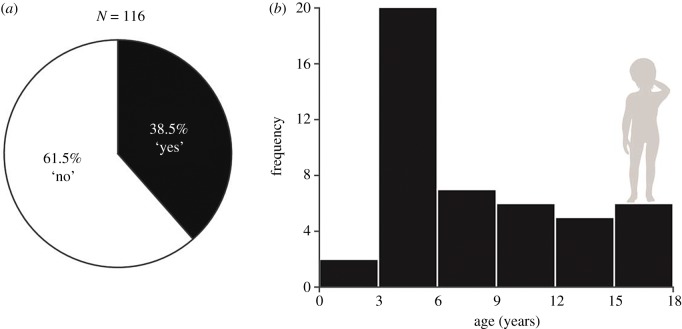
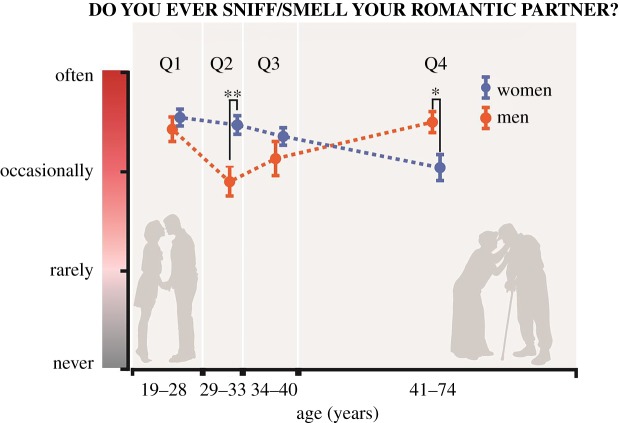
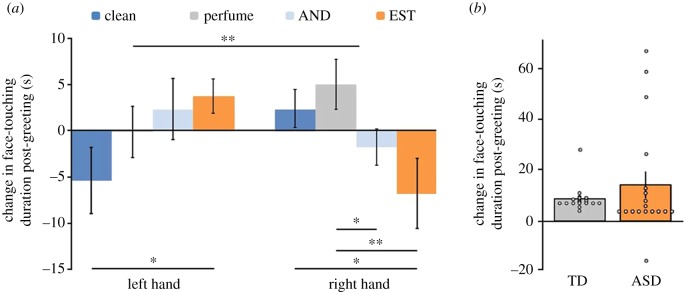
All primates, including humans, engage in self-face-touching at very high frequency. The functional purpose or antecedents of this behaviour remain unclear. In this , we put forth the hypothesis that self-face-touching subserves self-smelling. We first review data implying that humans touch their faces at very high frequency. We then detail evidence from the one study that implicated an olfactory origin for this behaviour: This evidence consists of significantly increased nasal inhalation concurrent with self-face-touching, and predictable increases or decreases in self-face-touching as a function of subliminal odourant tainting. Although we speculate that self-smelling through self-face-touching is largely an unconscious act, we note that in addition, humans also consciously smell themselves at high frequency. To verify this added statement, we administered an online self-report questionnaire. Upon being asked, approximately 94% of approximately 400 respondents acknowledged engaging in smelling themselves. Paradoxically, we observe that although this very prevalent behaviour of self-smelling is of concern to individuals, especially to parents of children overtly exhibiting self-smelling, the behaviour has nearly no traction in the medical or psychological literature. We suggest psychological and cultural explanations for this paradox, and end in suggesting that human self-smelling become a formal topic of investigation in the study of human social olfaction. This article is part of the Theo Murphy meeting issue 'Olfactory communication in humans'.
所有灵长类动物,包括人类,都会非常频繁地进行自我面部触摸。这种行为的功能目的或前因仍然不清楚。在这篇文章中,我们提出了一个假设,即自我面部触摸是为了自我嗅觉服务。我们首先回顾了一些数据,这些数据表明人类非常频繁地触摸自己的脸。然后,我们详细介绍了一项研究中的证据,该证据表明这种行为具有嗅觉起源:这些证据包括自我面部触摸时鼻腔明显的吸气增加,以及作为嗅觉刺激污染的函数,自我面部触摸的可预测增加或减少。虽然我们推测通过自我面部触摸进行自我嗅觉主要是一种无意识的行为,但我们注意到,人类也会非常频繁地有意识地闻自己。为了验证这一补充说法,我们进行了一项在线自我报告问卷调查。在被问到这个问题时,大约 400 名受访者中的近 94%承认他们会经常闻自己。矛盾的是,我们观察到,尽管这种自我嗅觉的行为非常普遍,而且个人,特别是那些孩子有明显自我嗅觉行为的父母会非常关注,但这种行为在医学或心理学文献中几乎没有得到关注。我们对这种矛盾现象提出了心理学和文化方面的解释,并最终建议将人类自我嗅觉作为人类社会嗅觉研究的一个正式课题。本文是 Theo Murphy 会议议题“人类嗅觉交流”的一部分。