Department of Veterinary Internal Medicine, Graduate School of Agricultural and Life Sciences, The University of Tokyo, 1-1-1 Yayoi, Bunkyo-ku, Tokyo 113-8657, Japan.
Veterinary Medical Center, Graduate School of Agricultural and Life Sciences, The University of Tokyo, 1-1-1 Yayoi, Bunkyo-ku, Tokyo 113-8657, Japan.
J Vet Med Sci. 2020 Jun 24;82(6):771-778. doi: 10.1292/jvms.19-0439. Epub 2020 Apr 17.
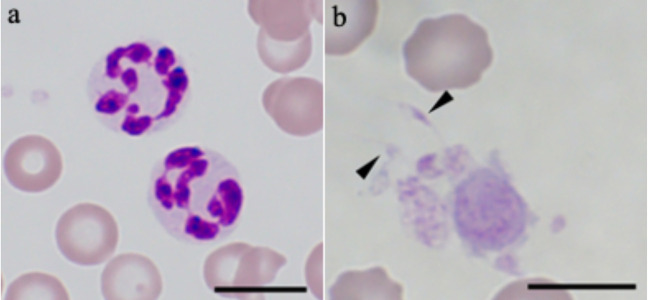
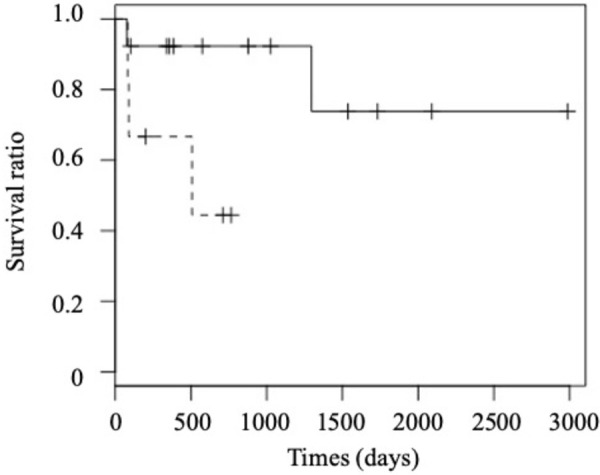
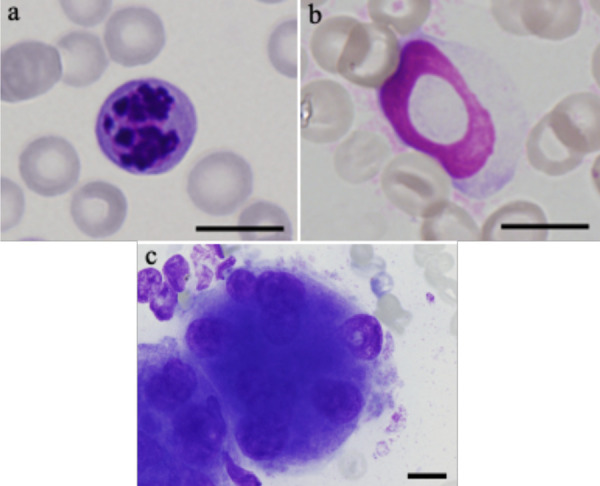
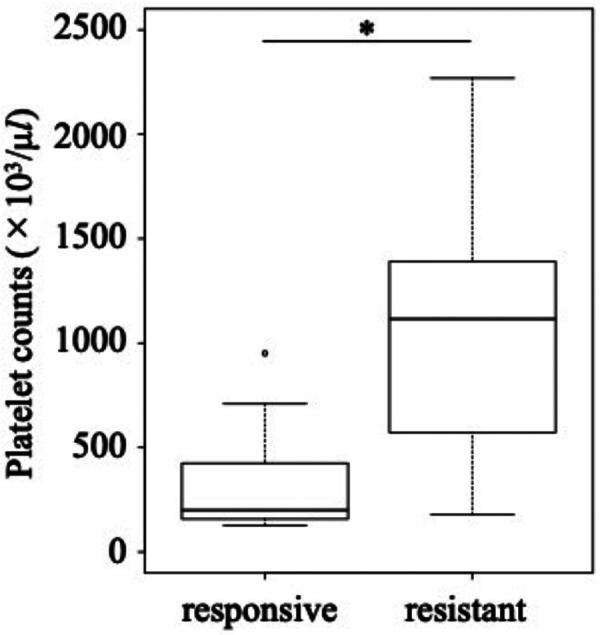
Non-neoplastic bone marrow disorders such as non-regenerative immune-mediated anemia, pure red cell aplasia, and myelodysplastic syndrome are major causes of non-regenerative anemia in dogs. However, there has been no study on the clinical and clinicopathological features of canine non-neoplastic bone marrow disorders in Japan. Hence, we first investigated the breed disposition of non-neoplastic bone marrow disorders that induce anemia as a retrospective study and found that Miniature Dachshund (MD) was a predisposed breed. Based on this finding, we investigated the clinical and clinicopathological features of non-neoplastic bone marrow disorders in MDs as a preliminary retrospective study, and we compared them between immunosuppressive treatment-responsive and -resistant MDs. We found that treatment-resistant MDs showed thrombocytosis and increased frequencies of dysplastic features in the peripheral blood. These results indicate that bone marrow disorders in treatment-resistant MDs might manifest distinct features compared with those in treatment-sensitive MDs, and sensitivity to immunosuppressive treatments could be predicted based on thrombocytosis and dysplastic features in the peripheral blood. Further studies that examine aberrations in the genome are needed to elucidate the pathophysiology of bone marrow disorders in MDs.
非肿瘤性骨髓疾病,如非再生性免疫介导性贫血、纯红细胞再生障碍和骨髓增生异常综合征,是犬非再生性贫血的主要原因。然而,在日本,还没有关于犬非肿瘤性骨髓疾病的临床和临床病理特征的研究。因此,我们首先进行了一项回顾性研究,调查了导致贫血的非肿瘤性骨髓疾病的品种易感性,发现迷你腊肠犬(MD)是一种易感品种。基于这一发现,我们对 MD 中非肿瘤性骨髓疾病的临床和临床病理特征进行了初步的回顾性研究,并对免疫抑制治疗有反应和无反应的 MD 进行了比较。我们发现,治疗无反应的 MD 表现为血小板增多和外周血中出现更多的发育不良特征。这些结果表明,治疗抵抗型 MD 的骨髓疾病可能与治疗敏感型 MD 的骨髓疾病表现出不同的特征,并且可以根据外周血中的血小板增多和发育不良特征来预测对免疫抑制治疗的敏感性。进一步的研究需要检查基因组中的异常,以阐明 MD 骨髓疾病的病理生理学。