Institute of Cellular Biology and Pathology 'Nicolae Simionescu', Biopathology and Therapy of Inflammation, Bucharest, Romania.
Cardiovascular Surgery Department, Central Military Hospital, Bucharest, Romania.
J Cell Mol Med. 2020 Jun;24(11):6350-6361. doi: 10.1111/jcmm.15277. Epub 2020 Apr 19.
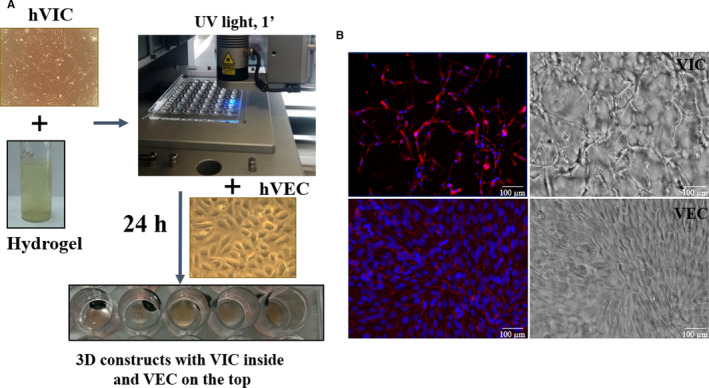
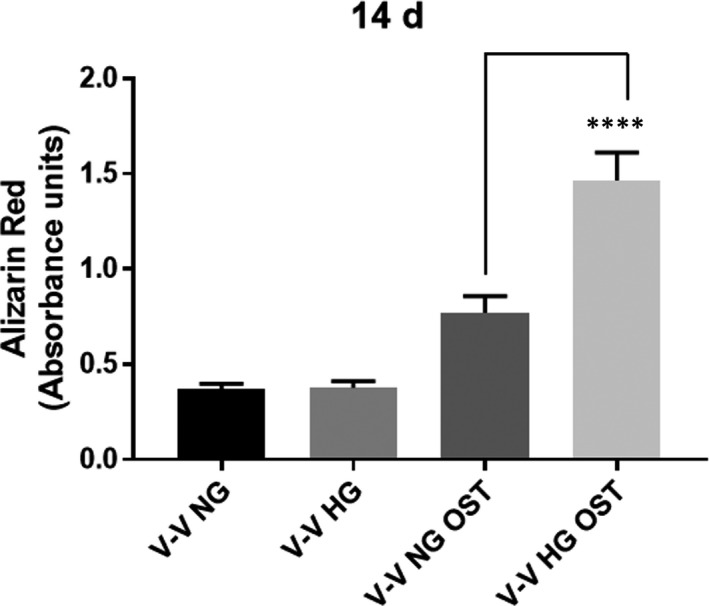
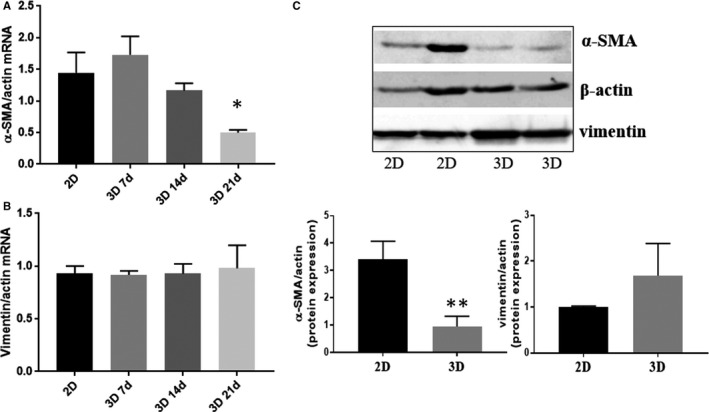
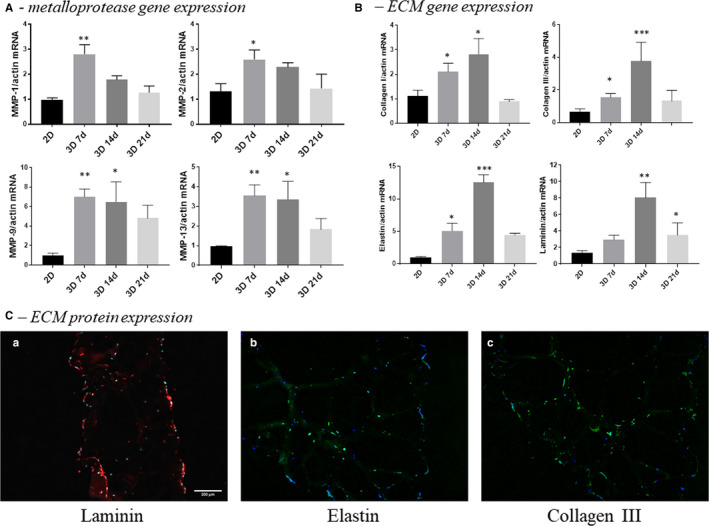
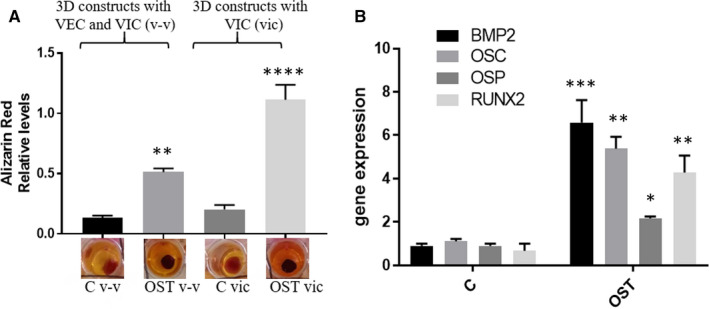
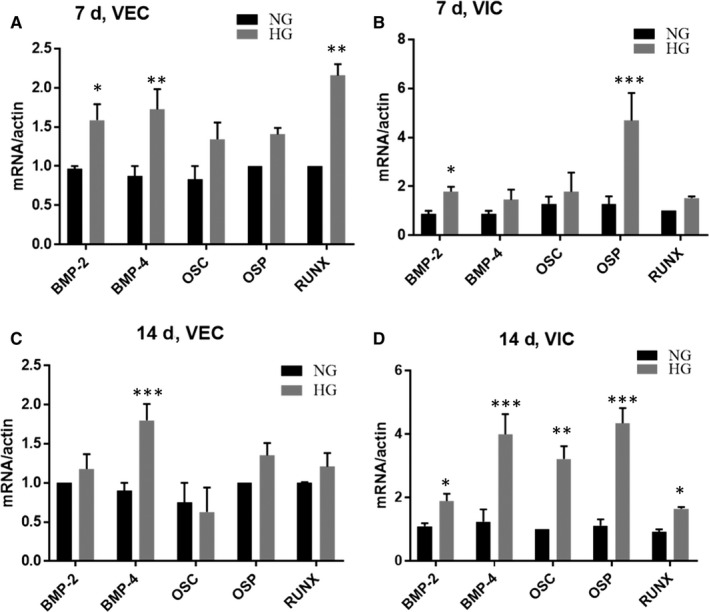
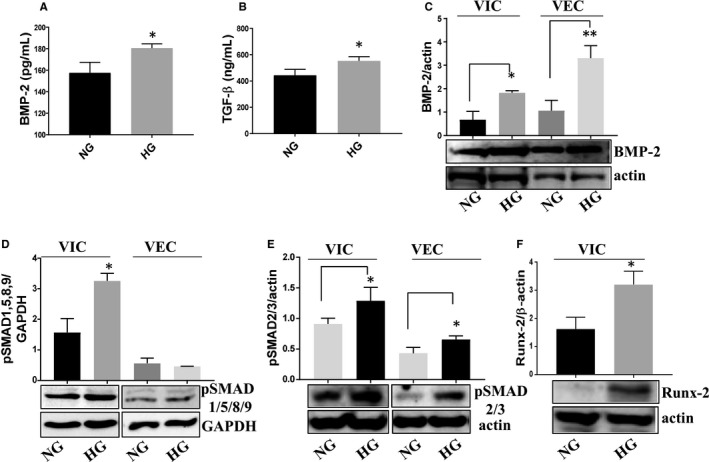
Calcific aortic valve disease (CAVD)-the most common valvular heart disease-is accelerated in diabetes and has no pharmacotherapy. Although it is known that early CAVD is associated with inflammation and osteogenesis, the molecular mechanisms involved in diabetes-associated CAVD still need to be uncovered. In this context, we have developed a 3D construct based on gelatin populated with human valvular endothelial cells (VEC) and valvular interstitial cells (VIC) and evaluated the effect of high glucose (HG) concentration on osteogenic molecules expression and on calcification mechanisms. First, we characterized the 3D model and assessed VIC remodelling properties at different time-points. Then, we exposed it to normal glucose (NG) or high glucose (HG) for 7, 14 and 21 days after which the cells were isolated, separated and investigated individually. Our results showed that encapsulated VIC actively remodel the hydrogel, as demonstrated by an increased expression of extracellular matrix (ECM) proteins and matrix metalloproteinases (MMPs). Moreover, exposure of the construct to HG triggered bone morphogenetic protein (BMP) and TGF-β signalling pathways, up-regulating expression of osteogenic molecules-BMP-2/-4, osteocalcin, osteopontin, SMADs and Runt-related transcription factor (Runx-2)-and increased calcium deposits in an osteogenic environment. These findings underline the potential of the developed 3D model as a suitable system to investigate the mechanisms of human CAVD and may help to better understand the calcification mechanisms in CAVD associated to diabetes.
钙化性主动脉瓣疾病(CAVD)是最常见的瓣膜性心脏病,在糖尿病患者中加速发展,且目前尚无药物治疗方法。虽然已知早期 CAVD 与炎症和骨生成有关,但与糖尿病相关的 CAVD 相关的分子机制仍有待发现。在这种情况下,我们开发了一种基于明胶的 3D 构建体,其中填充有人瓣膜内皮细胞(VEC)和瓣膜间质细胞(VIC),并评估了高葡萄糖(HG)浓度对成骨分子表达和钙化机制的影响。首先,我们对 3D 模型进行了特征描述,并在不同时间点评估了 VIC 重塑特性。然后,将其暴露于正常葡萄糖(NG)或高葡萄糖(HG)中 7、14 和 21 天,然后将细胞分离并单独研究。我们的结果表明,包封的 VIC 积极重塑水凝胶,这表现为细胞外基质(ECM)蛋白和基质金属蛋白酶(MMPs)的表达增加。此外,构建体暴露于 HG 会触发骨形态发生蛋白(BMP)和转化生长因子-β(TGF-β)信号通路,上调成骨分子 BMP-2/-4、骨钙素、骨桥蛋白、SMADs 和 runt 相关转录因子(Runx-2)的表达,并在成骨环境中增加钙沉积。这些发现强调了开发的 3D 模型作为研究人类 CAVD 机制的合适系统的潜力,并可能有助于更好地理解与糖尿病相关的 CAVD 的钙化机制。