Zhang Zhongheng, Li Xiuyang, Wu Xiao, Qiu Huixian, Shi Hongying
Department of Emergency Medicine, Sir Run-Run Shaw Hospital, Zhejiang University School of Medicine, Hangzhou 310016, China.
Department of Epidemiology & Biostatistics, Zhejiang University School of Medicine, Hangzhou 310058, China.
Ann Transl Med. 2020 Mar;8(5):246. doi: 10.21037/atm.2020.01.33.
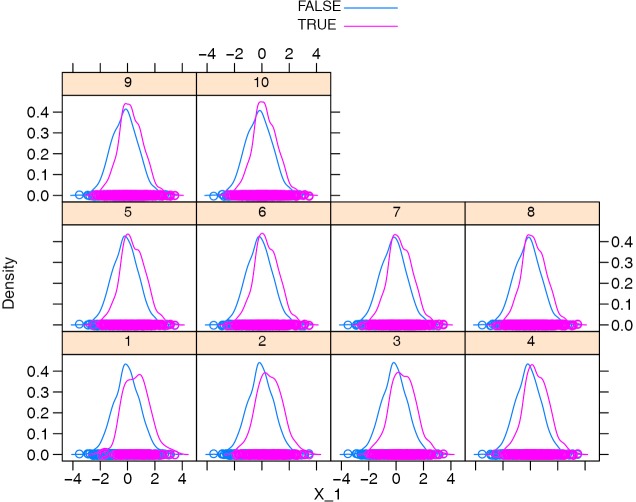
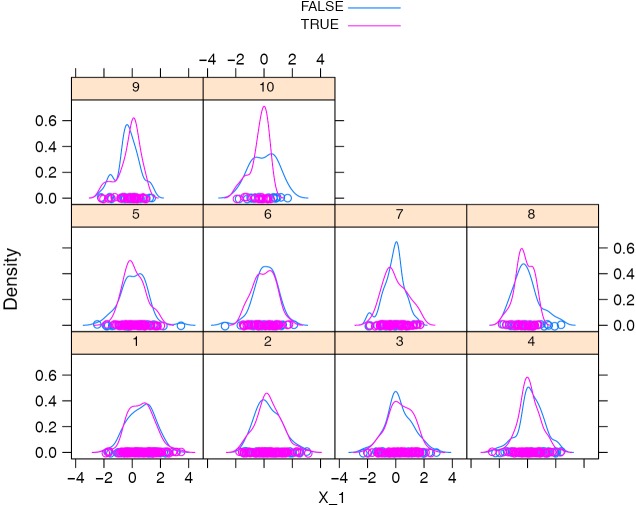
Propensity score analysis (PSA) is widely used in medical literature to account for confounders. Conventionally, the propensity score (PS) is calculated by a binary logistic regression model using time-fixed covariates. In the presence of time-varying treatment or exposure, the conventional method may cause bias because subjects with early and late exposure are treated as the same. In effect, subjects who are treated latter can be different from those who are treated early. Thus, the conventional PSA must be modified to address this bias. In this paper, we illustrate how to perform analysis in the presence of time-dependent exposure. We conduct a simulation study with a known treatment effect. In the simulation study, we find the PSA method that directly adjust PS estimated by either a binary logistic regression model or a Cox regression model using time-fixed covariates still introduce significant bias. On the other hand, the time-dependent PS matching can help to achieve a result approaching the true effect. After time-dependent PS matching, the matched cohort can be analyzed with conventional Cox regression model or conditional logistic regression (CLR) model with time strata. The performance is comparable to the correctly specified Cox regression model with time-varying covariates (i.e., adjusting the exposure in a multivariable model as a time-varying covariate). We further develop a function called for time-dependent PS matching and it is applied to a real world dataset.
倾向得分分析(PSA)在医学文献中被广泛用于处理混杂因素。传统上,倾向得分(PS)是通过使用时间固定协变量的二元逻辑回归模型计算得出的。在存在随时间变化的治疗或暴露的情况下,传统方法可能会导致偏差,因为早期和晚期暴露的受试者被视为相同。实际上,后期接受治疗的受试者可能与早期接受治疗的受试者不同。因此,必须对传统的PSA进行修改以解决这种偏差。在本文中,我们说明了如何在存在时间依赖性暴露的情况下进行分析。我们进行了一项具有已知治疗效果的模拟研究。在模拟研究中,我们发现使用时间固定协变量通过二元逻辑回归模型或Cox回归模型直接调整估计的PS的PSA方法仍然会引入显著偏差。另一方面,时间依赖性PS匹配有助于获得接近真实效果的结果。在进行时间依赖性PS匹配后,可以使用传统的Cox回归模型或带有时间分层的条件逻辑回归(CLR)模型对匹配队列进行分析。其性能与正确设定的带有时间变化协变量的Cox回归模型相当(即,在多变量模型中将暴露作为时间变化协变量进行调整)。我们进一步开发了一个用于时间依赖性PS匹配的函数,并将其应用于一个真实世界的数据集。