Kiani Zahra, Simbar Masoumeh, Hajian Sepideh, Zayeri Farid, Shahidi Maryam, Saei Ghare Naz Marzieh, Ghasemi Vida
1Student Research Committee, Department of Midwifery and Reproductive Health, School of Nursing and Midwifery, Shahid Beheshti University of Medical Sciences, Tehran, Iran.
2Midwifery and Reproductive Health Research Center, School of Nursing and Midwifery, Shahid Beheshti University of Medical Sciences, Tehran, Iran.
Fertil Res Pract. 2020 Apr 15;6:7. doi: 10.1186/s40738-020-00076-1. eCollection 2020.
Infertile women are exposed more frequently to anxiety risk than are infertile men, thereby adversely affecting the procedures with which they are treated and the quality of their lives. Yet, this problem is often disregarded. This study accordingly determined the prevalence of anxiety symptoms among infertile women.
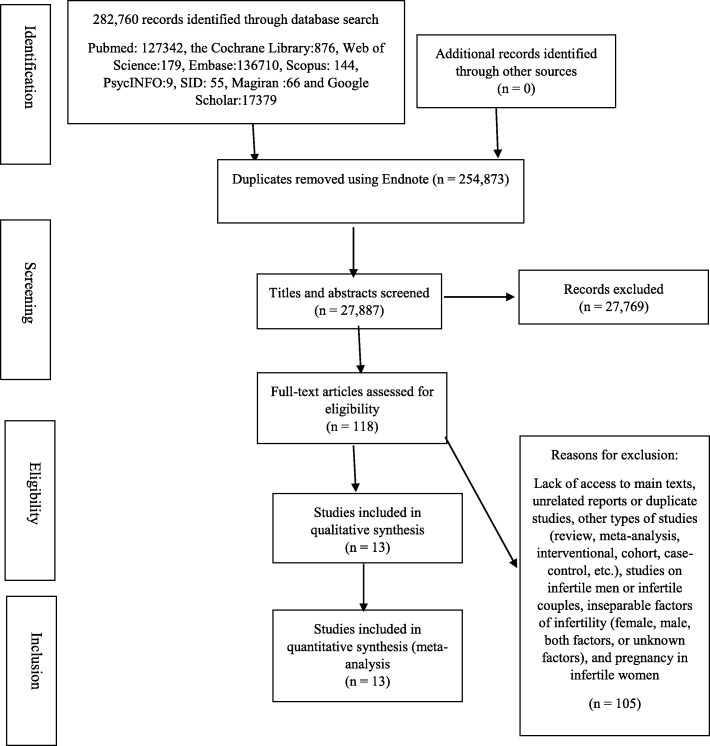
All Persian and English studies published from the early 2000s to May 2019 were searched in international (i.e., PubMed, the Cochrane Library, Web of Science, Scopus, Embase, and PsycINFO) and national (i.e., SID, Magiran) databases as well as through Google Scholar. After the titles and abstracts of the articles were reviewed, their quality was evaluated, and relevant works for examination were selected in consideration of established inclusion and exclusion criteria. The risk of biases of individual studies according to Newcastle - Ottawa Scale was assessed. The heterogeneity of the studies was assessed using the I statistic, and indicators of publication bias were ascertained using Egger's test. Stata (version 14) was employed in analyzing the findings.
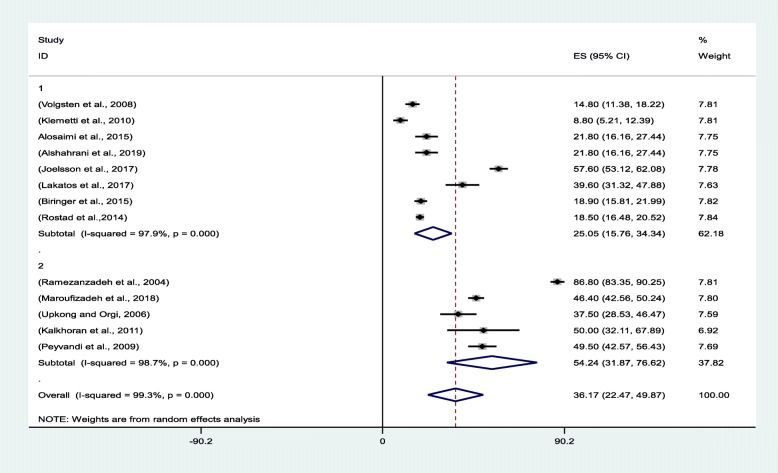
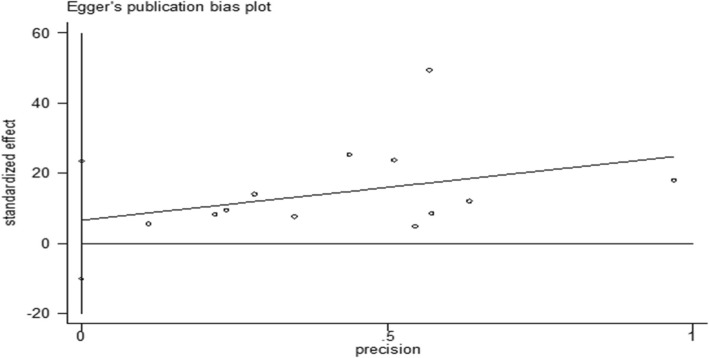
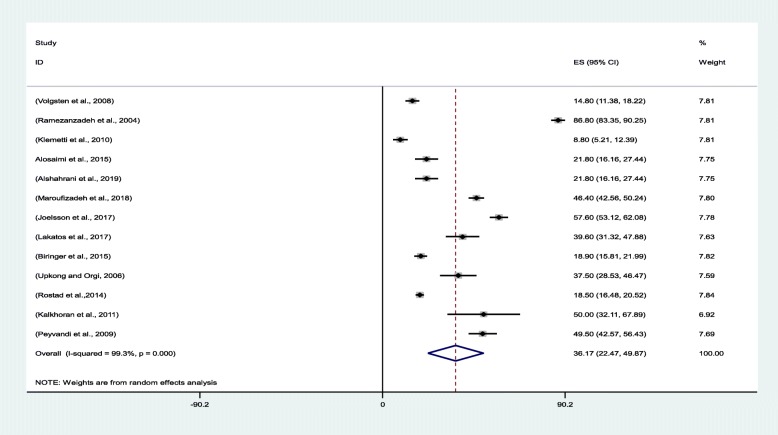
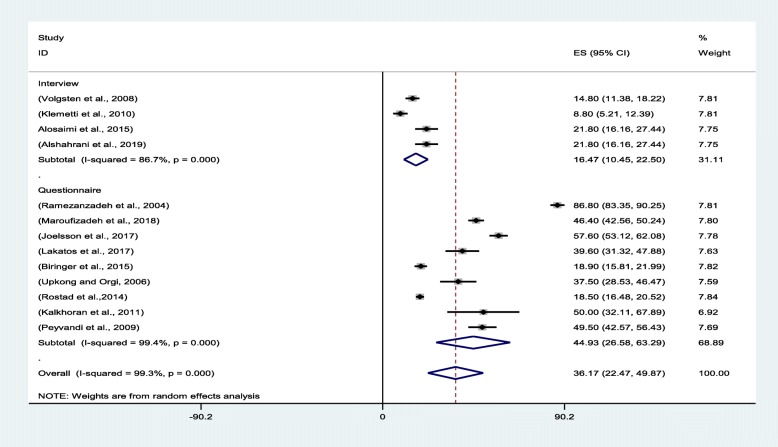
Thirteen studies having a collective sample size of 5055 infertile women were subjected to meta-analysis, with study heterogeneity incorporated into a random effects model. The findings indicated that 36% of the infertile women involved in the evaluated studies self-reported their experience with anxiety. The pooled prevalence of the condition among the subjects was 36.17% [95% confidence interval (CI): 22.47-49.87]. The pooled prevalence levels in low- and middle-income countries and high-income countries were 54.24% (95% CI: 31.86-78.62) and 25.05% (95% CI: 15.76-34.34), respectively. The results revealed no evidence of publication bias (P = 0.406).
Considering the prevalence of anxiety in infertile women and its effects on health processes and quality of life, this problem requires serious consideration and planning for effective intervention, especially in low- and middle-income nations.
与不育男性相比,不育女性更频繁地面临焦虑风险,从而对她们所接受的治疗程序和生活质量产生不利影响。然而,这个问题常常被忽视。因此,本研究确定了不育女性中焦虑症状的患病率。
检索了2000年代初至2019年5月发表的所有波斯语和英语研究,检索范围包括国际数据库(即PubMed、Cochrane图书馆、科学网、Scopus、Embase和PsycINFO)、国家数据库(即SID、Magiran)以及谷歌学术。在对文章的标题和摘要进行审查后,评估其质量,并根据既定的纳入和排除标准选择相关的研究进行审查。根据纽卡斯尔-渥太华量表评估单个研究的偏倚风险。使用I统计量评估研究的异质性,并使用Egger检验确定发表偏倚指标。采用Stata(版本14)分析研究结果。
对13项研究进行了荟萃分析,这些研究的样本总量为5055名不育女性,并将研究异质性纳入随机效应模型。研究结果表明,参与评估研究的不育女性中有36%自我报告有焦虑经历。受试者中该疾病的合并患病率为36.17%[95%置信区间(CI):22.47 - 49.87]。低收入和中等收入国家以及高收入国家的合并患病率分别为54.24%(95%CI:31.86 - 78.62)和25.05%(95%CI:15.76 - 34.34)。结果显示没有发表偏倚的证据(P = 0.406)。
考虑到不育女性中焦虑症的患病率及其对健康过程和生活质量的影响,这个问题需要认真考虑并制定有效的干预计划,特别是在低收入和中等收入国家。