Pacifici Francesca, Della-Morte David, Piermarini Francesca, Arriga Roberto, Scioli Maria Giovanna, Capuani Barbara, Pastore Donatella, Coppola Andrea, Rea Silvia, Donadel Giulia, Andreadi Aikaterini, Abete Pasquale, Sconocchia Giuseppe, Bellia Alfonso, Orlandi Augusto, Lauro Davide
Department of Systems Medicine, University of Rome "Tor Vergata", 00133 Rome, Italy.
Department of Human Sciences and Quality of Life Promotion, San Raffaele Roma Open University, 00166 Rome, Italy.
Antioxidants (Basel). 2020 Apr 17;9(4):329. doi: 10.3390/antiox9040329.
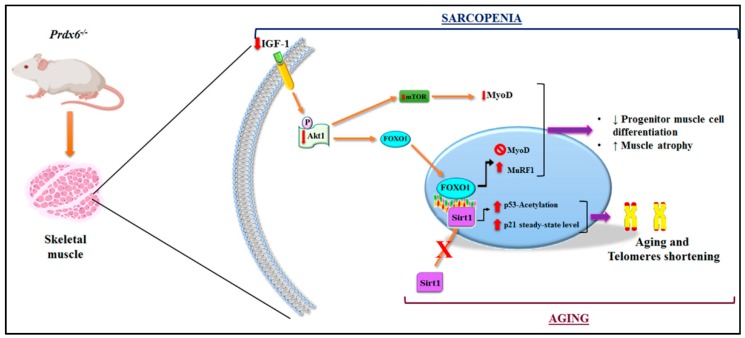
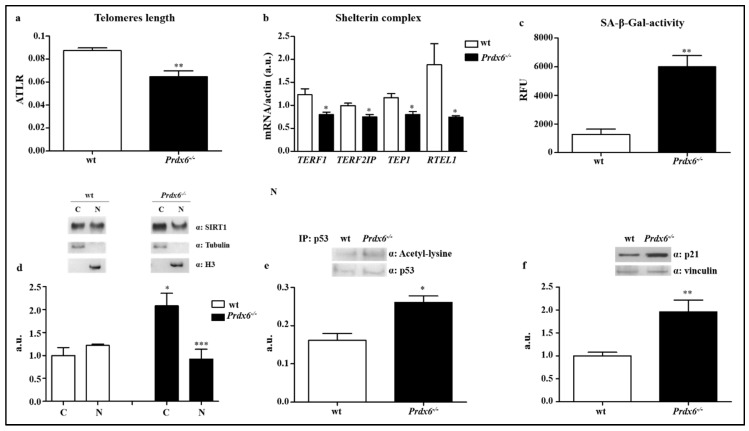
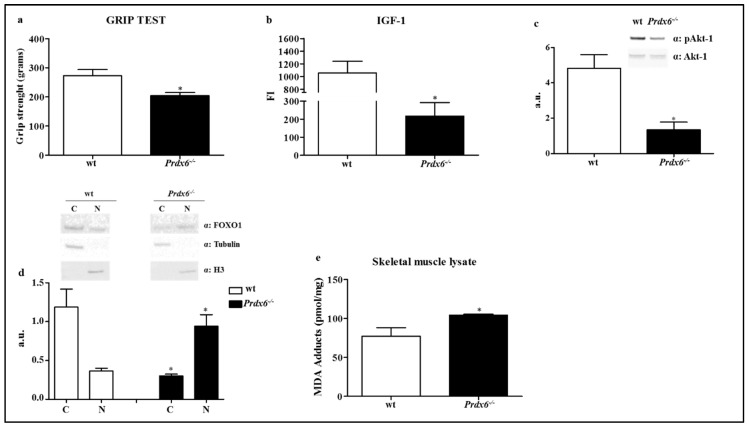
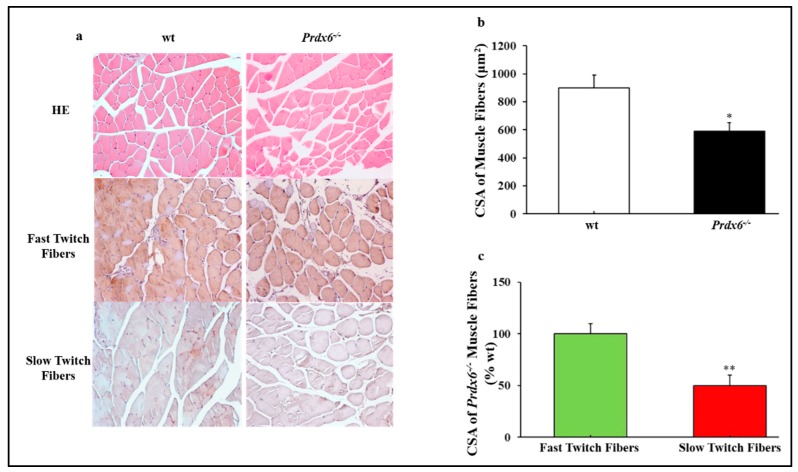
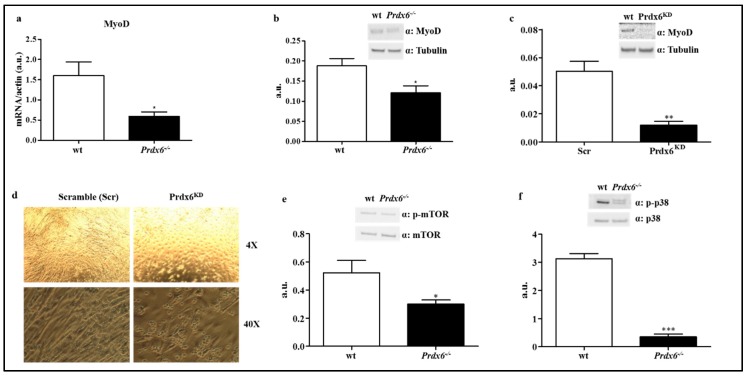
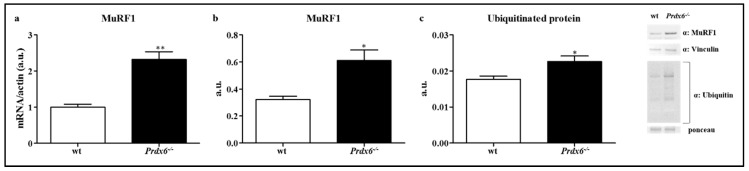
With the increase in average life expectancy, several individuals are affected by age-associated non-communicable chronic diseases (NCDs). The presence of NCDs, such as type 2 diabetes mellitus (T2DM), leads to the reduction in skeletal muscle mass, a pathological condition defined as sarcopenia. A key factor linking sarcopenia with cellular senescence and diabetes mellitus (DM) is oxidative stress. We previously reported as the absence of Peroxiredoxin 6 (Prdx6), an antioxidant enzyme implicated in maintaining intracellular redox homeostasis, induces an early-stage of T2DM. In the present study we sought to understand the role of Prdx6 in the crosstalk between aging and diabetic sarcopenia, by using Prdx6 knockout () mice. Absence of Prdx6 reduced telomeres length and Sirtuin1 (SIRT1) nuclear localization. An increase in Sa-β-Gal activity and p53-p21 pro-aging pathway were also evident. An impairment in IGF-1 (Insulin-like Groth Factor-1)/Akt-1/mTOR pathway leading to a relative increase in Forkhead Box O1 (FOXO1) nuclear localization and in a decrease of muscle differentiation as per lower levels of myoblast determination protein 1 (MyoD) was observed. Muscle atrophy was also present in mice by the increase in Muscle RING finger 1 (MuRF1) levels and proteins ubiquitination associated to a reduction in muscle strength. The present study, innovatively, highlights a fundamental role of Prdx6, in the crosstalk between aging, sarcopenia, and DM.
随着平均预期寿命的增加,一些人受到与年龄相关的非传染性慢性病(NCDs)的影响。诸如2型糖尿病(T2DM)等非传染性慢性病的存在会导致骨骼肌质量下降,这种病理状况被定义为肌肉减少症。将肌肉减少症与细胞衰老和糖尿病(DM)联系起来的一个关键因素是氧化应激。我们之前报道过,缺乏参与维持细胞内氧化还原稳态的抗氧化酶过氧化物酶6(Prdx6)会诱发T2DM的早期阶段。在本研究中,我们试图通过使用Prdx6基因敲除()小鼠来了解Prdx6在衰老与糖尿病性肌肉减少症相互作用中的作用。Prdx6的缺失缩短了端粒长度并减少了沉默调节蛋白1(SIRT1)的核定位。衰老相关β-半乳糖苷酶(SA-β-Gal)活性的增加和p53-p21促衰老途径也很明显。观察到胰岛素样生长因子1(IGF-1)/蛋白激酶B-1(Akt-1)/哺乳动物雷帕霉素靶蛋白(mTOR)信号通路受损,导致叉头框蛋白O1(FOXO1)核定位相对增加,而成肌细胞决定蛋白1(MyoD)水平降低,肌肉分化减少。由于肌肉环指蛋白1(MuRF1)水平增加和蛋白质泛素化增加导致肌肉力量下降,基因敲除小鼠中也出现了肌肉萎缩。本研究创新性地强调了Prdx6在衰老、肌肉减少症和糖尿病相互作用中的重要作用。