Naval-Sanchez Marina, McWilliam Sean, Evans Bradley, Yáñez José M, Houston Ross D, Kijas James W
CSIRO Agriculture and Food, Brisbane, QLD, Australia.
Salmon Enterprises of Tasmania Pty. Limited, Wayatinah, TAS, Australia.
Front Genet. 2020 Apr 3;11:264. doi: 10.3389/fgene.2020.00264. eCollection 2020.
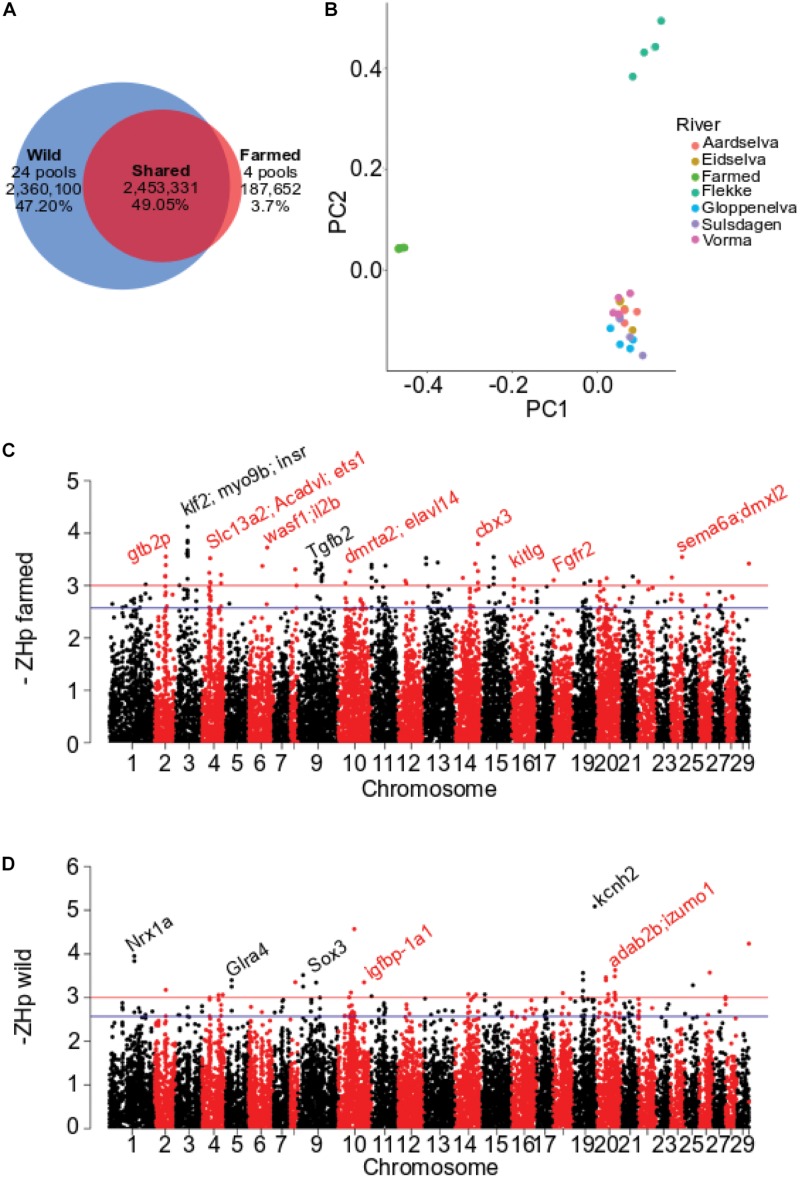
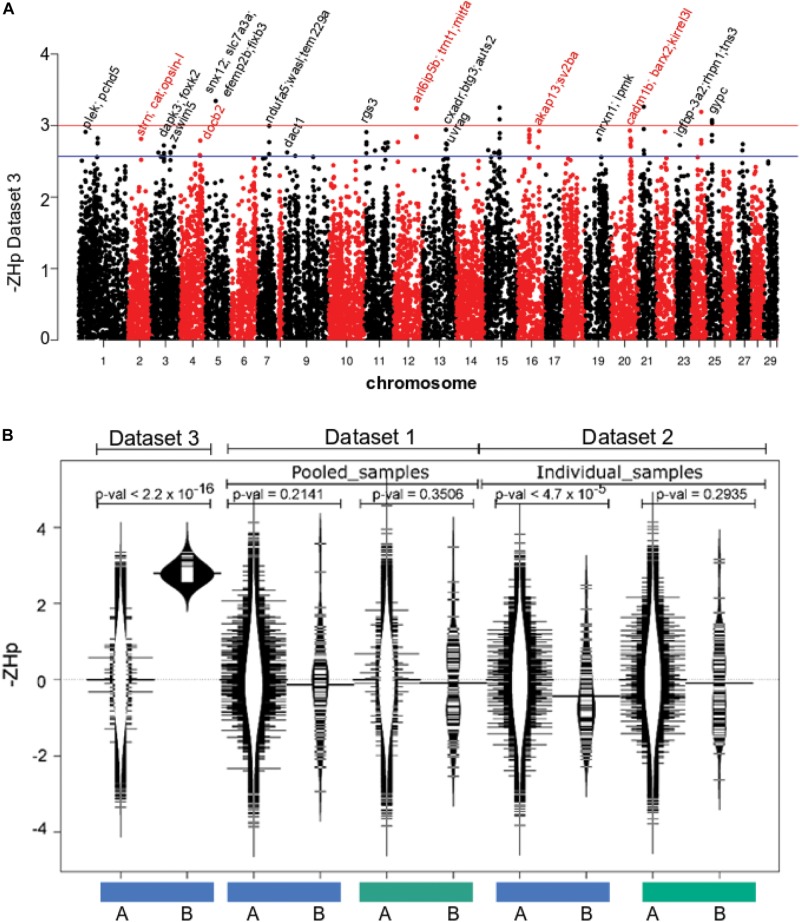
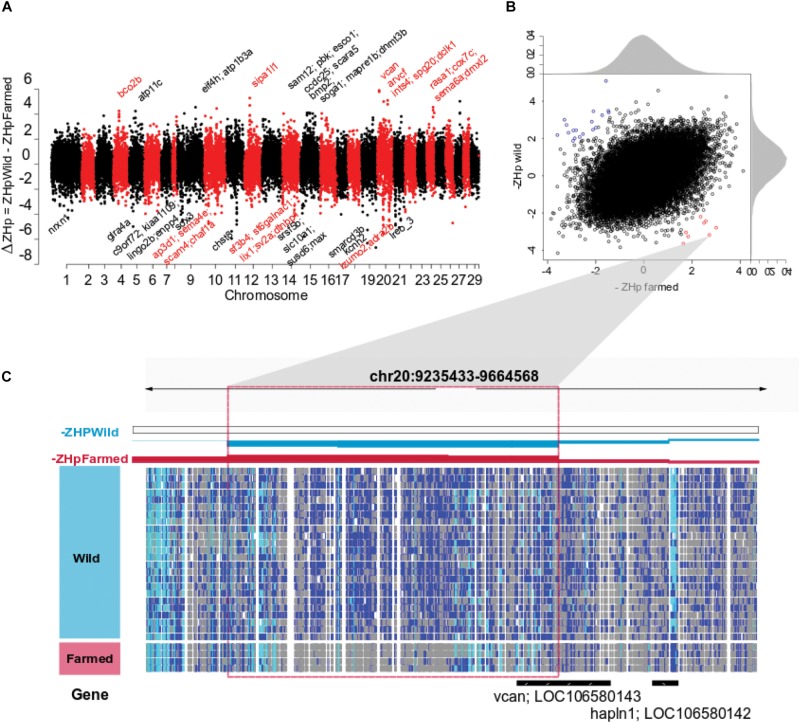
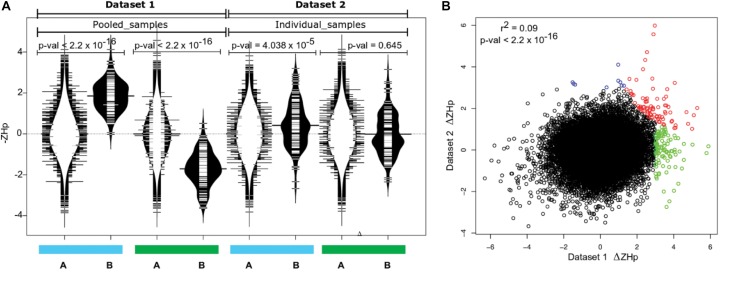
The introduction of wild Atlantic salmon into captivity, and their subsequent artificial selection for production traits, has caused phenotypic differences between domesticated fish and their wild counterparts. Identification of regions of the genome underling these changes offers the promise of characterizing the early biological consequences of domestication. In the current study, we sequenced a population of farmed European Atlantic salmon and compared the observed patterns of SNP variation to those found in conspecific wild populations. This identified 139 genomic regions that contained significantly elevated SNP homozygosity in farmed fish when compared to their wild counterparts. The most extreme was adjacent to , a gene involved in control of neural crest cell migration. To control for false positive signals, a second and independent dataset of farmed and wild European Atlantic salmon was assessed using the same methodology. A total of 81 outlier regions detected in the first dataset showed significantly reduced homozygosity within the second one, strongly suggesting the genomic regions identified are enriched for true selection sweeps. Examination of the associated genes identified a number previously characterized as targets of selection in other domestic species and that have roles in development, behavior and olfactory system. These include , , and genes. Finally, we searched for evidence of parallel sweeps using a farmed population of North American origin. This failed to detect a convincing overlap to the putative sweeps present in European populations, suggesting the factors that drive patterns of variation under domestication and early artificial selection were largely independent. This is the first analysis on domestication of aquaculture species exploiting whole-genome sequence data and resulted in the identification of sweeps common to multiple independent populations of farmed European Atlantic salmon.
将野生大西洋鲑鱼引入圈养环境,并随后对其生产性状进行人工选择,导致了养殖鱼类与其野生同类之间的表型差异。确定基因组中导致这些变化的区域,有望描绘出驯化的早期生物学后果。在本研究中,我们对一群养殖的欧洲大西洋鲑鱼进行了测序,并将观察到的单核苷酸多态性(SNP)变异模式与同种野生种群中的模式进行了比较。这确定了139个基因组区域,与野生同类相比,养殖鱼类中这些区域的SNP纯合度显著升高。最极端的区域与一个参与神经嵴细胞迁移控制的基因相邻。为了控制假阳性信号,使用相同方法评估了第二个独立的养殖和野生欧洲大西洋鲑鱼数据集。在第一个数据集中检测到的总共81个异常区域在第二个数据集中显示出显著降低的纯合度,强烈表明所确定的基因组区域富含真正的选择扫荡。对相关基因的检查确定了一些先前在其他家养物种中被表征为选择目标且在发育、行为和嗅觉系统中起作用的基因。这些包括、和基因。最后,我们使用北美养殖种群寻找平行扫荡的证据。这未能检测到与欧洲种群中假定的扫荡有令人信服的重叠,表明驱动驯化和早期人工选择下变异模式的因素在很大程度上是独立的。这是首次利用全基因组序列数据对水产养殖物种驯化进行的分析,并导致确定了多个独立的养殖欧洲大西洋鲑鱼种群共有的扫荡。