Alzheimer's Center at Temple, Temple University Lewis Katz School of Medicine, Philadelphia, PA, USA.
Department of Clinical Sciences, Temple University Lewis Katz School of Medicine, Philadelphia, PA, USA.
Ann Neurol. 2020 Jul;88(1):137-147. doi: 10.1002/ana.25752. Epub 2020 May 27.
Most of the patients with Down syndrome (DS) develop Alzheimer's disease (AD) neuropathology by age 40. Although this increased susceptibility to AD in DS is thought to be primarily due to triplication of the amyloid precursor protein located on chromosome 21, the precise molecular mechanisms are not well understood. Recent evidence has implicated defective protein sorting and trafficking secondary to deficiencies in retromer complex proteins in AD pathogenesis. Thus, the objective of the present study is to assess the retromer complex system in DS.
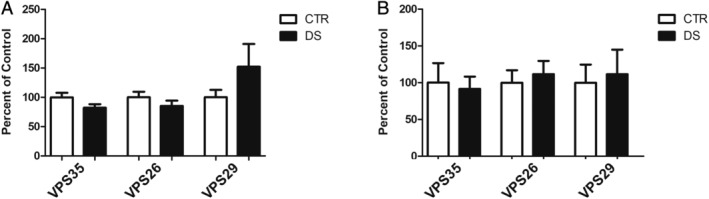
Human postmortem brain tissue and fibroblasts from subjects with DS and healthy controls were examined for the various retromer protein components using Western blot analysis and reverse transcription quantitative polymerase chain reaction (RT-qPCR).
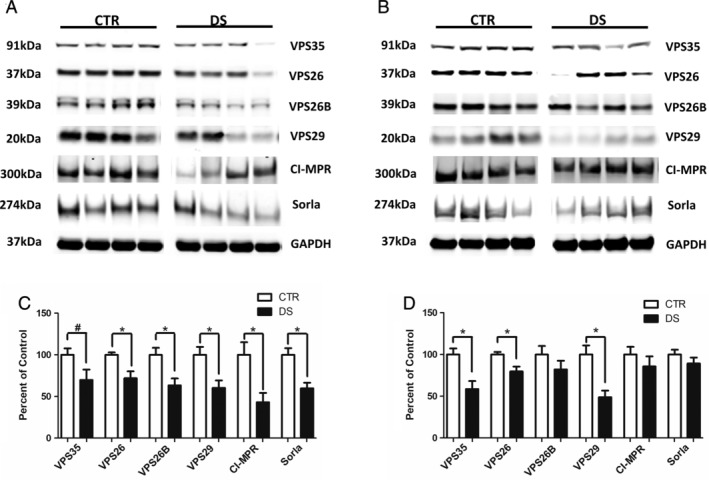
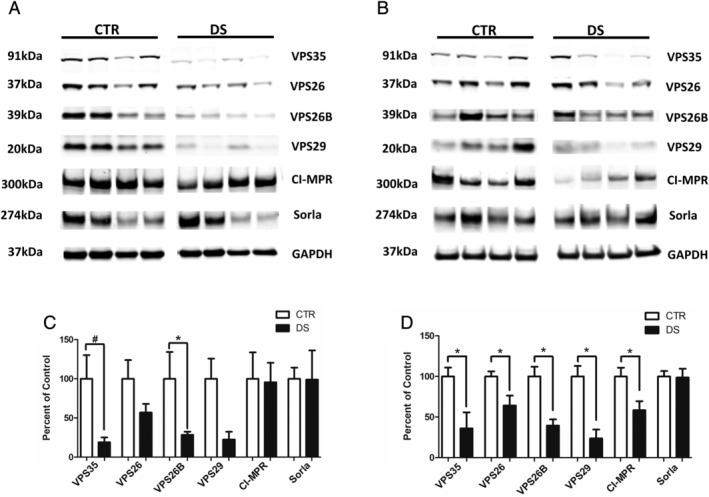
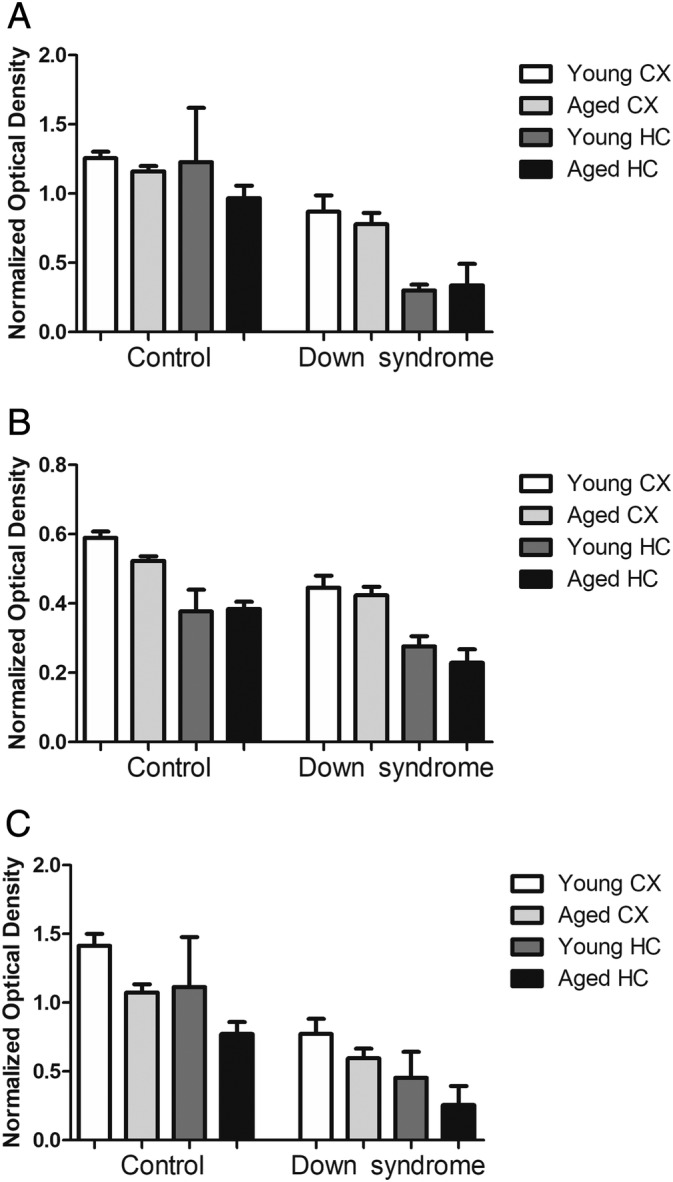
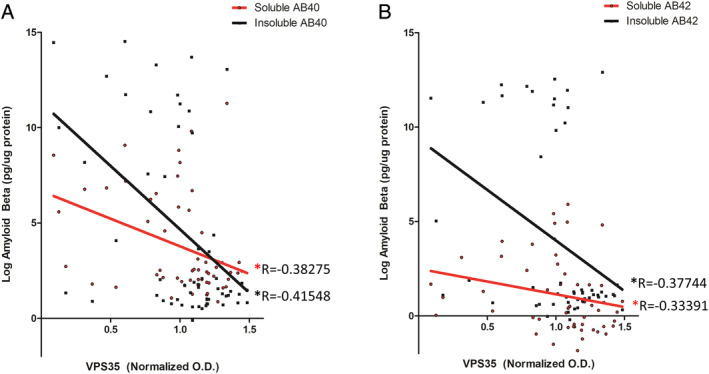
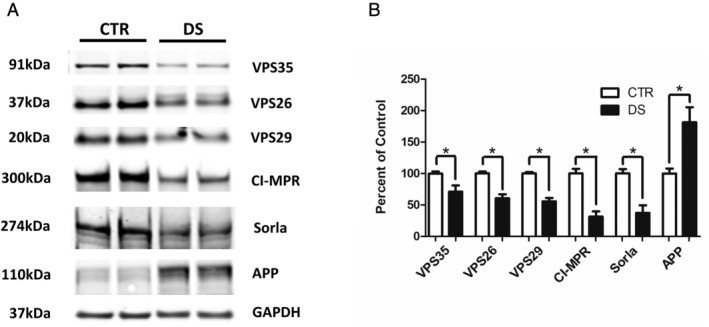
Retromer recognition core proteins were significantly decreased in DS fibroblasts, and in both the hippocampi and cortices of young (age 15-40 years old) and aged (40-65 years old) subjects with DS compared with controls. Correlation analyses showed a significant inverse relationship between recognition core proteins and levels of soluble forms of Aβ 1-40 and 1-42 in both hippocampus (n = 33, Spearman = -0.59 to -0.38, p ≤ 0.03 for VPS35, VPS26, VPS29, and VPS26B) and cortex tissue (n = 57, Spearman = -0.46 to -0.27, p ≤ 0.04 for VPS35, VPS26, and VPS29) of the same patients.
We conclude that dysregulation of the retromer complex system is an early event in the development of the AD-like pathology and cognitive decline in DS, and for this reason the system could represent a novel potential therapeutic target for DS. ANN NEUROL 2020 ANN NEUROL 2020;88:137-147.
大多数唐氏综合征(DS)患者在 40 岁时会出现阿尔茨海默病(AD)神经病理学改变。尽管 DS 患者对 AD 的这种易感性增加主要归因于位于 21 号染色体上的淀粉样前体蛋白的三倍体,但确切的分子机制尚不清楚。最近的证据表明,在 AD 发病机制中,由于逆行转运复合体蛋白的缺陷,导致蛋白质分拣和运输出现缺陷。因此,本研究旨在评估 DS 中的逆行转运复合体系统。
使用 Western blot 分析和逆转录定量聚合酶链反应(RT-qPCR),检测 DS 患者和健康对照者的人死后脑组织和成纤维细胞中的各种逆行转运复合体蛋白成分。
DS 成纤维细胞中的逆行转运识别核心蛋白显著减少,与对照组相比,年轻(15-40 岁)和老年(40-65 岁)DS 患者的海马体和皮质中也存在这种情况。相关性分析显示,在海马体(n = 33,Spearman = -0.59 至 -0.38,p≤0.03,VPS35、VPS26、VPS29 和 VPS26B)和皮质组织(n = 57,Spearman = -0.46 至 -0.27,p≤0.04,VPS35、VPS26 和 VPS29)中,识别核心蛋白与可溶性 Aβ 1-40 和 1-42 水平呈显著负相关。
我们的结论是,逆行转运复合体系统的失调是 AD 样病理学和 DS 认知能力下降发展过程中的早期事件,因此该系统可能是 DS 的一个新的潜在治疗靶点。