Qu Yan-Nv, Zhang Li, Wang Ting, Zhang He-Yang, Yang Ze-Ji, Yuan Fang-Fang, Wang Yan, Li Si-Wei, Jiang Xiao-Xia, Xie Xiao-Hua
Chinese PLA General Hospital, 28 Fuxing Road, Haidian District, Beijing 100853, China.
Department of Neural Engineering and Biological Interdisciplinary Studies, Institute of Military Cognition and Brain Sciences, Academy of Military Medical Sciences, 27 Taiping Road, Haidian District, Beijing 100850, China.
Stem Cells Int. 2020 Apr 3;2020:3150716. doi: 10.1155/2020/3150716. eCollection 2020.
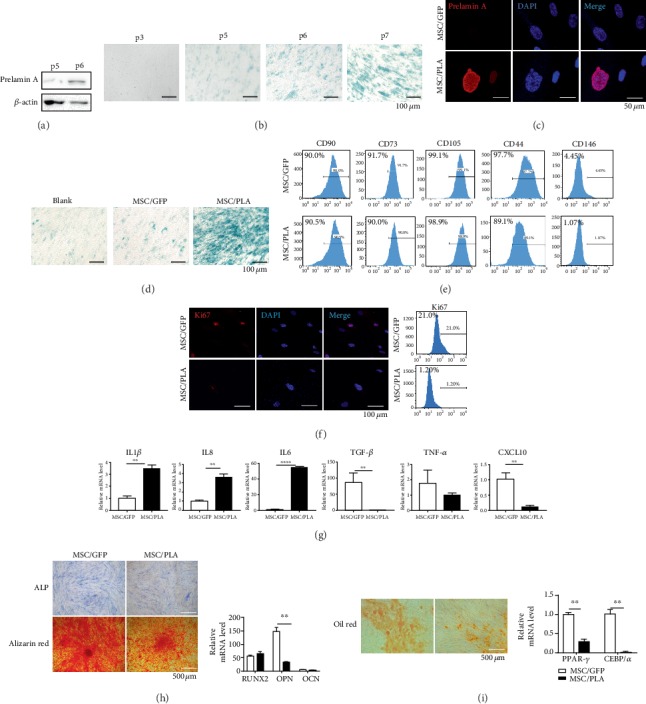
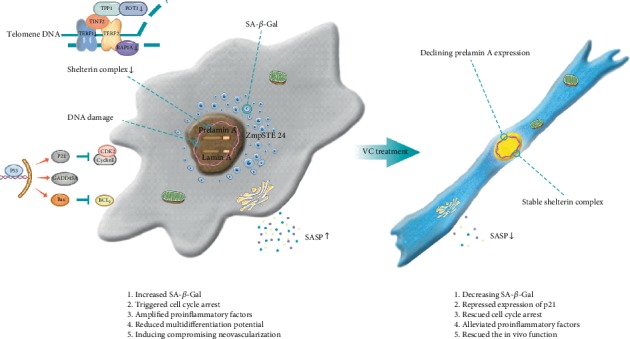
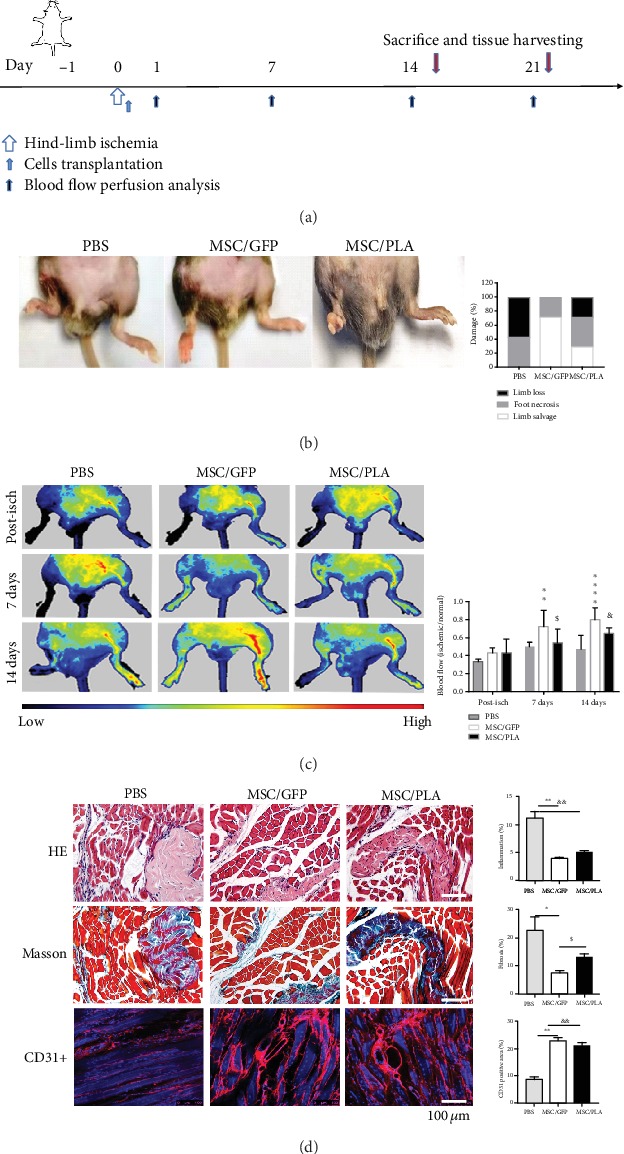
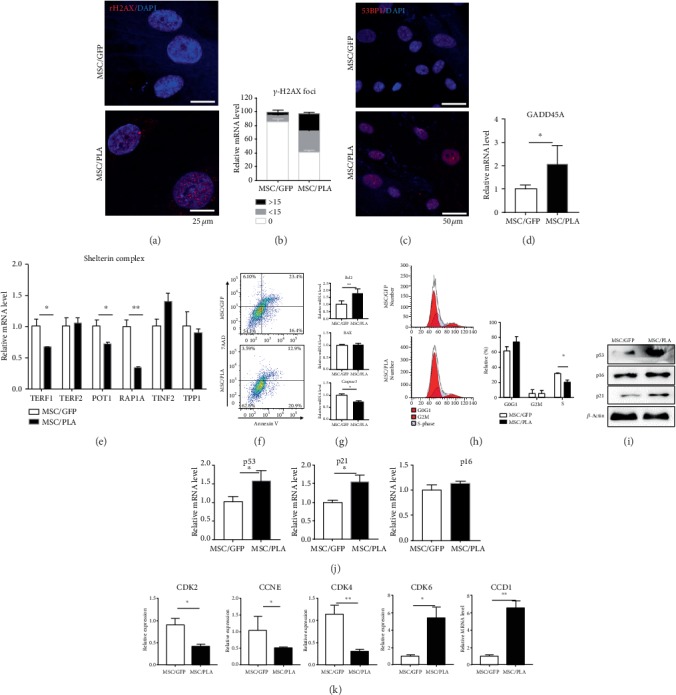
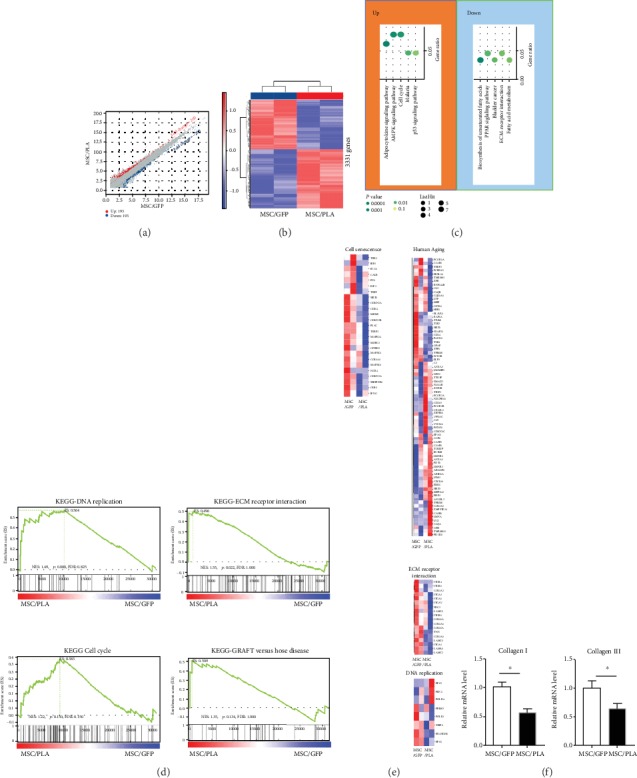
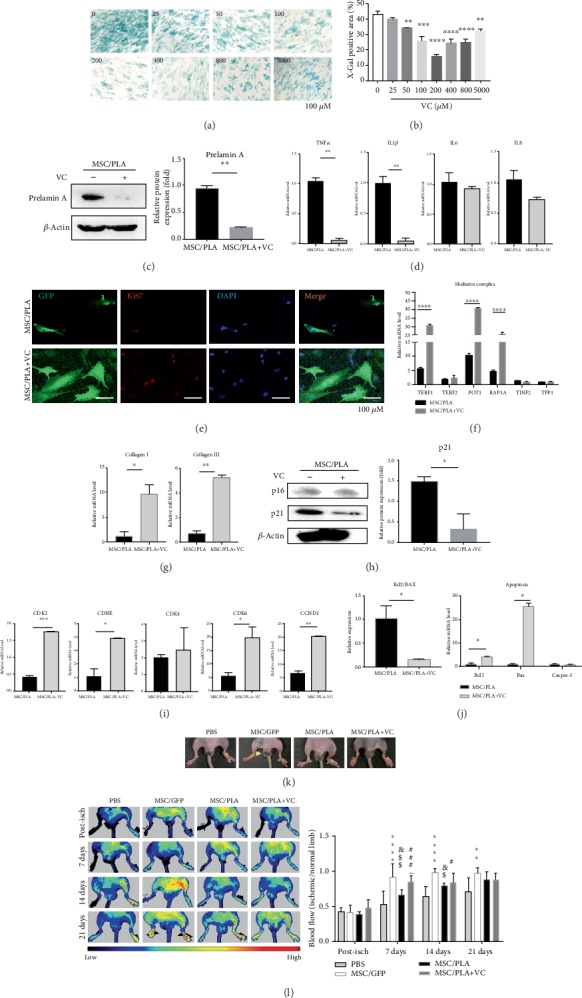
Aging is a predominant risk factor for many chronic conditions. Stem cell dysfunction plays a pivotal role in the aging process. Prelamin A, an abnormal processed form of the nuclear lamina protein lamin A, has been reported to trigger premature senescence. However, the mechanism driving stem cell dysfunction is still unclear. In this study, we found that while passaging subchondral bone mesenchymal stem cells (SCB-MSCs) , prelamin A accumulation occurred concomitantly with an increase in senescence-associated -galactosidase (SA--Gal) expression. Unlike their counterparts, SCB-MSCs with prelamin A overexpression (MSC/PLA) demonstrated decreased proliferation, osteogenesis, and adipogenesis but increased production of inflammatory factors. In a hind-limb ischemia model, MSC/PLA also exhibited compromised therapy effect. Further investigation showed that exogenous prelamin A triggered abnormal nuclear morphology, DNA and shelterin complex damage, cell cycle retardation, and eventually cell senescence. Changes in gene expression profile were also verified by microarray assay. Interestingly, we found that ascorbic acid or vitamin C (VC) treatment could inhibit prelamin A expression in MSC/PLA and partially reverse the premature aging in MSC/PLA, with reduced secretion of inflammatory factors and cell cycle arrest and resistance to apoptosis. Importantly, after VC treatment, MSC/PLA showed enhanced therapy effect in the hind-limb ischemia model. In conclusion, prelamin A can accelerate SCB-MSC premature senescence by inducing DNA damage. VC can be a potential therapeutic reagent for prelamin A-induced aging defects in MSCs.
衰老 是 许多 慢性 疾病 的 主要 风险 因素 。干细胞 功能 障碍 在 衰老 过程 中 起 关键 作用 。前层粘连蛋白A,一种 核纤层 蛋白 核纤层蛋白A的 异常 加工 形式 ,已 被 报道 可 引发 早衰 。然而 ,驱动 干细胞 功能 障碍 的 机制 仍 不清楚 。在 本 研究 中,我们 发现 ,在 传代 软骨下 骨 间充质 干细胞 (SCB-MSCs) 时 ,前层粘连蛋白A的 积累 与 衰老 相关 -半乳糖苷酶 (SA--Gal) 表达 的 增加 同时 发生 。与 其 对照 细胞 不同 ,过表达 前层粘连蛋白A的 SCB-MSCs (MSC/PLA) 表现出 增殖 、成骨 和 成脂 能力 下降 ,但 炎症 因子 的 产生 增加 。在 后肢 缺血 模型 中 ,MSC/PLA 也 表现出 治疗 效果 受损 。进一步 的 研究 表明 ,外源性 前层粘连蛋白A 引发 了 异常 的 核 形态 、DNA 和 保护素 复合物 损伤 、细胞 周期 阻滞 ,并 最终 导致 细胞 衰老 。基因 表达 谱 的 变化 也 通过 微阵列 分析 得到 了 验证 。有趣的 是,我们 发现 抗坏血酸 或 维生素C (VC) 处理 可以 抑制 MSC/PLA 中 前层粘连蛋白A的 表达 ,并 部分 逆转 MSC/PLA 的 早衰 ,减少 炎症 因子 的 分泌 、细胞 周期 阻滞 和 对 凋亡 的 抵抗 。重要的 是,VC 处理 后 ,MSC/PLA 在 后肢 缺血 模型 中 表现出 增强 的 治疗 效果 。总之 ,前层粘连蛋白A 可 通过诱导 DNA 损伤 加速 SCB-MSC 的 早衰 。VC 可能 是 一种 潜在 的 治疗 试剂 ,用于 治疗 MSCs 中 前层粘连蛋白A 诱导 的 衰老 缺陷 。