Jiang Han-Kai, Lee Man-Nee, Tsou Jo-Chu, Chang Kuan-Wen, Tseng Hsueh-Wei, Chen Kuang-Po, Li Yaw-Kuen, Wang Yane-Shih
Institute of Biological Chemistry, Academia Sinica, Taipei, Taiwan.
Chemical Biology and Molecular Biophysics Program, Taiwan International Graduate Program, Academia Sinica, Taipei, Taiwan.
Front Bioeng Biotechnol. 2020 Apr 7;8:235. doi: 10.3389/fbioe.2020.00235. eCollection 2020.
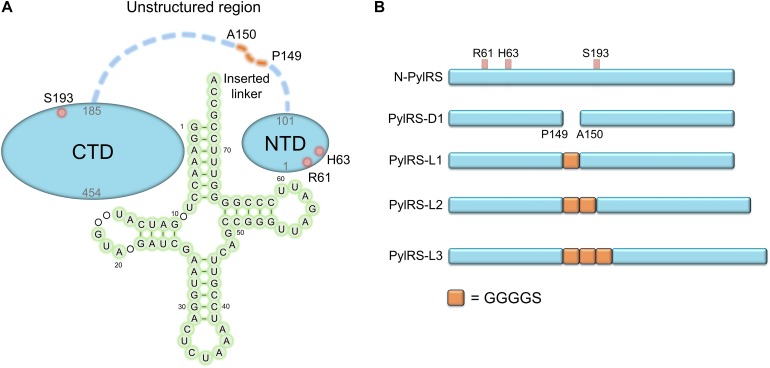
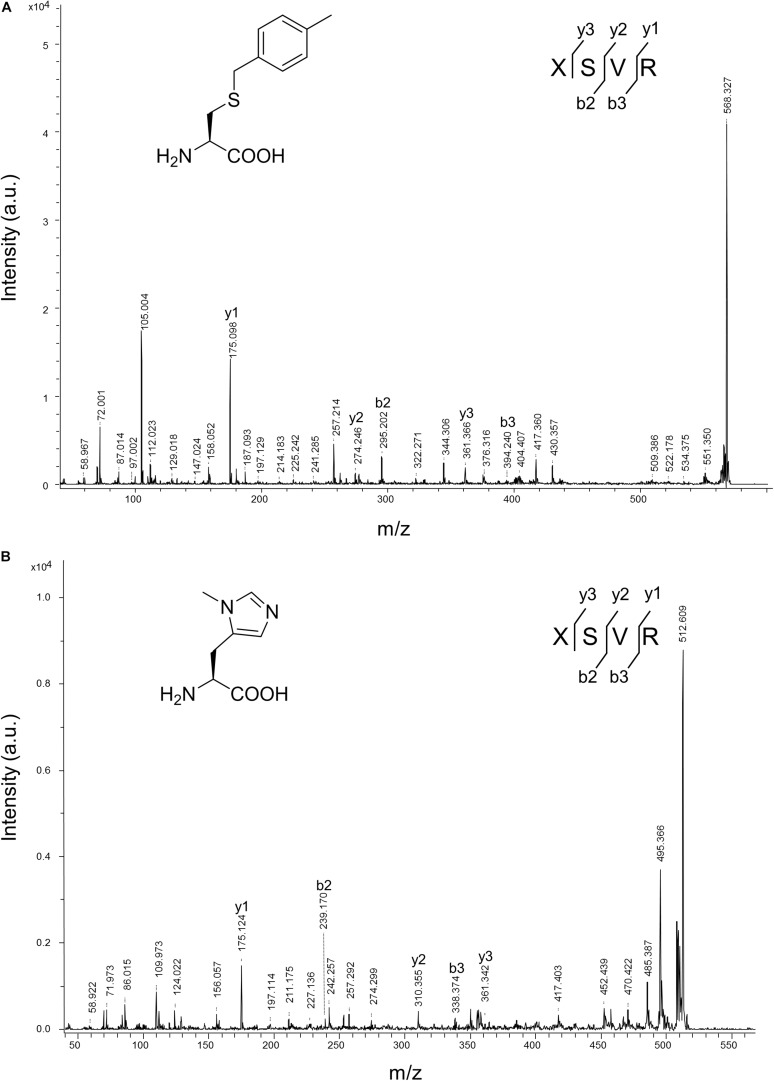
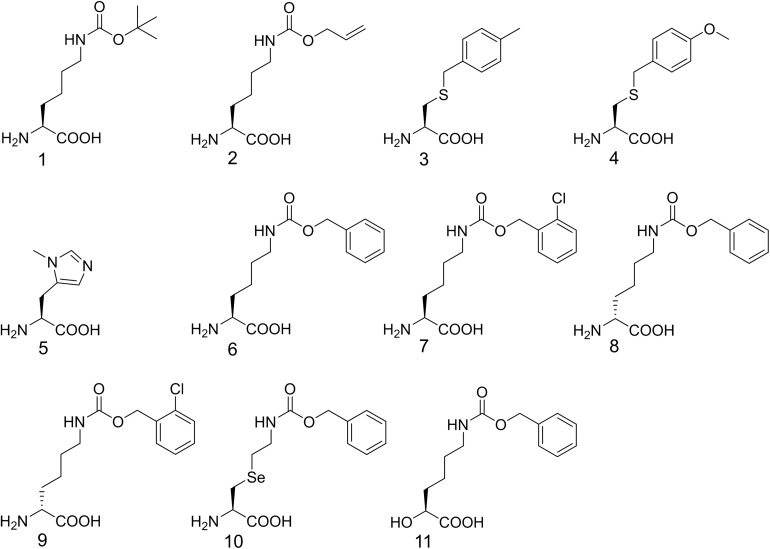
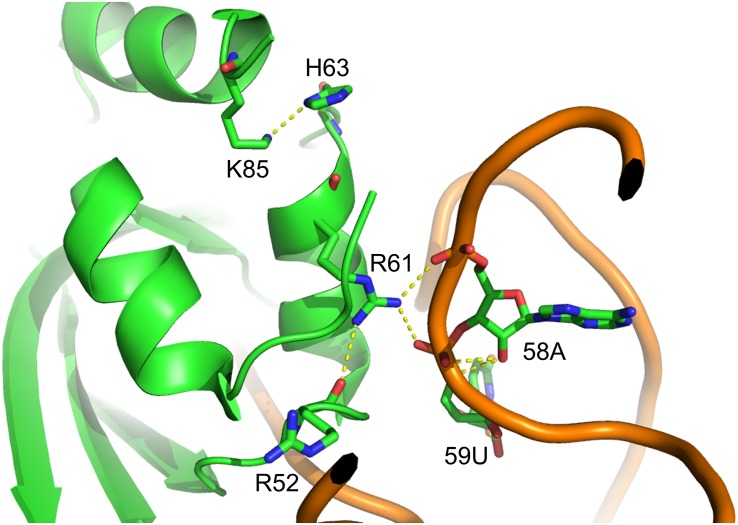
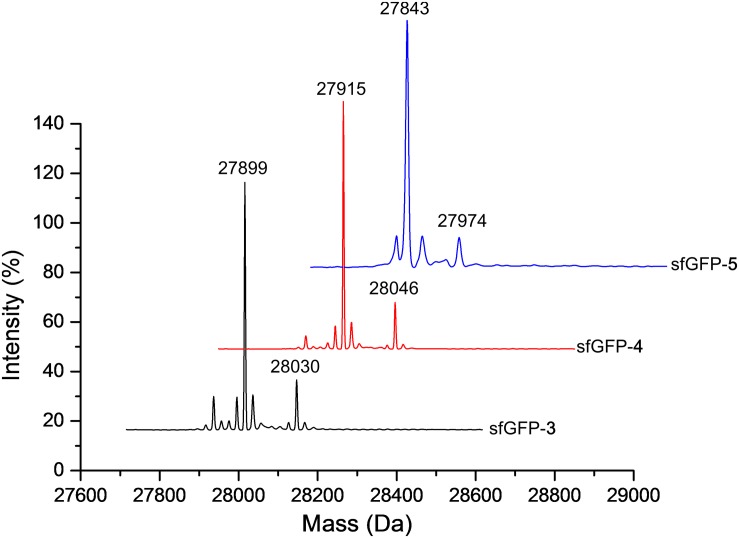
The pyrrolysyl-tRNA synthetase (PylRS)⋅tRNA pair can be used to incorporate non-canonical amino acids (ncAAs) into proteins at installed amber stop codons. Although engineering of the PylRS active site generates diverse binding pockets, the substrate ranges are found similar in charging lysine and phenylalanine analogs. To expand the diversity of the ncAA side chains that can be incorporated the PylRS⋅tRNA pair, exploring remote interactions beyond the active site is an emerging approach in expanding the genetic code research. In this work, remote interactions between tRNA, the tRNA binding domain of PylRS, and/or an introduced non-structured linker between the N- and C-terminus of PylRS were studied. The substrate range of the PylRS⋅tRNA pair was visualized by producing gene products, which also indicated amber suppression efficiencies and substrate specificity. The unstructured loop linking the N-terminal and C-terminal domains (CTDs) of PylRS has been suggested to regulate the interaction between PylRS and tRNA. In exploring the detailed role of the loop region, different lengths of the linker were inserted into the junction between the N-terminal and the C-terminal domains of PylRS to unearth the impact on remote effects. Our findings suggest that the insertion of a moderate-length linker tunes the interface between PylRS and tRNA and subsequently leads to improved suppression efficiencies. The suppression activity and the substrate specificity of PylRS were altered by introducing three mutations at or near the N-terminal domain of PylRS (N-PylRS). Using a N-PylRS⋅tRNA pair, three ncAA substrates, two -benzyl cysteine and a histidine analog, were incorporated into the protein site specifically.
吡咯赖氨酸 - tRNA合成酶(PylRS)⋅tRNA对可用于在已安装的琥珀色终止密码子处将非标准氨基酸(ncAA)掺入蛋白质中。尽管对PylRS活性位点进行工程改造可产生不同的结合口袋,但在对赖氨酸和苯丙氨酸类似物进行氨酰化时,发现其底物范围相似。为了扩大可被PylRS⋅tRNA对掺入的ncAA侧链的多样性,探索活性位点之外的远程相互作用是扩展遗传密码研究中的一种新兴方法。在这项工作中,研究了tRNA、PylRS的tRNA结合结构域和/或PylRS的N端和C端之间引入的非结构化接头之间的远程相互作用。通过产生基因产物来可视化PylRS⋅tRNA对的底物范围,这也表明了琥珀色抑制效率和底物特异性。有人提出,连接PylRS的N端结构域和C端结构域(CTD)的非结构化环可调节PylRS与tRNA之间的相互作用。在探索环区域的详细作用时,将不同长度的接头插入到PylRS的N端和C端结构域之间的连接处,以揭示其对远程效应的影响。我们的研究结果表明,插入中等长度的接头可调节PylRS与tRNA之间的界面,进而提高抑制效率。通过在PylRS(N - PylRS)的N端结构域或其附近引入三个突变,改变了PylRS的抑制活性和底物特异性。使用N - PylRS⋅tRNA对,三种ncAA底物,即两种苄基半胱氨酸和一种组氨酸类似物,被特异性地掺入到蛋白质位点中。