Chemical Engineering Graduate Program, University of California San Diego, La Jolla, California, USA.
Department of Mechanical and Aerospace Engineering, University of California San Diego, La Jolla, California, USA.
Wiley Interdiscip Rev Syst Biol Med. 2020 Sep;12(5):e1490. doi: 10.1002/wsbm.1490. Epub 2020 Apr 23.
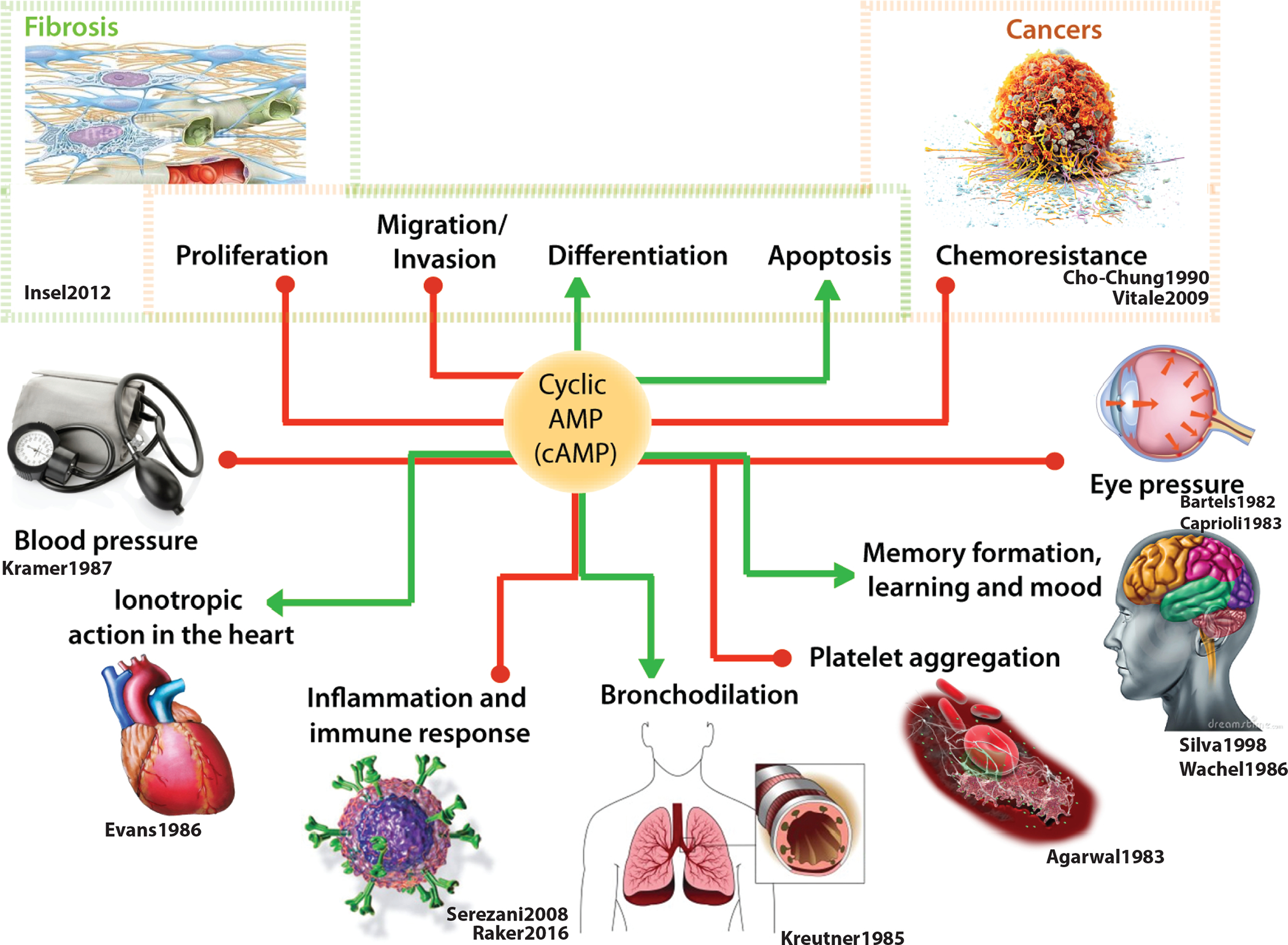
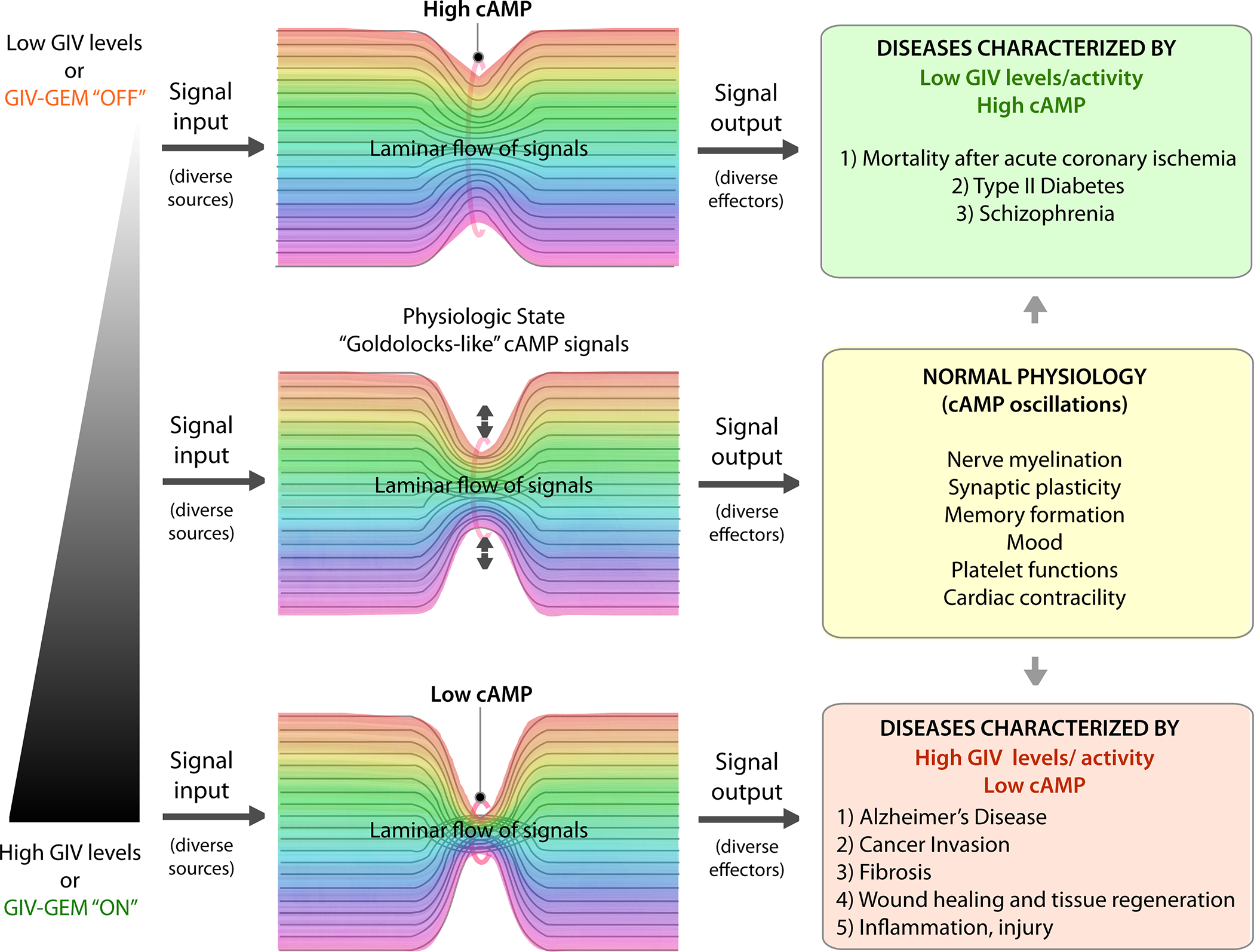
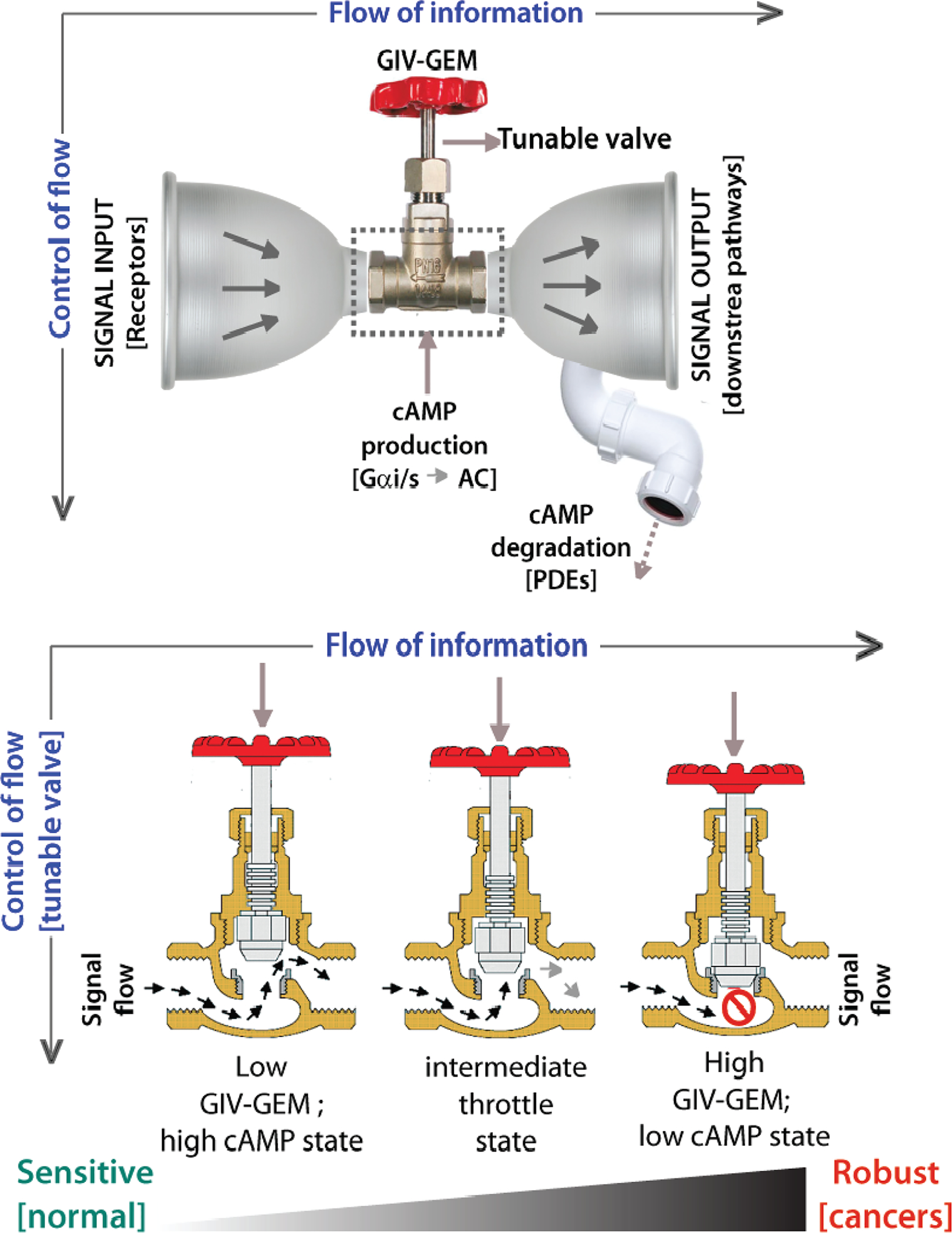
A number of hormones and growth factors stimulate target cells via the second messenger pathways, which in turn regulate cellular phenotypes. Cyclic adenosine monophosphate (cAMP) is a ubiquitous second messenger that facilitates numerous signal transduction pathways; its production in cells is tightly balanced by ligand-stimulated receptors that activate adenylate cyclases (ACs), that is, "source" and by phosphodiesterases (PDEs) that hydrolyze it, that is, "sinks." Because it regulates various cellular functions, including cell growth and differentiation, gene transcription and protein expression, the cAMP signaling pathway has been exploited for the treatment of numerous human diseases. Reduction in cAMP is achieved by blocking "sources"; however, elevation in cAMP is achieved by either stimulating "source" or blocking "sinks." Here we discuss an alternative paradigm for the regulation of cellular cAMP via GIV/Girdin, the prototypical member of a family of modulators of trimeric GTPases, Guanine nucleotide Exchange Modulators (GEMs). Cells upregulate or downregulate cellular levels of GIV-GEM, which modulates cellular cAMP via spatiotemporal mechanisms distinct from the two most often targeted classes of cAMP modulators, "sources" and "sinks." A network-based compartmental model for the paradigm of GEM-facilitated cAMP signaling has recently revealed that GEMs such as GIV serve much like a "tunable valve" that cells may employ to finetune cellular levels of cAMP. Because dysregulated signaling via GIV and other GEMs has been implicated in multiple disease states, GEMs constitute a hitherto untapped class of targets that could be exploited for modulating aberrant cAMP signaling in disease states. This article is categorized under: Models of Systems Properties and Processes > Mechanistic Models Biological Mechanisms > Cell Signaling.
许多激素和生长因子通过第二信使途径刺激靶细胞,进而调节细胞表型。环腺苷酸 (cAMP) 是一种普遍存在的第二信使,它促进许多信号转导途径;细胞内 cAMP 的产生受到配体刺激的受体的严格平衡,这些受体激活腺苷酸环化酶 (ACs),即“源”,并受磷酸二酯酶 (PDEs) 水解,即“汇”。由于它调节包括细胞生长和分化、基因转录和蛋白质表达在内的各种细胞功能,因此 cAMP 信号通路已被用于治疗许多人类疾病。通过阻断“源”来减少 cAMP;然而,通过刺激“源”或阻断“汇”来增加 cAMP。在这里,我们通过 GIV/Girdin 讨论了一种调节细胞 cAMP 的替代范例,GIV 是三聚体 GTPase 调节剂家族的典型成员,Guanine nucleotide Exchange Modulators (GEMs)。细胞上调或下调细胞内 GIV-GEM 的水平,通过时空机制调节细胞内 cAMP,与最常靶向的两类 cAMP 调节剂“源”和“汇”不同。最近提出的基于网络的 GEM 促进 cAMP 信号模型表明,GIV 等 GEM 就像一个“可调阀”,细胞可以用它来微调细胞内的 cAMP 水平。由于 GIV 和其他 GEM 的信号失调与多种疾病状态有关,因此 GEM 构成了一个迄今尚未开发的靶点类别,可以用于调节疾病状态下异常的 cAMP 信号。本文属于:系统性质和过程的模型 > 机制模型 生物学机制 > 细胞信号。