Brako Francis, Luo Chaojie, Matharu Rupy Kaur, Ciric Lena, Harker Anthony, Edirisinghe Mohan, Craig Duncan Q M
Medway School of Pharmacy, Universities of Kent and Greenwich, Chatham ME4 4TB, UK.
Department of Mechanical Engineering, University College London, Torrington Place, London WC1E 7JE, UK.
Pharmaceutics. 2020 Apr 18;12(4):373. doi: 10.3390/pharmaceutics12040373.
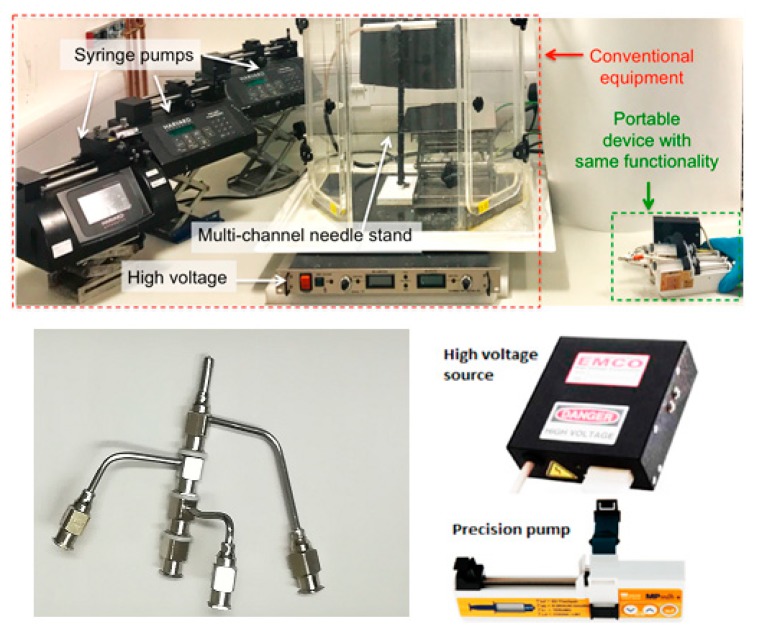
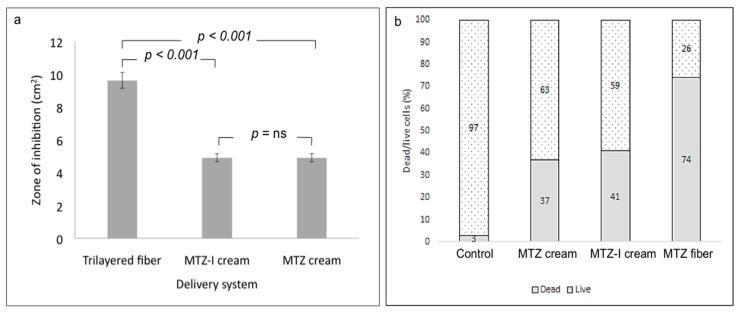
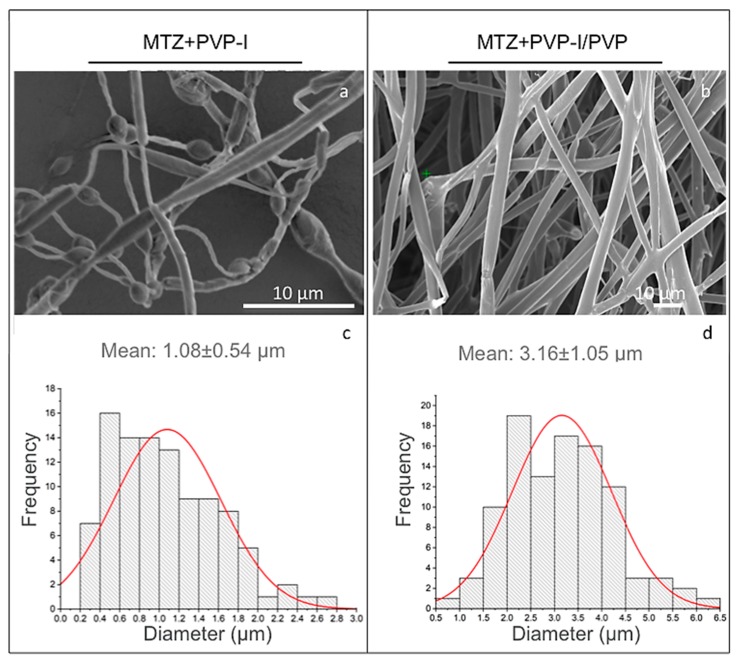
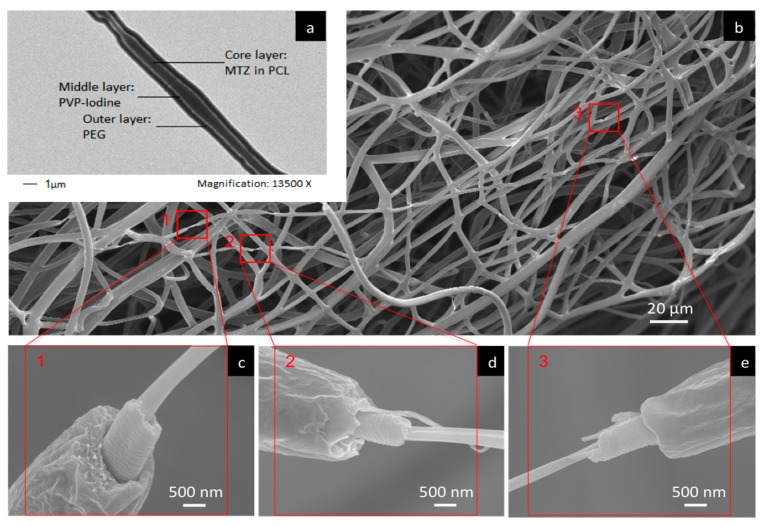
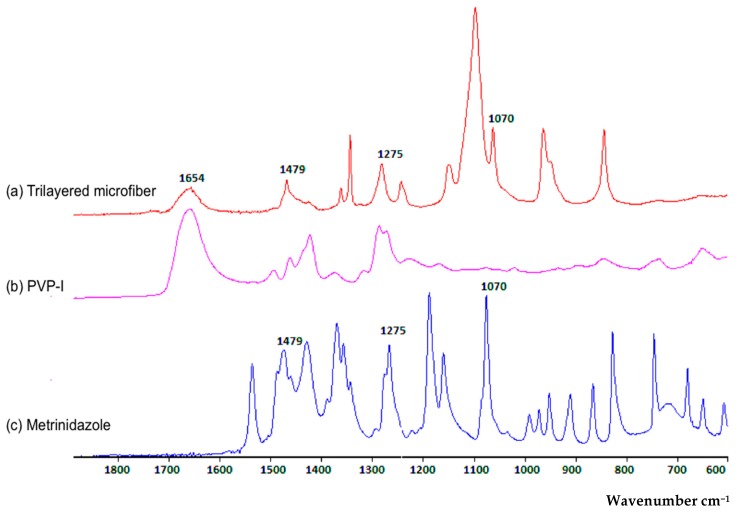
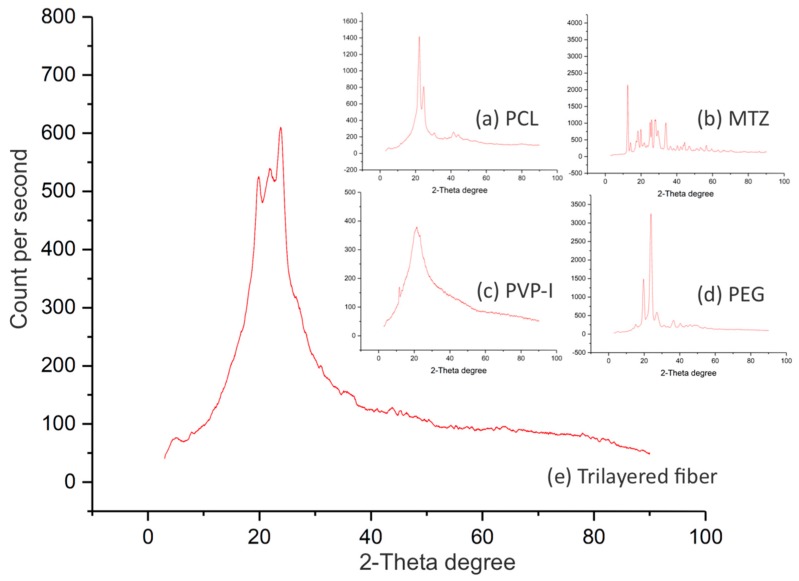
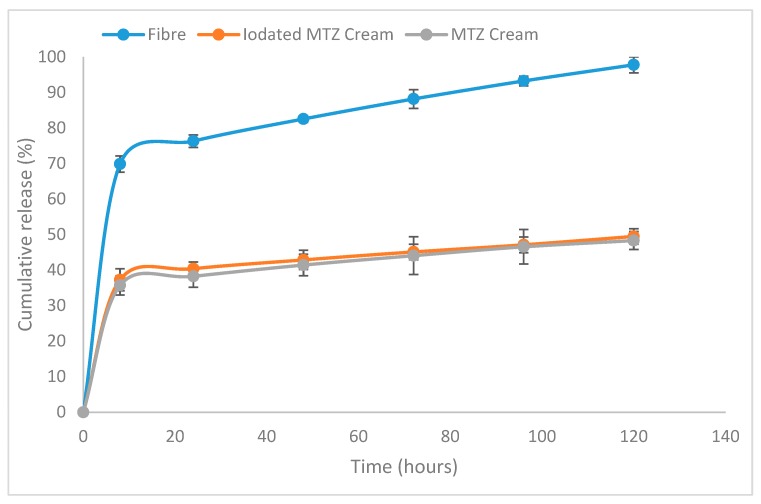
The use of combination therapies for the treatment of a range of conditions is now well established, with the component drugs usually being delivered either as distinct medicaments or combination products that contain physical mixes of the two active ingredients. There is, however, a compelling argument for the development of compartmentalised systems whereby the release, stability and incorporation environment of the different drugs may be tailored. Here we outline the development of polymeric fine fiber systems whereby two drugs used for the treatment of wounds may be separately incorporated. Fibers were delivered using a newly developed handheld electrospinning device that allows treatment at the site of need. Crucially, the delivery system is portable and may be used for the administration of drug-loaded fibers directly into the wound in situ, thereby potentially allowing domiciliary or site-of-trauma administration. The three-layered fiber developed in this study has polyethylene glycol as the outermost layer, serving as a structural support for the inner layers. The inner layers comprised iodine complexed with polyvinylpyrrolidone (PVP) and metronidazole dispersed in polycaprolactone (PCL) as a slow release core. The systems were characterized in terms of structure and architecture using scanning electron microscopy, transmission electron microscopy, attenuated total reflection Fourier transform infrared spectroscopy and diffractometry. As antibacterial creams are still used for managing infected wounds, the performance of our trilayered fiber was studied in comparison with creams containing similar active drugs. Drug release was measured by UV analysis, while antimicrobial efficiency was measured using agar diffusion and suspension methods. It was found that the trilayered systems, averaging 3.16 µm in diameter, released more drug over the study period and were confirmed by the microbacterial studies to be more effective against , a bacterium commonly implicated in infected wounds. Overall, the portable system has been shown to be capable of not only incorporating the two drugs in distinct layers but also of delivering adequate amounts of drugs for a more effective antibacterial activity. The portability of the device and its ability to generate distinct layers of multiple active ingredients make it promising for further development for wound healing applications in terms of both practical applicability and antimicrobial efficacy.
联合疗法用于治疗一系列病症现已得到充分确立,其中组成药物通常作为不同的药物或包含两种活性成分物理混合物的复方产品给药。然而,开发分隔系统具有令人信服的理由,通过该系统可以调整不同药物的释放、稳定性和掺入环境。在此,我们概述了聚合物细纤维系统的开发,通过该系统可分别掺入用于治疗伤口的两种药物。使用新开发的手持式静电纺丝装置递送纤维,该装置允许在需要的部位进行治疗。至关重要的是,该递送系统便于携带,可用于将载药纤维直接原位施用于伤口,从而有可能实现居家给药或创伤现场给药。本研究中开发的三层纤维以聚乙二醇作为最外层,作为内层的结构支撑。内层包括与聚乙烯吡咯烷酮(PVP)络合的碘以及分散在聚己内酯(PCL)中的甲硝唑作为缓释核心。使用扫描电子显微镜、透射电子显微镜、衰减全反射傅里叶变换红外光谱和衍射法对该系统的结构和构造进行了表征。由于抗菌乳膏仍用于处理感染伤口,我们将三层纤维的性能与含有类似活性药物的乳膏进行了比较研究。通过紫外分析测量药物释放,同时使用琼脂扩散和悬浮法测量抗菌效率。结果发现,平均直径为3.16 µm的三层系统在研究期间释放出更多药物,并且微生物学研究证实其对一种常见于感染伤口的细菌更有效。总体而言,该便携式系统已被证明不仅能够将两种药物掺入不同层,而且能够递送足够量的药物以实现更有效的抗菌活性。该装置的便携性及其产生多个活性成分不同层的能力使其在实际适用性和抗菌功效方面对于伤口愈合应用的进一步开发具有前景。