Graduate School of Frontier Biosciences, Osaka University, Osaka 5650871, Japan.
Center for Information and Neural Networks (CiNet), National Institute of Information and Communications Technology, Osaka 5650871, Japan.
Int J Mol Sci. 2020 Apr 18;21(8):2843. doi: 10.3390/ijms21082843.
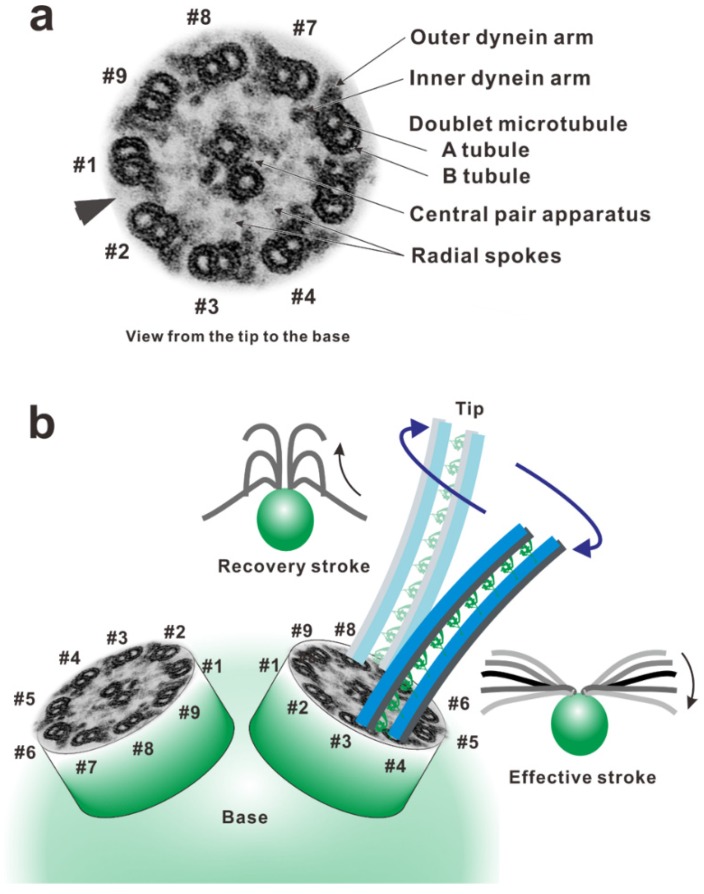
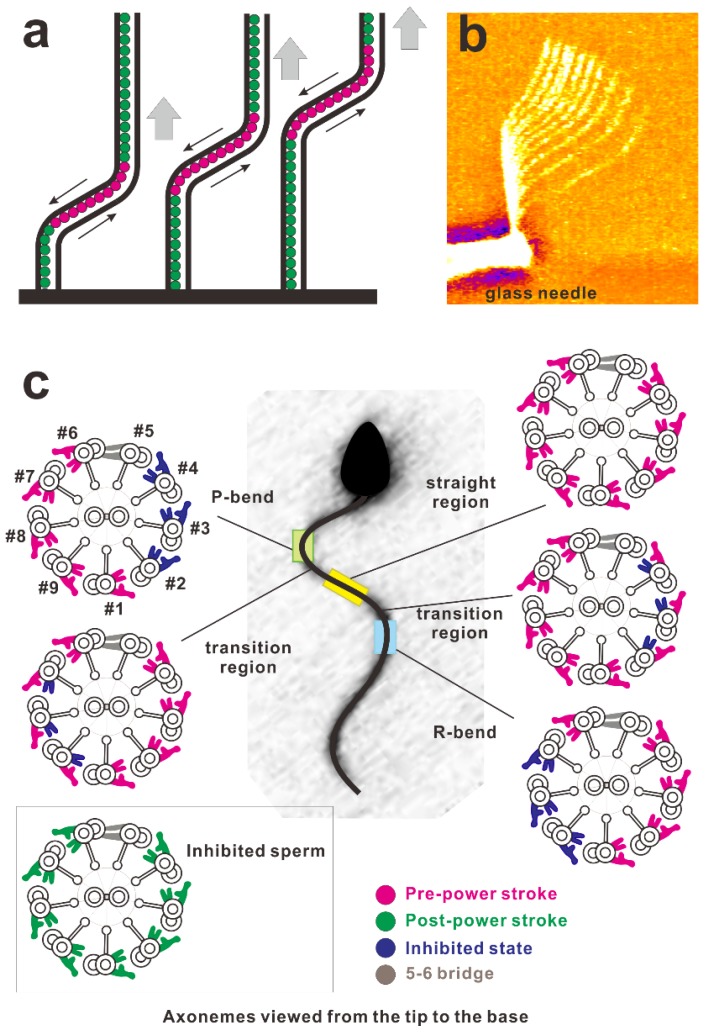
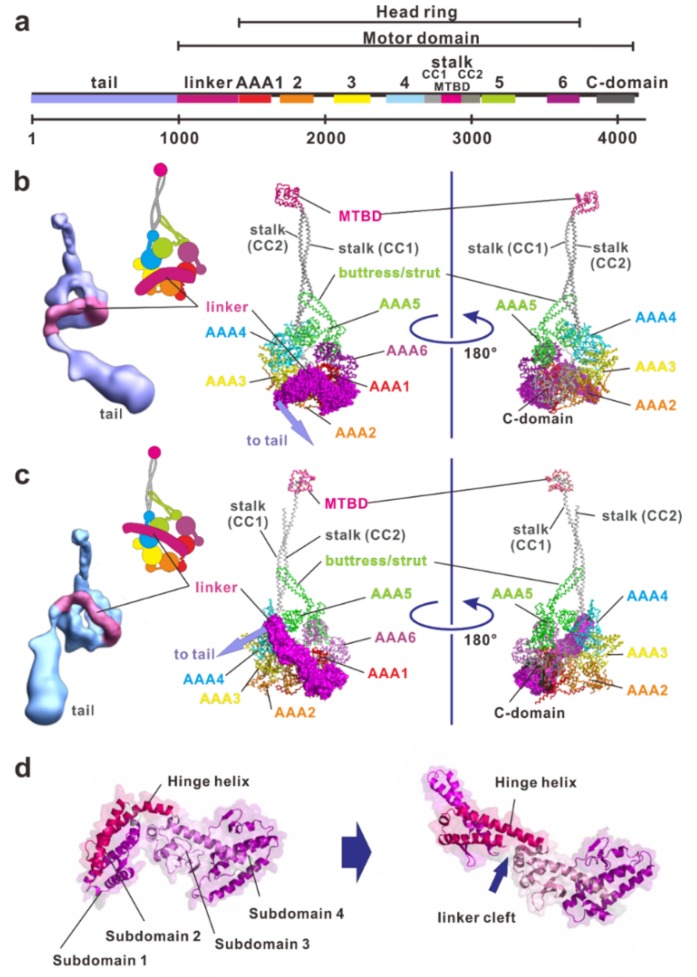
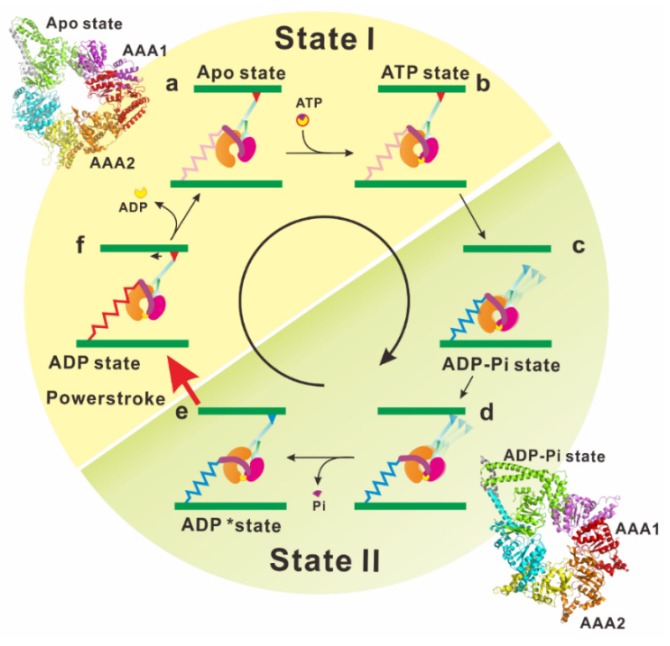
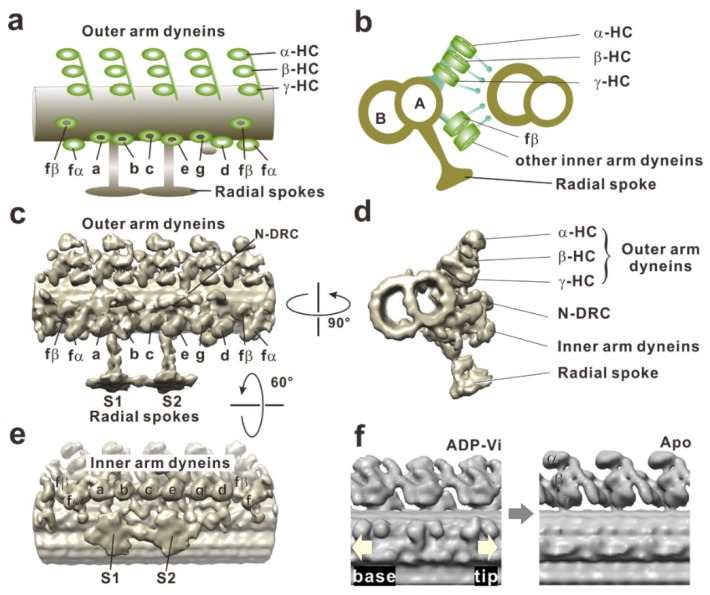
In eukaryotic cilia and flagella, various types of axonemal dyneins orchestrate their distinct functions to generate oscillatory bending of axonemes. The force-generating mechanism of dyneins has recently been well elucidated, mainly in cytoplasmic dyneins, thanks to progress in single-molecule measurements, X-ray crystallography, and advanced electron microscopy. These techniques have shed light on several important questions concerning what conformational changes accompany ATP hydrolysis and whether multiple motor domains are coordinated in the movements of dynein. However, due to the lack of a proper expression system for axonemal dyneins, no atomic coordinates of the entire motor domain of axonemal dynein have been reported. Therefore, a substantial amount of knowledge on the molecular architecture of axonemal dynein has been derived from electron microscopic observations on dynein arms in axonemes or on isolated axonemal dynein molecules. This review describes our current knowledge and perspectives of the force-generating mechanism of axonemal dyneins in solo and in ensemble.
在真核纤毛和鞭毛中,各种类型的轴丝动力蛋白协调它们的不同功能,产生轴丝的振荡弯曲。由于单分子测量、X 射线晶体学和先进的电子显微镜技术的进展,动力蛋白的力产生机制最近得到了很好的阐明,主要是在细胞质动力蛋白中。这些技术揭示了几个关于伴随 ATP 水解的构象变化以及多个运动域是否在动力蛋白的运动中协调的重要问题。然而,由于缺乏适当的轴丝动力蛋白表达系统,尚未报道轴丝动力蛋白整个运动域的原子坐标。因此,关于轴丝动力蛋白的分子结构的大量知识是从轴丝中的动力蛋白臂或分离的轴丝动力蛋白分子的电子显微镜观察中得出的。本综述描述了我们目前对单体和整体轴丝动力蛋白的力产生机制的认识和观点。