Gambardella Valentina, Tarazona Noelia, Cejalvo Juan Miguel, Lombardi Pasquale, Huerta Marisol, Roselló Susana, Fleitas Tania, Roda Desamparados, Cervantes Andres
Department of Medical Oncology, INCLIVA Biomedical Research Institute, University of Valencia, 46010 Valencia, Spain.
Instituto de Salud Carlos III, CIBERONC, 28220 Madrid, Spain.
Cancers (Basel). 2020 Apr 19;12(4):1009. doi: 10.3390/cancers12041009.
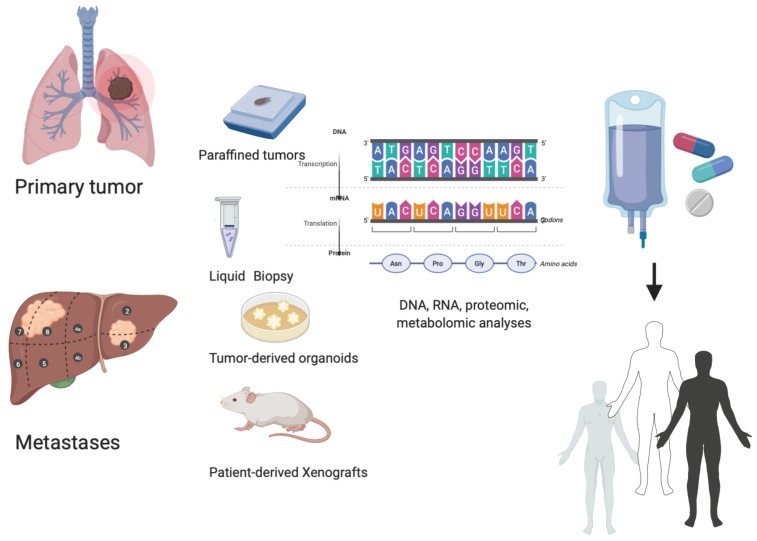
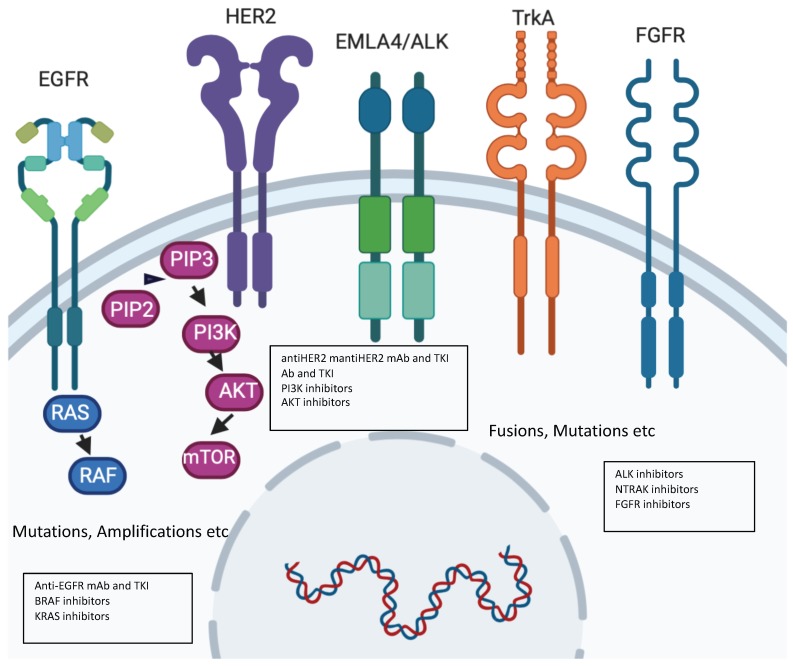
Translational research has revolutionized how we develop new treatments for cancer patients. The change from an organ-centric concept guiding treatment choice towards deep molecular analysis, driving a personalized approach, is one of the most important advances of modern oncology. Several tools such as next generation sequencing and RNA sequencing have greatly improved the capacity to detect predictive and prognostic molecular alterations. Detection of gene mutations, amplifications, and fusions has therefore altered the history of several diseases in both a localized and metastatic setting. This shift in perspective, in which attention is focused on the specific molecular alterations of the tumor, has opened the door to personalized treatment. This situation is reflected in the increasing number of basket trials selecting specific molecular targets. Nonetheless, some weaknesses need to be addressed. The complexity of cancer cells enriched with concomitant molecular alterations complicates identification of the driver. Moreover, tumor heterogeneity could be responsible for the lack of benefit when targeted agents are used. In light of this, there is growing interest in the role of multidisciplinary committees or molecular tumor boards to try to enhance selection. The aim of this review is to critically analyze the evolution of cancer treatment towards a precision approach, underlining some recent successes and unexpected failures.
转化研究彻底改变了我们为癌症患者开发新疗法的方式。从以器官为中心的概念指导治疗选择向深度分子分析的转变,推动了个性化治疗方法的发展,这是现代肿瘤学最重要的进展之一。下一代测序和RNA测序等多种工具极大地提高了检测预测性和预后性分子改变的能力。因此,基因突变、扩增和融合的检测在局部和转移情况下都改变了几种疾病的治疗史。这种视角的转变,即关注肿瘤的特定分子改变,为个性化治疗打开了大门。这种情况反映在越来越多选择特定分子靶点的篮子试验中。尽管如此,一些弱点仍需解决。富含伴随分子改变的癌细胞的复杂性使驱动因素的识别变得复杂。此外,肿瘤异质性可能是使用靶向药物时缺乏疗效的原因。有鉴于此,人们对多学科委员会或分子肿瘤学委员会在增强选择方面的作用越来越感兴趣。本综述的目的是批判性地分析癌症治疗向精准方法的演变,强调一些近期的成功和意外的失败。