Dagher Dimitri J, de la Providencia Ivan E, Pitre Frédéric E, St-Arnaud Marc, Hijri Mohamed
Institut de Recherche en Biologie Végétale, Université de Montréal and Jardin botanique de Montréal, 4101 Sherbrooke est, Montréal, QC H1X 2B2, Canada.
Neomed-labs 525 Boulevard Cartier O, Laval, QC H7V 4A2, Canada.
Microorganisms. 2020 Apr 21;8(4):602. doi: 10.3390/microorganisms8040602.
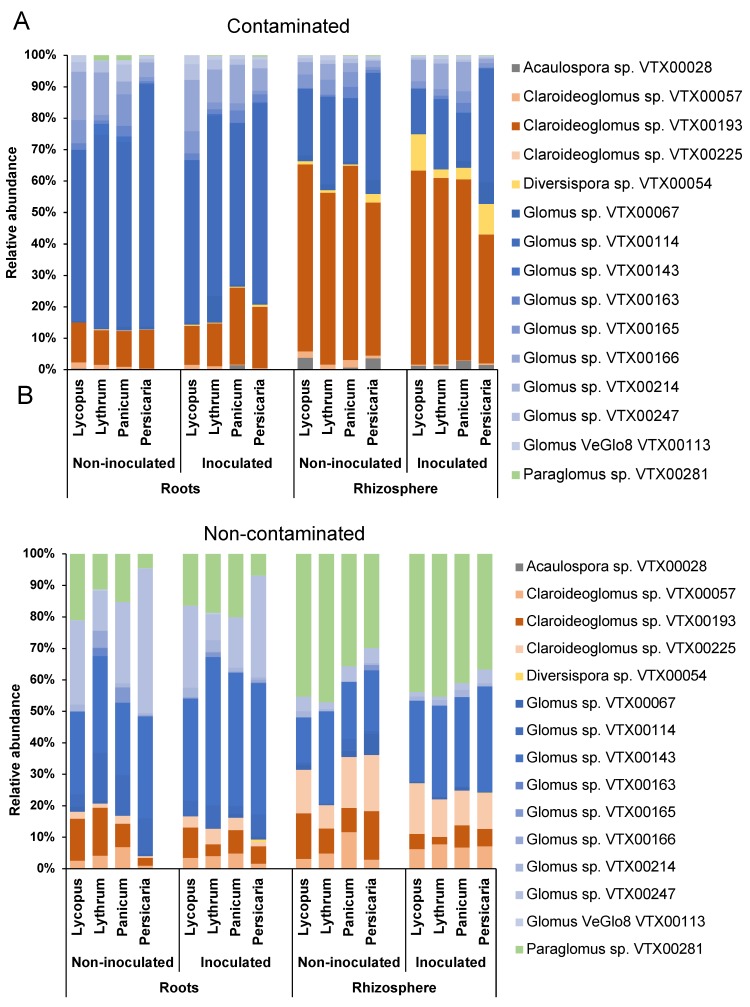
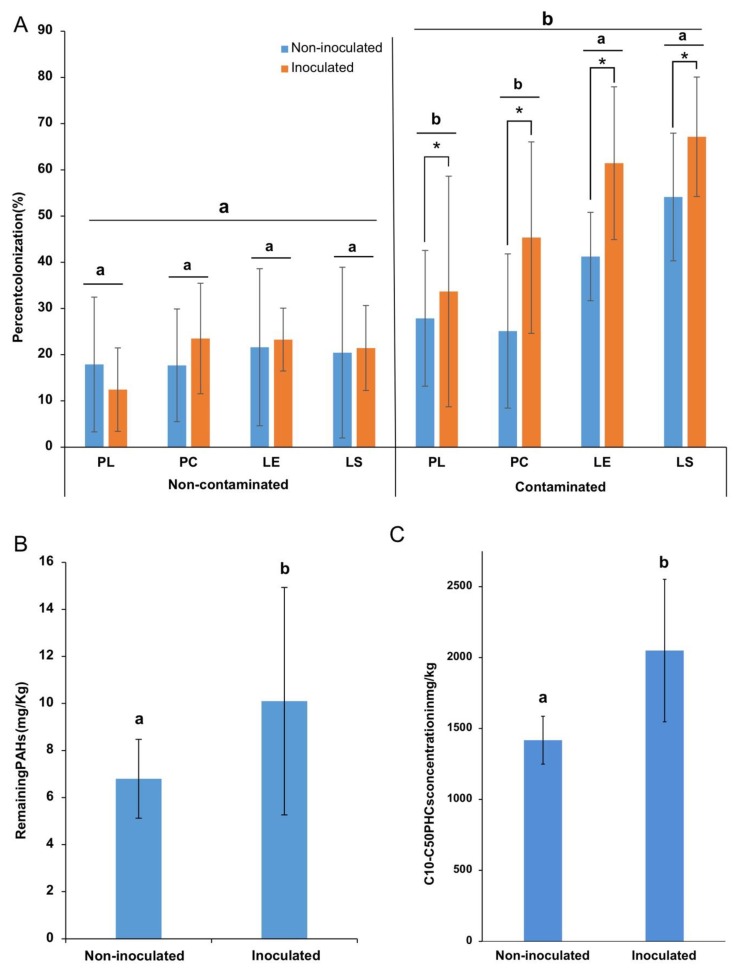
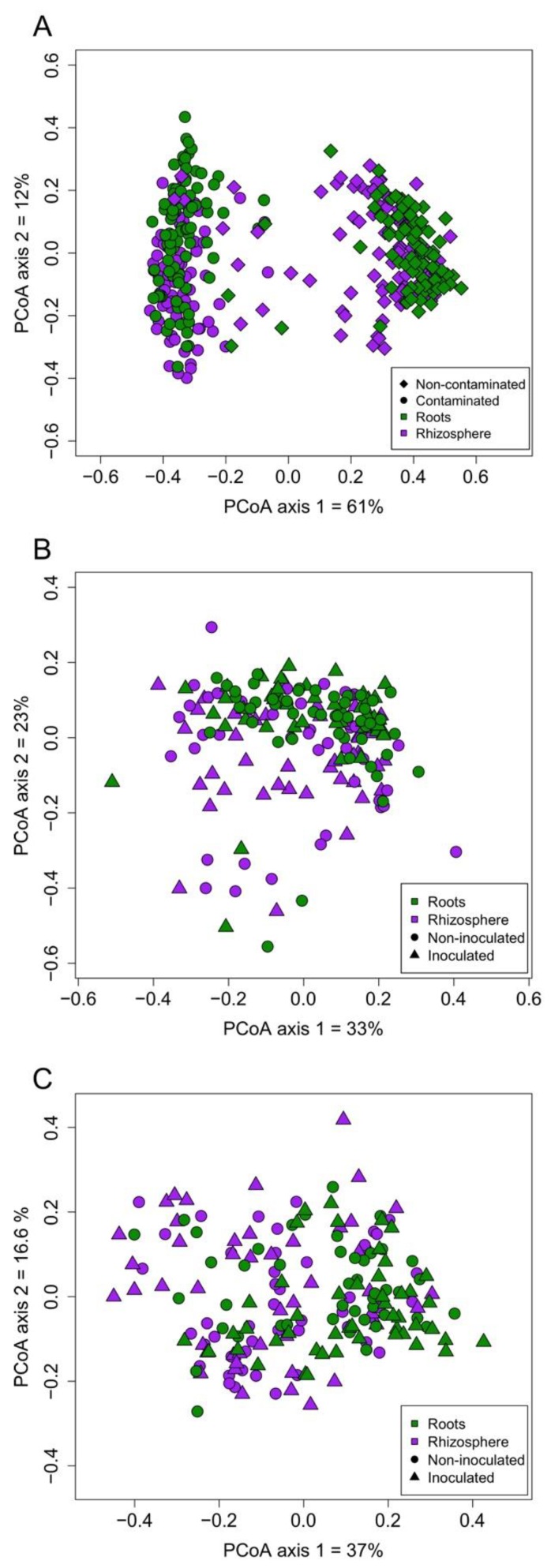
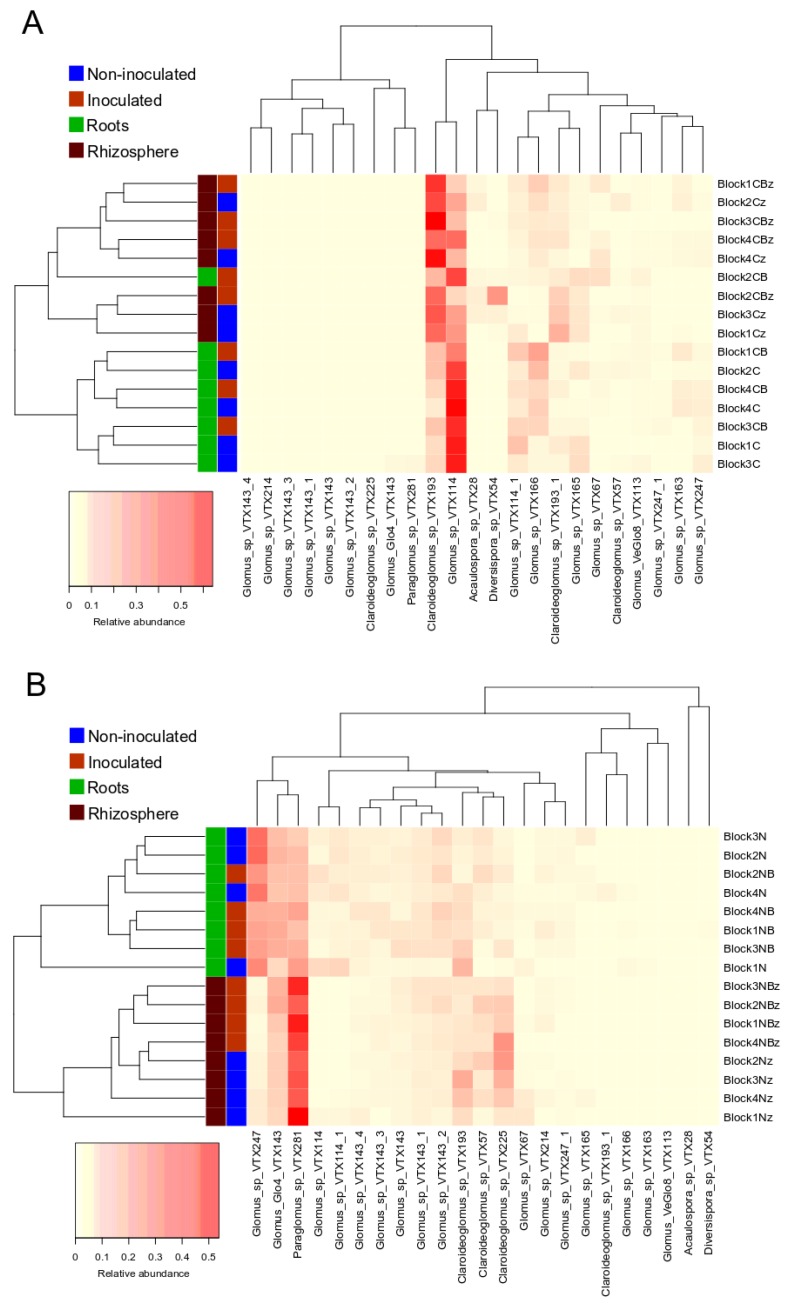
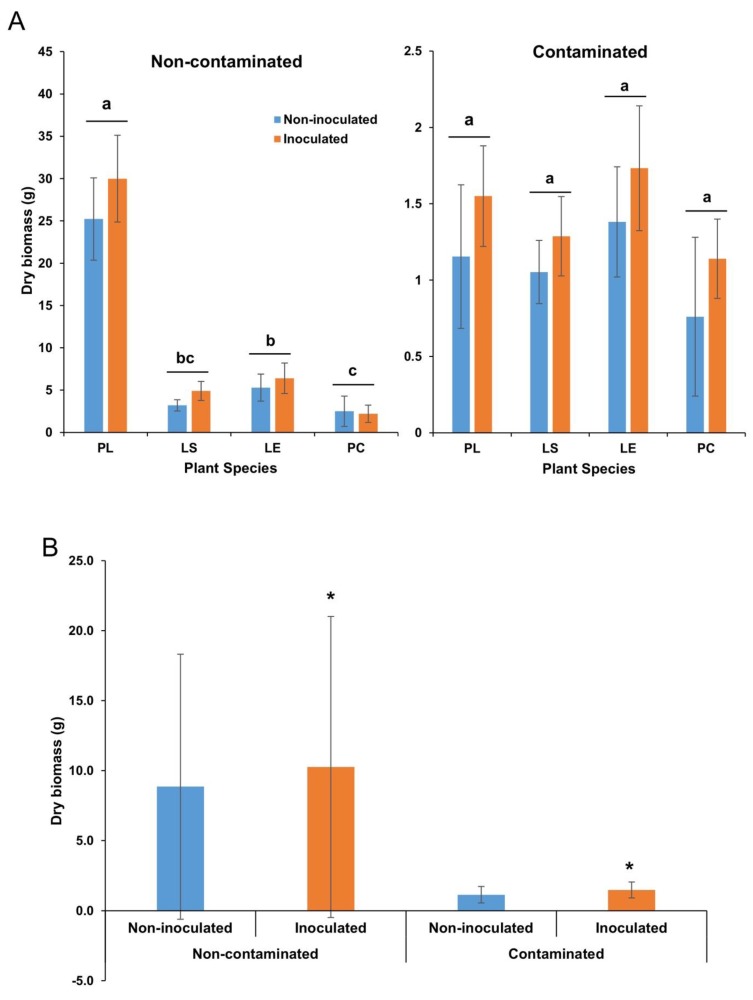
Arbuscular mycorrhizal fungi (AMF) have been shown to reduce plant stress and improve their health and growth, making them important components of the plant-root associated microbiome, especially in stressful conditions such as petroleum hydrocarbons (PHs) contaminated environments. Purposely manipulating the root-associated AMF assemblages in order to improve plant health and modulate their interaction with the rhizosphere microbes could lead to increased agricultural crop yields and phytoremediation performance by the host plant and its root-associated microbiota. In this study, we tested whether repeated inoculations with a Proteobacteria consortium influenced plant productivity and the AMF assemblages associated with the root and rhizosphere of four plant species growing either in non-contaminated natural soil or in sediments contaminated with petroleum hydrocarbons. A mesocosm experiment was performed in a randomized complete block design in four blocks with two factors: (1) substrate contamination (contaminated or not contaminated), and (2) inoculation (or not) with a bacterial consortium composed of ten isolates of Proteobacteria. Plants were grown in a greenhouse over four months, after which the effect of treatments on plant biomass and petroleum hydrocarbon concentrations in the substrate were determined. MiSeq amplicon sequencing, targeting the 18S rRNA gene, was used to assess AMF community structures in the roots and rhizosphere of plants growing in both contaminated and non-contaminated substrates. We also investigated the contribution of plant identity and biotope (plant roots and rhizospheric soil) in shaping the associated AMF assemblages. Our results showed that while inoculation caused a significant shift in AMF communities, the substrate contamination had a much stronger influence on their structure, followed by the biotope and plant identity to a lesser extent. Moreover, inoculation significantly increased plant biomass production and was associated with a decreased petroleum hydrocarbons dissipation in the contaminated soil. The outcome of this study provides knowledge on the factors influencing the diversity and community structure of AMF associated with indigenous plants following repeated inoculation of a bacterial consortium. It highlights the dominance of soil chemical properties, such as petroleum hydrocarbon presence, over biotic factors and inputs, such as plant species and microbial inoculations, in determining the plant-associated arbuscular mycorrhizal fungi communities.
丛枝菌根真菌(AMF)已被证明可以减轻植物压力,改善其健康状况和生长,使其成为植物根系相关微生物群的重要组成部分,尤其是在石油烃(PHs)污染环境等胁迫条件下。有意操纵根系相关的AMF组合,以改善植物健康状况并调节其与根际微生物的相互作用,可能会提高农作物产量以及宿主植物及其根系相关微生物群的植物修复性能。在本研究中,我们测试了用变形菌门菌剂重复接种是否会影响在未受污染的天然土壤或受石油烃污染的沉积物中生长的四种植物的根系和根际相关的AMF组合以及植物生产力。在四个区组中进行了一项中宇宙实验,采用随机完全区组设计,有两个因素:(1)基质污染(污染或未污染),以及(2)用由十种变形菌门分离株组成的细菌菌剂接种(或不接种)。植物在温室中生长四个月,之后测定处理对植物生物量和基质中石油烃浓度的影响。使用靶向18S rRNA基因的MiSeq扩增子测序来评估在受污染和未受污染基质中生长的植物根系和根际中的AMF群落结构。我们还研究了植物身份和生物群落(植物根系和根际土壤)在塑造相关AMF组合中的作用。我们的结果表明,虽然接种导致AMF群落发生显著变化,但基质污染对其结构的影响要强得多,其次是生物群落,植物身份的影响较小。此外,接种显著提高了植物生物量产量,并且与污染土壤中石油烃消散减少有关。本研究结果提供了关于重复接种细菌菌剂后影响与本土植物相关的AMF多样性和群落结构的因素的知识。它强调了在决定与植物相关的丛枝菌根真菌群落时,土壤化学性质(如石油烃的存在)比生物因素和投入(如植物种类和微生物接种)更具主导性。